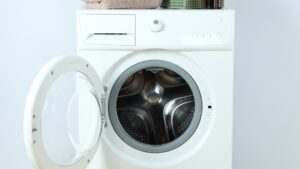

Every Asko appliance carries an asko rating plate somewhere on the cabinet, and it holds more information than most owners ever look at. Where a lot of brands print a single model number and call it done, the asko rating plate lists three separate fields together: Model, Serial, and Art. No. Knowing what each one is for — and which one a parts counter actually needs — saves a repeat trip and a wrong-part order.
Where to find the asko rating plate
Location depends on appliance type. On a dishwasher, look on the right side of the inner door panel or along the edge of the tub — you may need the door fully open to see it. On a washer, the plate sits above the door opening on the front panel, visible without removing anything. On a dryer, it is behind the door, in the upper-left corner of the cabinet opening. If a plate has worn illegible from years of steam and detergent residue, a phone photo taken early — before it fades further — is worth keeping on file.
What each field actually means
The model number identifies the appliance family and configuration — the general product you own. The serial number pins down the specific manufacturing date and production run, which matters most for recall lookups and for production-specific part revisions. The Art. No., short for Article Number, is the field genuine Asko parts suppliers and third-party parts catalogs use to guarantee an exact-fit replacement. Two dishwashers with the same model number can still ship with different internal revisions, and the Art. No. is what separates them at the parts counter.
Why the Art. No. matters more than people expect
A generic “model number” search on a parts site often turns up several near-matches, because Asko, like most manufacturers, revises components across a model’s production life without changing the printed model number. The Art. No. narrows that ambiguity to one specific configuration. Before you or a technician orders a control board, a pump, or a door seal, reading off the Art. No. alongside the model and serial numbers is the single habit that prevents the most common parts-ordering mistake: the part that looks right on the page but does not fit the unit in front of you.
What to do with the numbers once you have them
Write all three down — model, serial, Art. No. — before you call anyone, whether that is a parts supplier or a repair technician. If you are booking service through our scheduling page, having the plate photographed ahead of time lets the technician arrive with the likely part already in hand rather than diagnosing on-site and returning later. It is a small step that shortens the whole repair, especially for dishwasher and laundry service where boards and pumps vary by production run.
A habit worth keeping
Once you have located the asko rating plate on one appliance, the pattern for the rest of your Asko lineup usually follows the same logic — door edge, tub edge, or the panel nearest the door opening. If you own more than one Asko dishwasher, washer, or dryer, photograph each plate separately and store the images together; serial-specific part revisions mean the numbers are never interchangeable across units even when the model names look identical. Browsing our model reference pages can help confirm which series and production family a given model number belongs to before you order anything.
Checking your Asko rating plate before you shop for parts online
Before ordering anything through a marketplace listing, pull up Asko’s own site and search the model number visible on your asko rating plate against the current product catalog — this confirms whether your unit is still an active model or an older, discontinued one, which changes how you should expect parts lead times to run. A discontinued model is not a lost cause; it simply means the Art. No. becomes even more important, since a discontinued model number alone will not narrow a parts search the way it does for a current unit. Keep a written note of all three numbers somewhere outside the appliance itself — a phone contacts note, a shared household document, or a photo folder — so a faded or damaged plate years from now does not leave you starting from zero. Owners who keep this record ready consistently report shorter, less frustrating parts calls than owners who go looking for the plate for the first time only after something has already failed.