
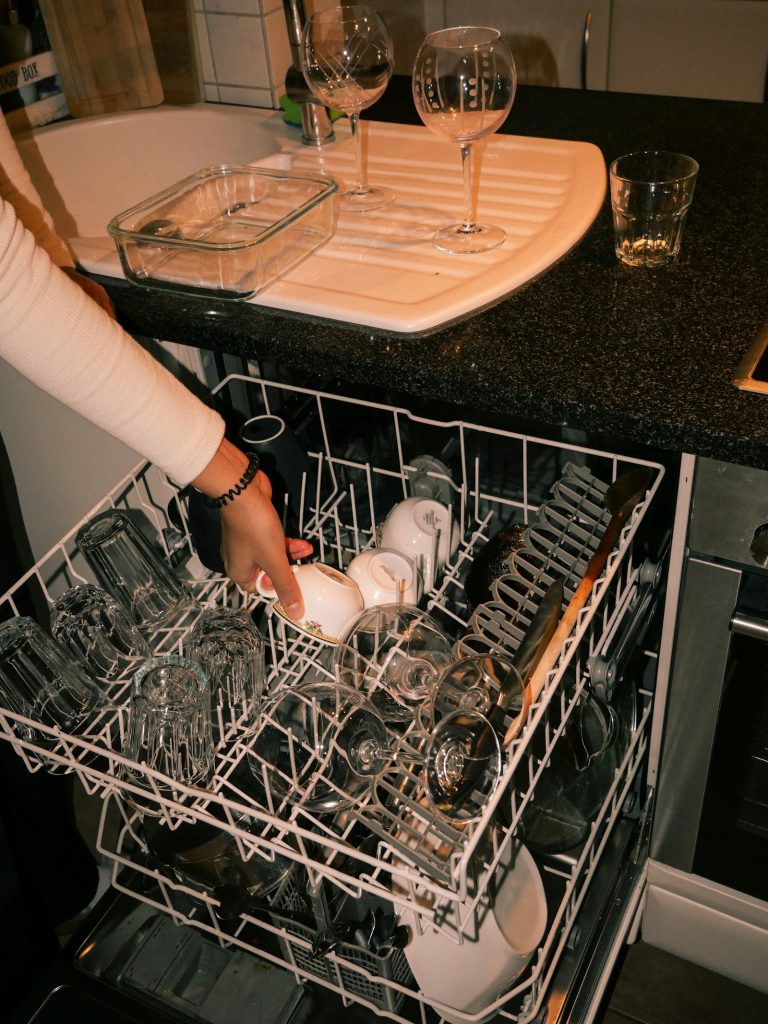
Hard water leaves behind mineral deposits long after a dish cycle finishes, and this asko dishwasher descaling guide walks through recognizing that buildup and clearing it before it affects performance. Scale accumulates on the heating element, the tub walls, and inside spray arm nozzles, and it builds up gradually enough that owners often do not notice until cleaning results have already declined.
Signs your dishwasher needs descaling
A white or cloudy film on the interior tub walls, especially near the heating element, is the clearest visual sign. Glasses and dishes coming out with a persistent cloudy haze that does not wipe off — as opposed to spotting, which rinse aid usually resolves — points toward scale rather than a rinse aid issue. A cycle that seems to take longer than usual to heat water, or a dishwasher that feels less effective at drying, can also indicate scale coating the heating element and reducing its efficiency.
Descaling the interior tub
Run an empty cycle — no dishes, no detergent — with a dishwasher-safe descaling product or a cup of white vinegar placed in a bowl on the top rack. Use the hottest cycle setting available so the descaling solution has maximum time and temperature to break down mineral deposits on the tub walls and heating element. This empty-cycle approach avoids any risk of vinegar reacting with detergent chemistry or leaving residue on actual dishes.
Descaling spray arm nozzles specifically
Because spray arm nozzles are narrow, they scale up faster relative to their size than open tub surfaces. Remove the spray arms as described in our spray arm cleaning guide and soak them separately in a warm water and white vinegar solution for fifteen to twenty minutes before reinstalling. This targeted soak reaches deposits that an empty-cycle descaling run, which mostly addresses open surfaces, will not fully clear from tight nozzle openings.
How often to descale
Households with harder water — check your municipal water report for a hardness figure — should plan on descaling every one to two months. Households with genuinely soft water may only need this once or twice a year, if at all. Using the built-in salt-based softener correctly, where your water hardness warrants it, significantly reduces how often manual descaling is needed in the first place.
When descaling does not resolve heating or cleaning issues
If cloudiness or slow heating persists after a thorough descaling, the heating element itself may have degraded beyond what surface cleaning can restore, or a thermistor could be reading temperature incorrectly and cutting the heat cycle short. Our dishwasher repair service covers heating-element diagnosis, and our error code pages are worth checking if the display is also showing a problem. You can book a visit if descaling has not resolved the issue.
When to consider a whole-home solution instead of repeated asko dishwasher descaling
If you find yourself running this asko dishwasher descaling guide’s routine more than once a month just to keep up, your household water hardness may be high enough that a whole-home water softening system would address the problem at its source, reducing scale buildup across your dishwasher, washer, and plumbing fixtures all at once rather than treating the dishwasher in isolation. This is a bigger investment than dishwasher-specific descaling, so it makes the most sense for households already dealing with hard-water symptoms beyond just the dishwasher — chalky buildup on faucets, dull-feeling laundry, or visible scale in a kettle or coffee maker. You can review Asko’s care and maintenance guidance for further detail on water hardness thresholds the brand considers worth addressing directly rather than through routine descaling alone.
Combining this asko dishwasher descaling guide with softener use
Households actively using the built-in softener salt system as intended, described in our separate salt and rinse aid guide, typically need to follow this asko dishwasher descaling guide less often than households skipping the softener despite genuinely hard water. Using both systems together — softener salt for ongoing prevention, periodic descaling for maintenance — produces noticeably better long-term results than relying on either one alone.
Mark your calendar after each descaling session rather than relying on memory for when the next one is due, since scale buildup is gradual enough that it is easy to lose track of exactly how long it has been since the last treatment.