
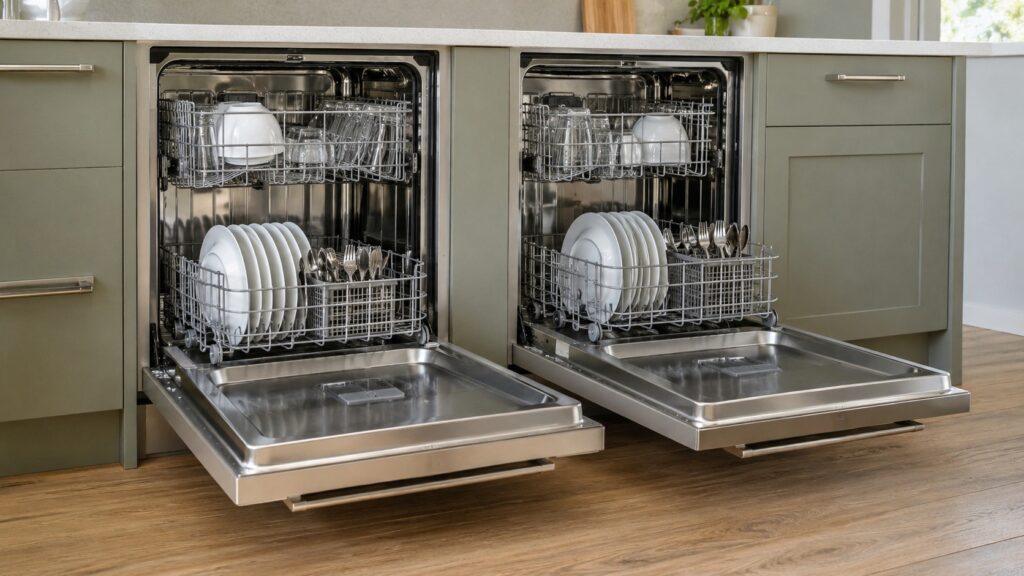
If you are comparing an asko vs bosch dishwasher, the plainest way to see the difference is to list what each brand puts in the tub, the racks and the drying system, and then decide which of those points will matter in your kitchen. Asko’s dishwashers are described on our pages by their stainless steel tub, passive condensation drying with a forced-air option on some tiers, a steel-forward build and a range that runs from standard to XXL and outdoor models. For Bosch we make no claims about specific features: check the spec sheet of the exact model. We do not say which brand is better, quote prices or give reliability numbers. We are an independent repair company.
What are the pros and cons of an Asko dishwasher?
Pros first, based on what we see. Our guide says the stainless steel tub holds heat evenly and wipes clean, and our guide to Asko dishwasher steel construction explains why it also resists odor. The racks and structure lean toward metal. Higher-tier models add leak protection and forced-air drying, and the XXL models are built to take bigger loads. Now the cons, stated just as plainly. Plastic still comes out damp on any machine that relies on residual heat. A salt compartment is one more thing to understand, though you may not need to use it. Not every part is steel, and wear parts such as seals, spray arms and pumps age whatever the tub is made of. And availability varies by model, so check our US lineup guide. These points are the picture, not a verdict.
For the full lineup, our Asko US product lineup guide explains what the brand sells today.
How do Asko and Bosch compare on drying?
This is the point where the right answer changes with the model. Most Asko models use condensation drying: no heating element, a hot final rinse and a cooler steel wall that collects the moisture, as our explanation of how Asko condensation drying works describes. Some higher-tier models add forced hot air, which our guide to Turbo Combi Drying covers. For a Bosch, read the drying method listed for the exact model. A base model of either brand may dry differently from a top model. Whichever you choose, check your manual for rinse aid.
How do racks and capacity differ?
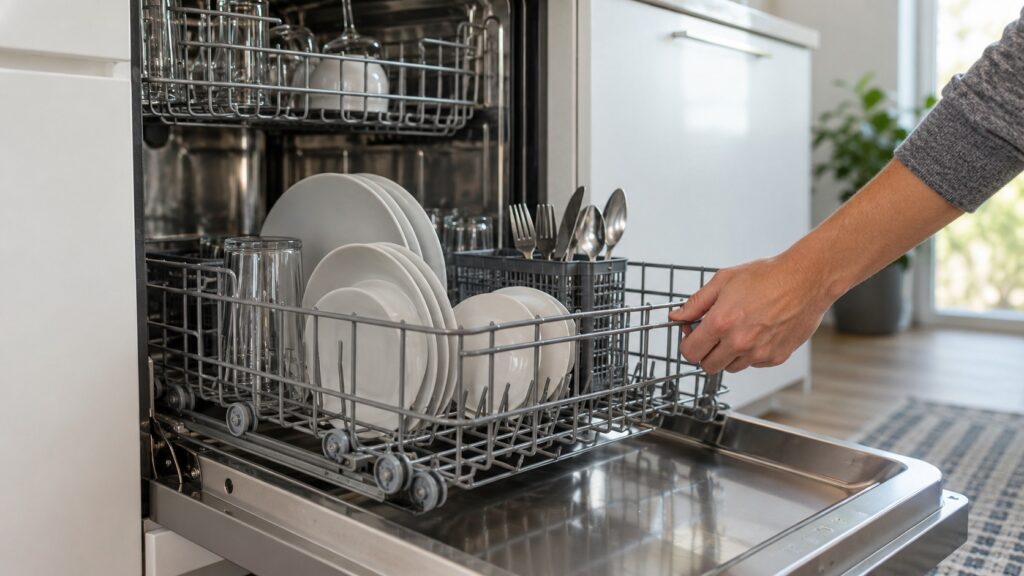
Look at the racks with a real load in mind. Our guide says many XXL Asko models offer an upper rack with adjustable tines and a shallow top tray for utensils. For a Bosch, check the rack layout on the spec sheet of the exact model. Asko’s XXL models carry extra rack depth and tub height, and our guide to Asko XXL loading shows how to use that space. A bigger tub is only useful if the racks let you use it, and a deeper rack can be heavier to pull out when full. Try each in the showroom with a full-size plate and a tall glass. Do not buy a dishwasher on place-setting counts alone, because the counts are measured by each brand’s own method.
Do you need the salt system, and what about leaks?
Asko’s salt compartment is a European design feature for hard water. Whether you need to use it depends on your local water hardness, and our guide to Asko salt and rinse aid explains how to check. Rinse aid is useful in any case. On leak protection, our Aqua Safe guide describes the Asko system on higher tiers: it shuts off the water if it detects water in the base pan. Check what protection the exact Bosch model has on its spec sheet, and ask what the Asko model has, because the answer depends on the tier and model year. No protection system replaces a glance at the door seal and the hose connections now and then.
What should you check on service and installation?
Look at the installation requirements before you look at the colors. Check the cabinet opening, the supply and drain connections and the power, and decide whether you want a panel-ready front, as our panel-ready installation guide explains. Look at the filter and how easy it is to remove, because our filter cleaning routine is the most useful habit on any dishwasher. Ask who services the machine locally and how long parts take, since a dishwasher you cannot get repaired is a poor buy at any price. Our Asko dishwasher maintenance checklist shows what regular care looks like.
How should you test each dishwasher before you commit?
Bring a short list. Open and close each door several times and note how it feels. Pull each rack fully out and push it back. Look at the spray arms and the filter to see how easy they are to remove for cleaning. Check how the controls work and how a fault is shown on the display. Ask for the noise rating of the exact model and for the conditions of the test. Then ask each seller the same question: if this machine needs a part in five years, who fits it and how long does it take? An honest answer to that last question is worth more than any feature on the list.
Should you repair an older dishwasher instead?
If the tub and racks are sound, repair is usually the better course. A part swap is usually far cheaper than a new dishwasher plus installation, and diagnosis tells you what has failed. A technician visit makes sense when the machine will not drain, will not fill or shows a fault code. Our guide to Asko dishwasher error code families explains how to read the display, our repair or replace guide helps you weigh the decision, and our Asko dishwasher repair page explains how a visit works.