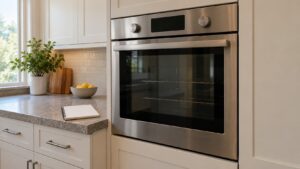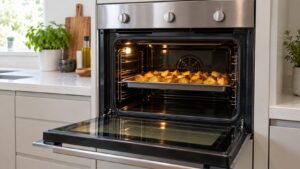
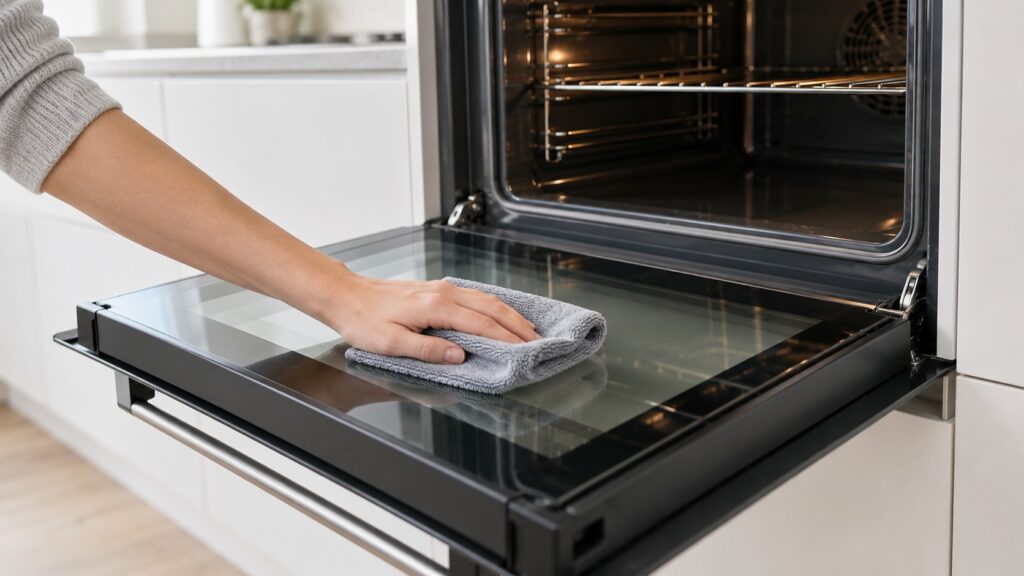
Asko oven door cleaning comes down to a few safe habits: wait until the oven is completely cool and switched off, wipe the glass with a soft cloth and mild soap and water, and treat the door gasket gently, because it is soft and does a job that matters for baking. Do not use abrasive pads, steel wool or caustic oven cleaner on the glass edges or the seal, and do not take the door apart; the glass panels and hinges are a technician’s work.
Why does the inside of an oven door glass get so dirty?
Cooking releases grease and moisture as vapor, and the door glass is the nearest cool surface in the cavity, so the vapor settles there as a film. Over time the film bakes on and turns brown. It is not a fault in the oven, and it usually builds up faster in ovens that roast and fry often than in ones used mainly for baking. A film also makes it harder to see the food, which is why a clean door glass is more than a cosmetic matter.
Steam from the food and splatter from roasting contribute as well, and a door opened often during cooking lets in cool air that makes the vapor condense onto the glass faster. A film that is wiped away while it is still thin comes off with soap and water; one that has been baked on many times is the one that needs patience.
If your oven has a pyrolytic cleaning cycle, that cycle reduces residue on the cavity and the inner glass, but a gentle hand wipe between cycles keeps the film from building up. Our pyrolytic cleaning guide explains what the cycle does and what to remove first.
How do you clean the glass safely?
Start with a completely cool oven that is switched off. Put the door in the open position, making sure nothing can tip it or catch it, and lay a towel below it to catch drips. Wipe the glass with a soft cloth wrung out in warm water with a little mild dish soap. For a stubborn film, lay the damp cloth on the glass for a while so the film softens, then wipe again rather than scrubbing. Dry with a clean, lint-free cloth so no streaks are left.
Avoid abrasive pads, steel wool and anything that can scratch, because scratches on glass catch grease and are very hard to remove. Do not spray cleaner into the door edges or vents, where liquid can run into places it should not. And never apply caustic oven cleaner to a pyrolytic model; the baked residue from a cleaner can damage the enamel at high temperature.
How should you clean the door gasket?
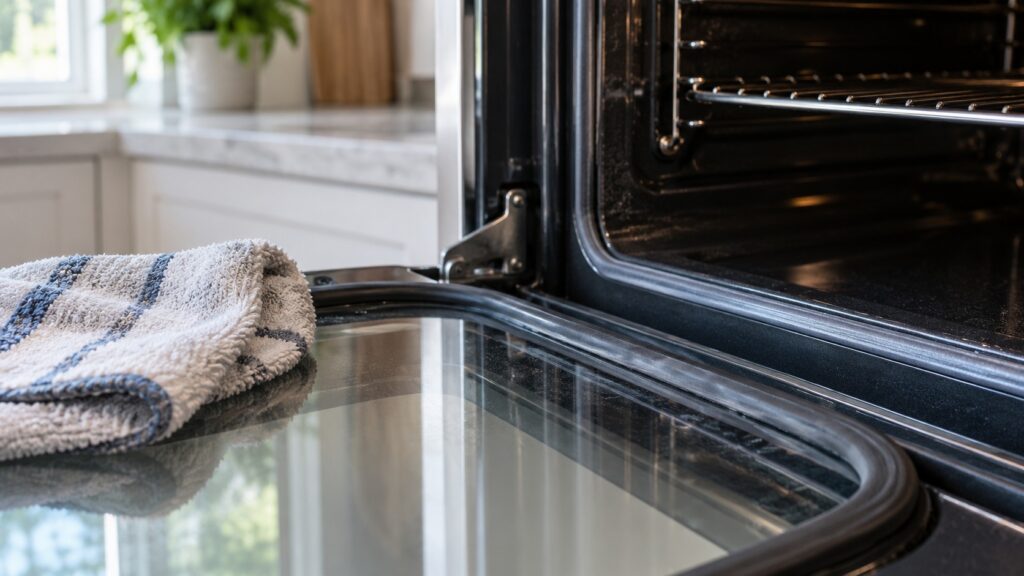
The gasket is the soft seal around the door opening, and it keeps the heat in the cavity. Because it is soft, the only thing it needs is a gentle wipe with a damp cloth to remove spills and grease. Do not scrub it, pick at baked-on spots with a blade or soak it in strong chemicals. A seal that is dirty can hold the door slightly open and let heat escape; a seal that is torn or hardened needs to be replaced.
Our guide to replacing an oven door seal explains the signs of a failing seal and why the correct part is specific to the model. If you are not sure whether the seal is the issue, look at the door closed against a light source in a dim room; light leaking around the edge shows a gap.
What cleaning mistakes do owners make most often?
The first is cleaning a hot oven. A hot door can burn the skin, and cold water on hot glass is a risk to the glass itself, so wait. The second is reaching for the strongest product. Strong cleaners do not make glass cleaner than soap does, but they do damage seals and enamel. The third is forgetting to dry. Water left on the door edges can sit in the hinge area; dry the door before closing it.
Treat the door handle and the control panel next to it with the same care: a slightly damp cloth, never a spray directly onto the panel, because liquid that runs behind the controls can cause faults that are expensive to trace.
The fourth is going further than the visible glass. Some owners see grease between the panes and try to open the door. Do not do that. The inside of the door has its own ventilation path and the panel fixings are not an owner job. A film between the panes is a reason to ask a technician. For general cavity care on freestanding models, our guide on cleaning the oven cavity covers the same safe habits.
When does a dirty or damaged door need a technician?
Call if the glass is cracked or chipped, if the door no longer closes flush, if the gasket is torn, flattened or hard, or if the oven takes longer to heat than it used to. Cracked oven glass is a safety matter: switch the oven off, keep the door closed and leave it alone until it has been looked at. If you smell burning or see smoke, or if there are sparks or water near the controls, switch off the breaker at the panel while standing on a dry floor.
Our Asko oven repair page explains how a visit works.