Asko oven heating modes are different ways of using the same few parts: the upper element, the lower element, a ring-shaped element around a fan, and on some models a steam generator. Each mode turns on a particular combination, so each suits a different job. What each mode is called and exactly how it behaves on your oven is described in the owner’s manual for your model, and this guide gives the general idea so the manual makes sense.
What is the basic idea behind oven heating modes?
An oven is a box with heating elements and, in many models, a fan. A mode simply tells the control which elements to power and whether to run the fan. Because heat moves in different ways in each setup, the same dish can cook differently depending on the mode you pick. Understanding which parts are working makes the symbol on the panel easier to read, and your manual pairs every picture with the mode it stands for.
The elements themselves are not something an owner touches. If a mode stops working, the question for a technician is which element or part is involved, which is why knowing the basic idea helps you describe a symptom clearly.
What does top and bottom heat do?
The traditional mode uses the upper and lower elements without a fan. Heat comes from above and below and moves through the cavity by natural convection, so the air is calmer and there can be differences between racks and between the front and back of the oven. It suits recipes written for a conventional oven, such as cakes and other delicate baking, where a gentle environment is helpful.
Because the heat is uneven by nature, rack position matters more in this mode, and so does using the middle of the oven for most dishes. Check the manual for the rack levels recommended for each type of food.
Preheating matters in every mode. Putting food into an oven that has not reached its target changes the result, especially for baking, so wait for the oven to signal that it is ready rather than guessing.
What do the fan modes do?
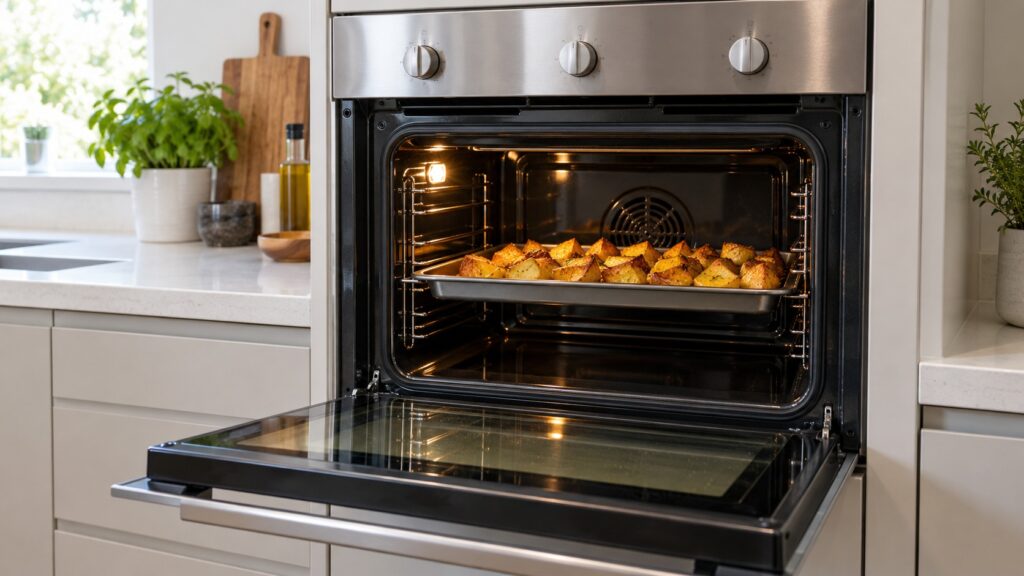
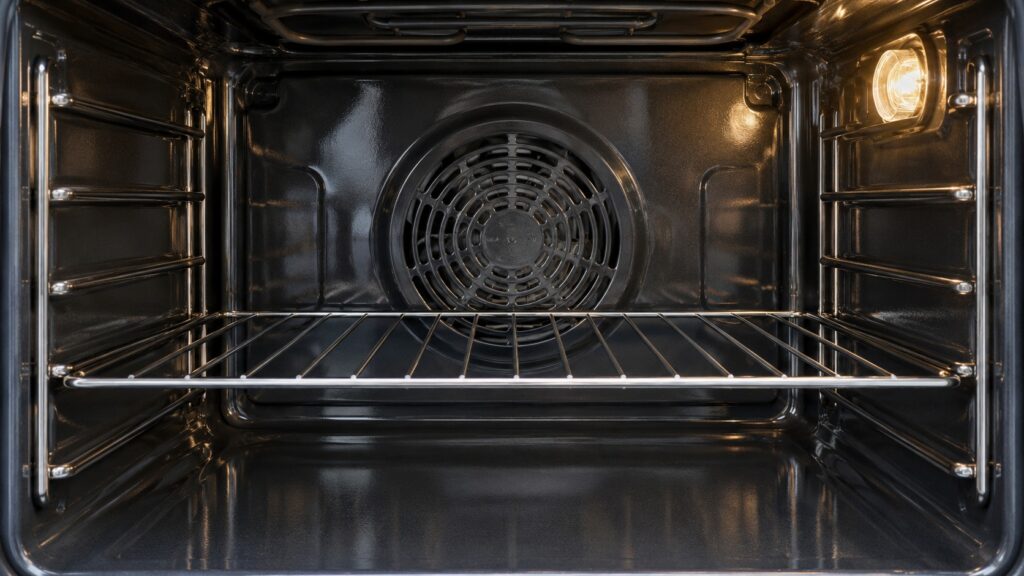
A fan at the back of the cavity, usually with a ring-shaped element around it, moves hot air around the food. That makes the temperature across the cavity more even, which is why you can often cook on more than one rack at a time. Fan modes tend to brown food more evenly and can cook faster than a mode without a fan, so recipe temperatures and times that are written for a conventional oven may need adjusting. Do not guess at the amount; the manual and the recipe you are using should be your guide.
A word on temperature: the number you set is the target for the cavity, and ovens in general cycle their elements on and off to hold it, so the reading on the display is not a constant. A fan mode also spreads the heat more evenly, which is why fan modes can feel as if they are running hotter even at the same number.
After a fan mode, the cooling fan may keep running for a while to protect the electronics. That is normal behavior on many ovens, and our guide on an oven cooling fan that keeps running explains what is normal.
What are the grill and steam modes for?
The grill puts concentrated heat on the top of the food, which browns and crisps it. It is used for finishing a dish, for toasting and for thin cuts, and it asks you to stay close and watch, because the surface can go from golden to burned quickly. Follow the manual for door position and rack height, and keep an eye on any dish that contains fat. If fat or grease catches fire in the oven, keep the door closed, switch the oven off and do not throw water on it; call 911 if the fire does not die down.
Steam modes add moisture to the cavity. A steam-only oven cooks by moist heat, and a combi-steam model combines steam and dry heat, so a roast can start moist and finish brown. These ovens carry a water tank and need the care that comes with it. Our guide to Asko steam and combi-steam ovens explains the types.
How do you find the modes on your own oven?
The manual for your exact model is the authoritative list, and the model number on the rating plate tells you which manual that is. Some lines are covered in our guide to the Asko oven design lines, which explains how the families differ. If you cannot find the manual, send us the model number and we will tell you which family it belongs to.
Check also that the oven is actually doing what the mode implies. If a fan mode does not seem to move air, or the grill does not glow, or the oven takes much longer than it used to, that is not a matter of settings. Stop and ask for a visit; never open the oven’s panels.
When does a heating mode problem need a technician?
Call if a mode that used to work no longer heats, if the oven heats unevenly in every mode, if it trips the breaker, or if there is smoke or a burning smell that does not fade. Our guide on oven temperature calibration covers the case where the oven heats but the temperature is off. If you see sparks or water near the controls, switch off the breaker at the panel while standing on a dry floor and leave the oven alone.
Our Asko oven repair page explains how a visit works.