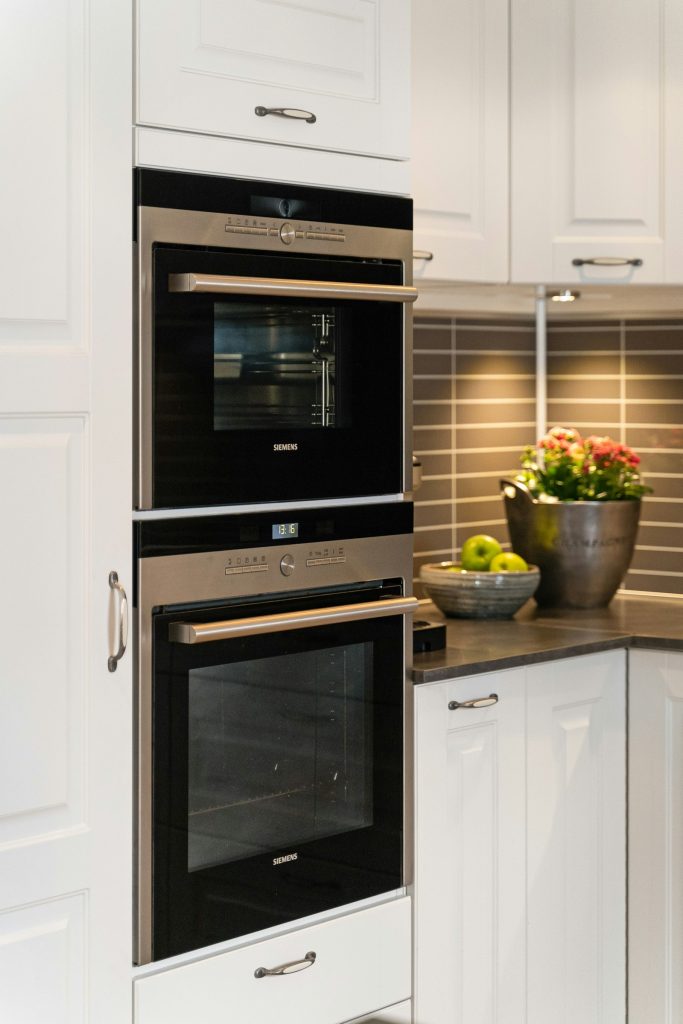
If your Asko wall oven is flashing an Err1, Err2, or a double-digit ErrXX on the display, the honest asko oven error code meaning is uncomfortable: Asko does not tell you. Every owner manual we have been able to check, across six different Asko oven models and several product generations, gives the identical instruction. The display shows an error code, the manual explains that XX denotes the number of the error, and the remedy printed underneath is simply to disconnect the appliance from power for a few minutes, reconnect it, and call a service technician if the code returns. There is no table anywhere in a consumer manual that says Err1 means one thing and Err7 means another.
Why the tidy ERR1-ERR15 tables online are not trustworthy
A number of repair sites, including at least one older Asko-branded fleet site, publish a full ERR1 through ERR15 table plus a separate F85 code, complete with clean one-line meanings like “temperature error” or “door is open.” We looked for the source of that table in six real Asko oven manuals, including OCS8456S, OCM84331BG, OP8651, and OT8636S, and it does not appear in any of them. The wording and structure across the sites that publish it are close enough that one almost certainly copied the other, rather than each independently confirming it against a manual. We are not going to repeat that table as fact, and we would treat any site that presents it without a manual citation with real skepticism.
What the manuals do confirm
Setting aside the meaning of the number itself, the manuals are consistent on two points that matter for troubleshooting. First, a persistent error code almost always points to the electronic control module rather than something a homeowner can reset by pressing buttons in a different order. Second, Asko’s own remedy of a full power cycle is a legitimate first step, not a stall tactic. Cutting power at the breaker for several minutes lets the control board fully reset, which does genuinely clear transient problems caused by a power blip or a stuck relay. If the code comes straight back once the oven is powered up again, that is the manual’s own signal that the problem is real and not a fluke.
What a technician actually checks next
Since the digit itself is not decoded, a useful diagnosis on an Asko oven that keeps throwing an error works from symptoms rather than the code number. A technician will typically check the door switch and door lock mechanism first, since a failed door sensor is one of the most common causes of an electronic problem on a built-in oven. Next comes the temperature sensor, checked with a multimeter against expected resistance at room temperature, since a drifted or open thermistor circuit is exactly the kind of problem an “electronic module” error is designed to catch. The heating element circuit and the main control board connections get checked as well, along with a visual inspection for moisture intrusion around the door seal, which can trip electronic problems on a built-in unit installed in a steamy kitchen.
When it makes sense to call it in
If the error clears after a full power cycle and does not come back, most owners are fine to keep cooking and simply watch for a repeat. If it returns on the next use, or the oven will not heat at all, further self-diagnosis is unlikely to help since the number on the display genuinely is not documented for the public. At that point a technician working from the door, sensor, and control-board checks above can usually narrow the problem down within a single visit. Bring your model, serial, and Art. No. from the rating plate, since Asko parts catalogs are organized by Art. No. rather than model number alone, and that is what will get the correct control board or sensor ordered the first time.
We service Asko wall ovens as an independent, third-party repair company; we are not affiliated with or authorized by Asko. Book a visit through /schedule/, browse other Asko oven error-code guides for the codes that are documented, or see Asko’s own product information at global.asko.com.