A noisy, rumbling, or non-starting motor on an Asko range hood is almost always a repairable fault, not a reason to replace the whole unit — the motor and blower assembly is a distinct, serviceable component from the canopy, ducting, and controls that make up the rest of the hood. The decision to repair or replace should turn on the specific failure and the hood’s overall condition, not on the assumption that a motor problem means the appliance is finished.
What does a noisy or rumbling range hood motor actually mean?
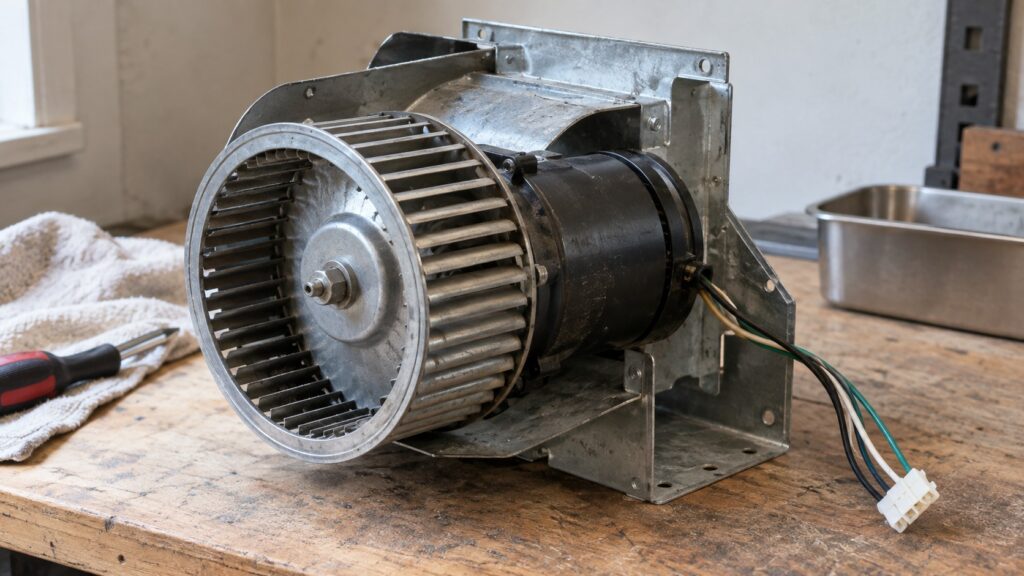
A motor that has become noticeably louder over weeks or months, especially with a rumbling or grinding character rather than a sharp rattle, is most often describing worn bearings inside the motor housing. Bearings wear gradually under normal use, and the noise typically starts subtly and worsens in a predictable curve rather than appearing suddenly. Our symptom guide on a noisy or rumbling range hood motor covers how to tell bearing wear apart from a loose blower wheel or debris caught in the housing, both of which can sound similar but have very different repairs.
A rattling or vibrating noise that comes and goes with fan speed, rather than a steady rumble, points more often at a blower wheel that has come loose on its shaft or has debris lodged in it — a different and usually simpler fix than bearing wear, and one that does not necessarily involve the motor itself failing at all.
What does it mean when the range hood motor will not start?
A motor that will not start, whether silent or with just a faint hum, points at a short list of specific causes: a failed start capacitor, which many motors need to get moving from a stopped position even though they can sometimes run once already spinning; a seized bearing that has progressed from noisy to fully locked; or a broken connection at the wiring harness between the control board and the motor itself. Our blower will not start symptom guide walks through distinguishing these from each other, which matters because a capacitor repair and a seized motor replacement are very different jobs in scope and cost.
A hood that hums continuously without the blower turning at all, rather than staying silent, is a useful diagnostic clue on its own — it usually means power is reaching the motor but something mechanical is preventing rotation, rather than an electrical fault upstream of the motor.
When does it make more sense to repair the motor than replace the hood?
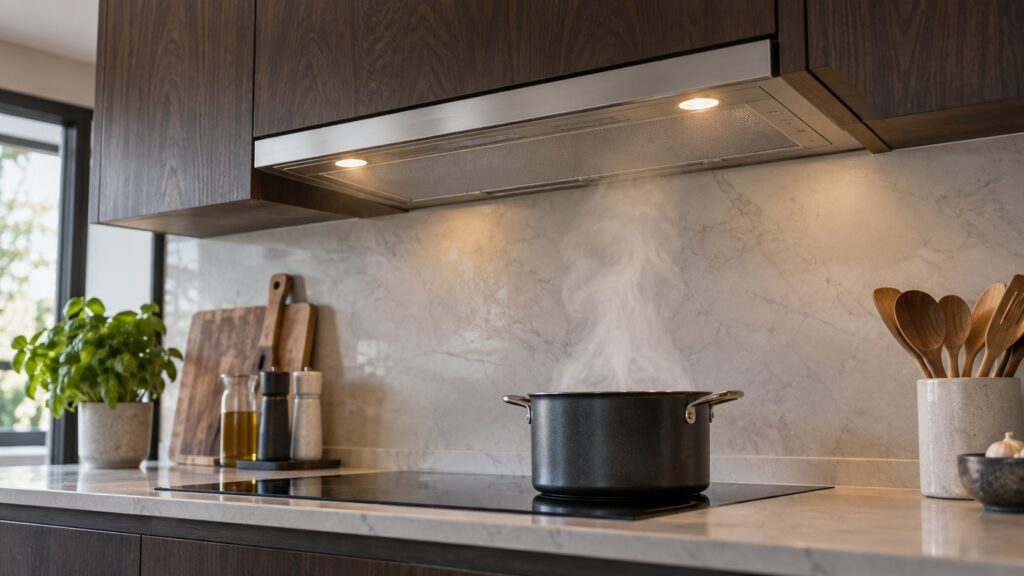
Repair is the stronger option when the fault is isolated to the motor and blower assembly and the rest of the hood — the canopy, the lighting, the control board, and the ducting or recirculation path — is in good working order. A motor and blower assembly is a well-defined, serviceable component on most Asko range hoods, and replacing just that assembly typically costs a fraction of a full hood replacement while restoring the unit to full function. This is especially true for concealed or slide-out hood designs, where the mechanism around the motor is often independent of the motor’s own condition.
Repair also makes sense simply because a motor fault, even a seized one, does not tell you anything negative about the rest of the hood. A unit that has run reliably for years with a single motor failure is a strong repair candidate, not a weak one — the failure is normal wear on one component, not a sign the whole appliance is declining.
When is replacing the whole range hood the better decision?
Replacement becomes the more sensible option when a motor failure coincides with other aging components — a control board that has also started acting unreliably, lighting that fails independently and repeatedly, or a canopy with damage from years of grease exposure that cleaning has stopped fully addressing. Fixing the motor alone on a hood already showing multiple unrelated issues often means paying for a repair now and facing a second repair on a different component soon after.
Replacement is also worth considering if the current hood’s ducted or recirculating configuration no longer suits the kitchen — our ducted versus recirculating guide covers that decision separately — since a motor failure is a natural point to reconsider the whole setup rather than simply restoring what was there before.
What should I check before deciding between repair and replace?
- Confirm the fault is actually the motor and not the control board sending it an incorrect signal — a technician’s diagnosis distinguishes these before any part is ordered.
- Check the age and condition of the rest of the hood. A motor fault on an otherwise sound unit repairs cleanly; a motor fault alongside other symptoms is a different calculation.
- Ask for the repair estimate before assuming replacement is cheaper. A motor and blower assembly replacement is very often the lower-cost path even against the inconvenience of ordering a part.
- Consider ducting and clearance requirements if replacement is on the table — a new hood may need different duct sizing than the current installation provides.
Stop before removing the motor housing yourself. It sits on wiring carrying household voltage and, on ducted models, is positioned close to the duct connection where grease residue accumulates — both are reasons to have a technician confirm the fault before any part is disturbed.
How much does an Asko range hood motor repair typically cost?
Motor and blower repairs start from a diagnostic visit fee, with the total depending on the specific motor type and whether the blower wheel or wiring also needs attention. We are an independent repair company, not a factory service arm, and we always confirm the estimate before any work begins rather than quoting a flat number sight unseen. Book Asko range hood repair or schedule a visit with the noise or no-start symptom described, and we will tell you plainly whether repair or replacement is the better move for your specific hood.
An honest asko range hood motor repair or replace assessment starts with confirming the fault is isolated to the motor before any part is ordered.