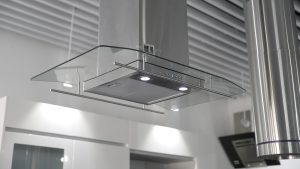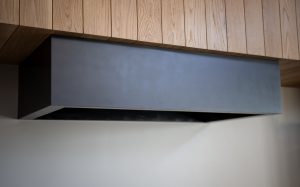
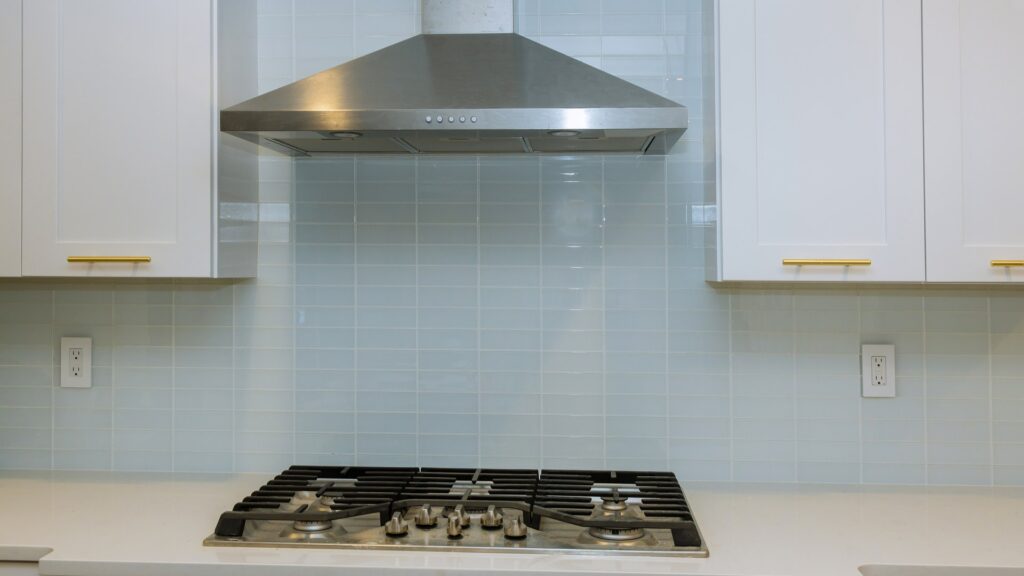
Asko range hood tips almost always come down to timing rather than power. A hood removes cooking vapor by capturing it while it is still rising in a column; once that column has spread across the ceiling, no speed setting brings it back. Running the right speed at the right moment removes more smoke and grease than running the highest speed at the wrong one, and it does it without the noise that makes people stop using the hood at all.
The timing that does the work
Vapor and grease leave a pan in a rising plume. A hood works by intercepting that plume inside its capture area. Two habits decide whether it can.
Switch on first. A hood running before the pan heats establishes an upward airflow that the plume joins. Switched on after a pan has already filled the room, it is trying to reclaim vapor that has spread sideways, and that is a much harder task at any speed.
Leave it running. Cooking does not stop producing vapor when the heat goes off. A hot pan, a hot cooktop and a hot oven door keep releasing for ten minutes or more, and that late vapor is the greasiest — it is what settles on cabinet doors. Models with a run-on timer exist precisely for this; if yours has one, use it rather than remembering.
Speed, and why highest is usually wrong
Most cooking is captured on the middle settings. Reserve the top speed and boost for what actually needs it: searing, wok cooking, anything smoking, and the first minutes of frying.
The argument against leaving a hood on boost is not only noise. A high-extraction hood removes heated air from the house at a rate that a sealed modern building cannot replace passively. The result is negative pressure — doors that pull shut, a whistle at a window seal, and in the worst case a fuel-burning appliance somewhere else in the house having its draft disturbed. Our guide on ducted versus recirculating hoods covers where this matters most.
There is also a simple noise economy at work: a hood that is quiet gets used, and a hood that gets used at speed two for the whole meal beats one that gets switched to boost for ninety seconds because it is unbearable otherwise.
Position matters more than power
Use the rear burners for anything that smokes or splatters. The capture area of almost every hood is biased toward the back, and a pan at the front of the cooktop sends its plume up the outside of that area and into the room. This one change does more than any setting.
Two related points. Keep a lid nearby: a partly covered pan of stock or sauce releases a fraction of the vapor and lets the hood stay on a low speed. And do not extend the plume unnecessarily — a tall stockpot puts its opening closer to the filters, which is good, while a wide shallow pan spreads vapor sideways before it can rise, which is not.
Filters, which decide how much of this works
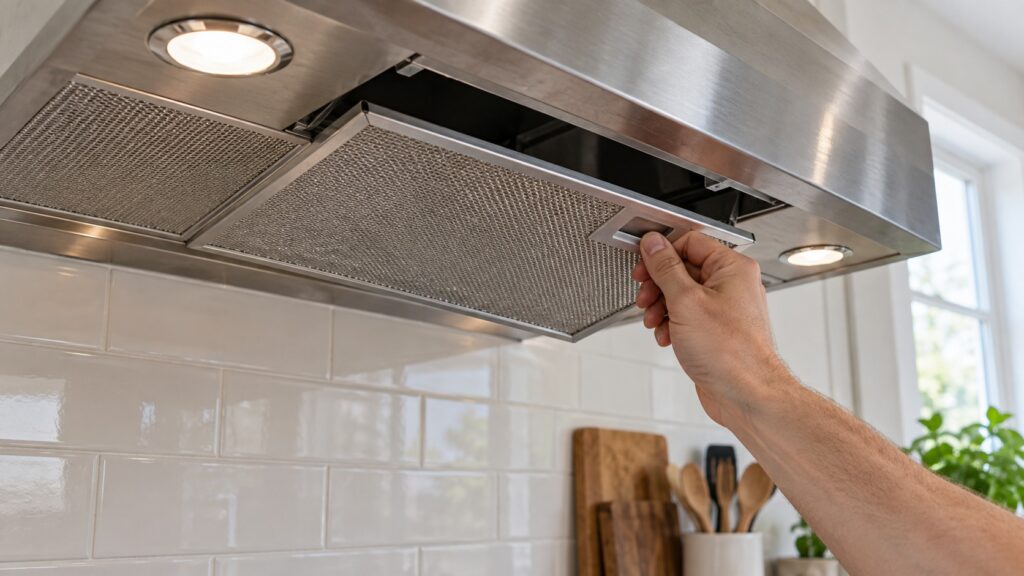
Every tip above assumes air can get through the filters. Grease filters saturate gradually and their loading is invisible from below — the hood does not get noticeably louder and nothing warns you. A saturated filter halves what the hood can move and starts dripping onto the cooktop, which is the point at which most people notice.
A monthly dishwasher cycle for metal mesh filters is the standard advice and it is right for a household that cooks most days. Our filter cleaning schedule has the detail, including what to do about the discoloration that a dishwasher leaves on aluminum mesh.
On a recirculating installation there is a second filter — charcoal — that cannot be washed and does not announce its own exhaustion either. When a recirculating hood stops controlling odor while still moving air normally, that filter is the answer, and it is a consumable with a life measured in months.
Recirculating hoods, and a fair expectation
An island or an apartment installation often cannot be ducted outside, and the hood recirculates: air passes through grease filters, then charcoal, then back into the room. It removes grease and a good part of the odor. It does not remove heat, and it does not remove moisture.
That changes how it should be used. Run it longer rather than harder, because the filters work on contact time. Expect the kitchen to stay warm while you cook, and open a window for the steam of a big pasta pot rather than reaching for boost. And treat the charcoal as a scheduled cost, the way you treat a water filter — a recirculating hood with exhausted charcoal is a fan, and it will still sound exactly like a working hood.
Habits that quietly help
- Wipe the canopy while it is warm. Grease that has cooled and hardened needs a solvent; the same film wipes off with warm water minutes after cooking.
- Do not block the perimeter slot on a slide-out or perimeter-extraction hood with a cloth or a utensil rail. That narrow gap is doing the capture.
- Check the lights. Cooking under a dim cooktop leads to more scorching, which produces more of what the hood has to remove.
- Listen for change. A hood that develops a rumble or a vibration is telling you about a bearing or an unbalanced impeller months before it stops, as our guide to hood noise causes describes.
When to call
Call when the hood no longer clears steam with clean filters, when the motor is noisy or vibrates, when grease drips from the canopy, when controls stop responding, or when a new hood in a tight house is producing back-draft symptoms elsewhere.
We are an independent repair company and not a factory service arm. Pricing starts from a diagnostic visit and we confirm the estimate before any work begins. Asko range hood repair covers motors, controls, lighting and ducting, and you can schedule a visit online.