
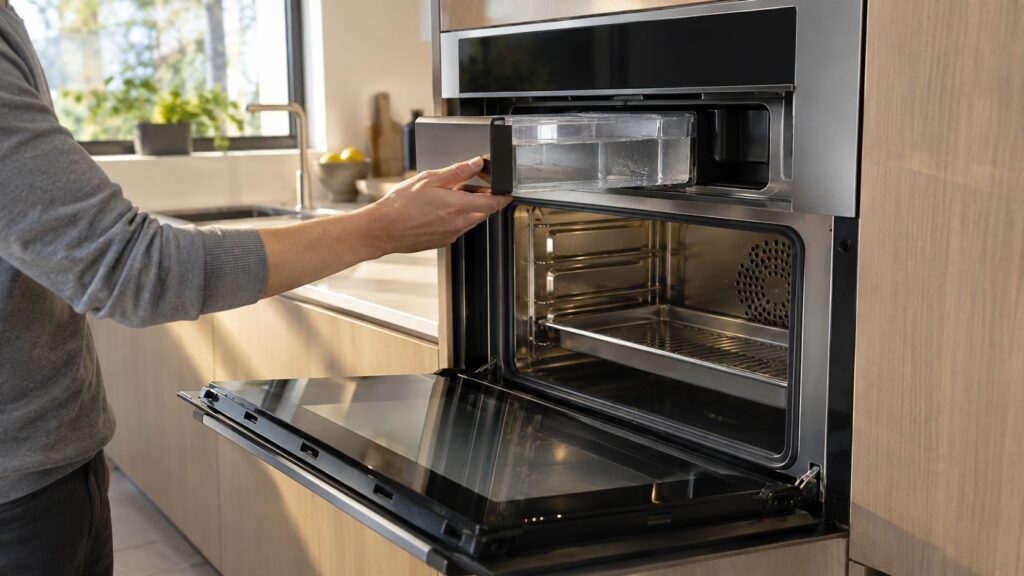
An Asko steam oven’s water tank is the one part of the appliance an owner has to maintain directly, and skipping that maintenance is the single most common reason a steam function stops working or the oven refuses to recognize the tank at all. The tank itself is a removable reservoir, not a plumbed connection, which means it depends entirely on the water quality and cleaning routine the owner gives it.
How often should I clean an Asko steam oven’s water tank?
The tank should be emptied and wiped dry after every session that uses steam, not left to sit with standing water between uses. Standing water in a warm reservoir is exactly the environment that encourages both mineral deposit buildup and, in humid conditions, mold or a musty smell inside the tank. A quick rinse and dry takes under a minute and prevents most of the buildup that eventually causes recognition or steam-generation problems weeks or months later.
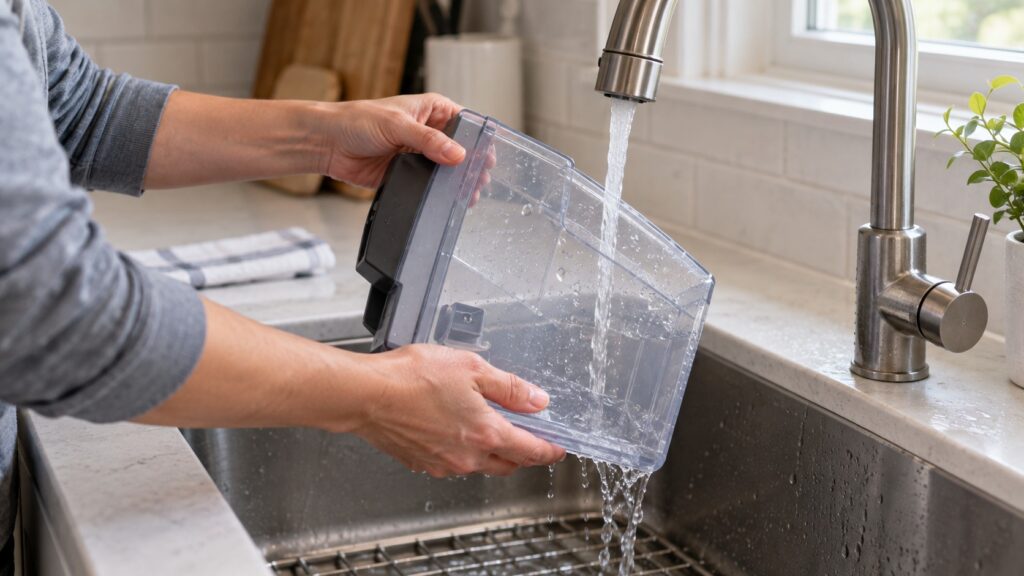
Beyond the after-use rinse, a deeper clean — removing the tank fully, washing it with a mild detergent, and rinsing thoroughly — is worth doing on a weekly basis for a household using the steam function several times a week, and less often for occasional use. The oven’s own manual and, on many models, an on-screen reminder will specify a descaling interval separate from this routine rinse, and that interval matters more in hard-water areas than the manual’s generic default suggests.
Does the type of water I use in the tank actually matter?
Yes, more than most owners expect. Tap water carries dissolved minerals — calcium and magnesium primarily — that stay behind as scale when the water evaporates during steaming. In a steam oven, that scale does not just coat the tank; it can build up in the steam generator and the pathway that delivers steam into the oven cavity, which is a much less accessible place to clean than the removable tank itself. Using filtered or distilled water, particularly in areas with hard water, slows that buildup dramatically and extends the interval between descaling cycles.
Filtered or distilled water is not a substitute for descaling altogether, since even low-mineral water leaves some residue over enough cycles, but it meaningfully reduces how often the full descaling procedure needs to run and lowers the chance of a scale-related fault appearing between scheduled maintenance.
What causes an Asko steam oven to say the water tank is not recognized?
A tank that seats incorrectly is the most common cause, and it is worth checking before assuming a sensor has failed. The tank connects to the oven through a fitting that has to align precisely when the tank slides back into place; a tank that is even slightly crooked, or that has a small amount of debris or scale buildup around the connection point, can fail to register even though it is physically in the oven. Removing the tank fully, wiping the connection point on both the tank and the oven cavity, and reseating it carefully resolves this more often than a genuine sensor fault does.
If the tank seats correctly and cleanly and the oven still does not recognize it, the sensor or the connector itself may be the actual problem — see our symptom guide on the water tank not recognized for what a technician checks next.
Why does my steam oven not generate steam even though the tank is full?
A full tank that is correctly seated but still produces no steam usually points at the steam generator itself rather than the tank or the water level. Scale buildup inside the generator — the component that actually heats water into steam before it enters the cavity — restricts flow and reduces heat transfer over time, and this is the exact failure mode that a consistent descaling routine is meant to prevent. A generator that has gone a long time without descaling in a hard-water area is the most likely candidate when the tank itself checks out fine.
Our symptom guide on a steam oven not generating steam covers the full range of causes beyond scale, including a case where the tank is full but not drawing correctly. For the mechanics of how the steam and combi-steam functions generate and deliver steam in the first place, see our steam and combi-steam ovens explained guide.
Does a combi-steam oven need a different routine than a pure steam oven?
The tank itself is cared for the same way on both, but a combi-steam oven — one that runs steam alongside a conventional or convection heat source — puts the tank and generator to work more often across a typical week, since owners tend to reach for the combi function for everyday roasting and baking, not just dedicated steam sessions. More frequent use means the emptying-and-drying habit and the descaling interval both matter sooner than the manual’s default schedule might suggest for a household that only steams vegetables occasionally.
Watch for the same warning signs on either type: a longer-than-usual wait before steam appears, a faint mineral smell from the vents during a cycle, or visible white residue around the tank opening. Any of those is a sign to move up the next descaling cycle rather than wait for the on-screen reminder, which is set to a generic interval and does not account for how hard the local water actually is.
What is the safest routine for keeping the tank and steam system working?
- Empty and dry the tank after every steam session. This single habit prevents more buildup than any other single step.
- Use filtered or distilled water in hard-water areas, especially for anyone using the steam function several times a week.
- Follow the descaling interval in the manual or the on-screen prompt, and do not extend it indefinitely just because the oven still seems to work.
- Reseat a tank fully and check the connection point before assuming a “not recognized” message means a hardware failure.
- Never use descaling solutions not intended for food-contact appliances. A steam oven’s tank and generator eventually contact the food compartment, and the wrong chemical is a real health and safety concern, not just a cleaning shortcut.
We are an independent repair company, not a factory service arm, and we service both the tank connection and the steam generator when routine cleaning and descaling do not resolve a recognition or steam-generation problem. Book Asko oven repair or schedule a visit if the steam function has stopped working despite a clean, correctly seated tank.
Consistent asko steam oven water tank care is what keeps both the tank and the generator behind it working reliably between service visits.