Asko microwaves: series and lineup
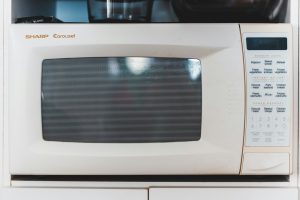
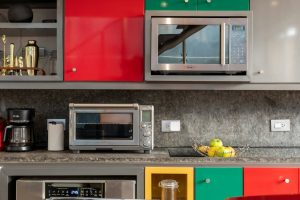
There is a fact worth stating plainly before anything else: Asko has never made a countertop or over-the-range microwave, in the US or anywhere else. The microwave function exists only inside built-in cabinetry, across three product lines — OM for a microwave-only cavity, OCM for a combi unit that adds convection heating to the microwave function, and OCSM for a five-in-one unit that layers in steam cooking as well. The units we actually see in service calls are OCM-prefixed, including OCM64BSH, OCM64GSH, OCM24BGH, and OCM8478GG, all sold in Australia and the UK rather than through us.asko.com. A US kitchen with one of these got it through an Asko-spec’d European build or an import, not a current US retail listing, and asko microwaves repair for us always starts by confirming which of the three built-in families is actually installed.
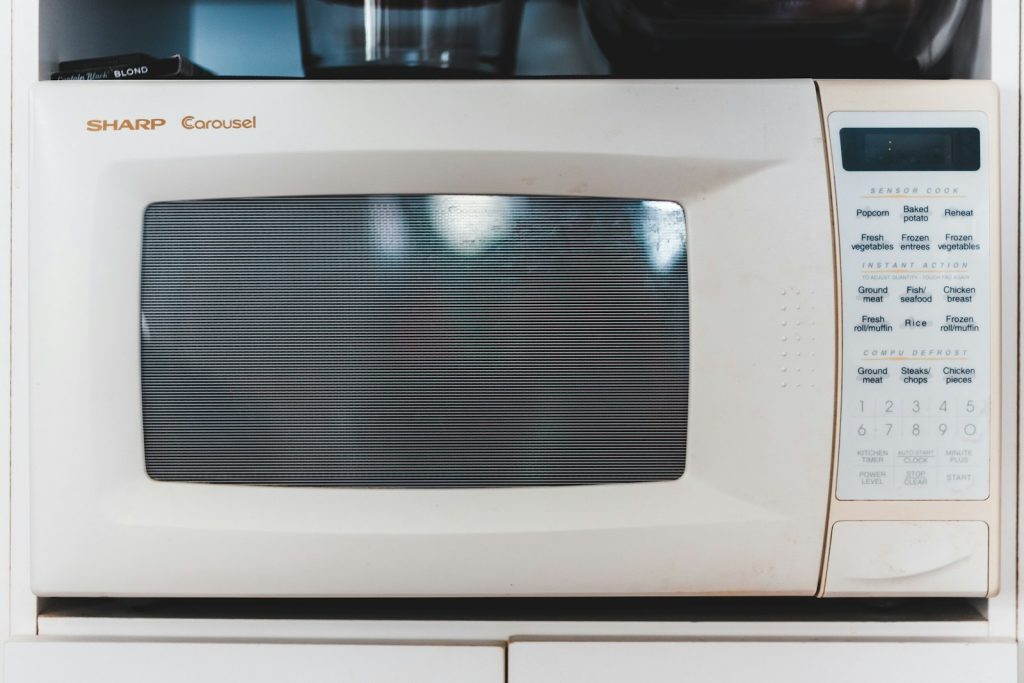
Because none of the three families were ever routed through a US retail storefront, most of the units we see arrived alongside a full Asko kitchen suite — an oven, a cooktop, and the combi microwave specified together as a matching set by a designer or an owner replicating a kitchen from a previous home. That context is useful on a service call, since it often means the same household also has an Asko oven or dishwasher installed nearby, and confirming the full suite helps rule out a shared circuit or installation issue before assuming the microwave itself has failed.
Technologies and features
An OCM combi unit runs a magnetron alongside a convection fan and heating element in the same cavity, letting it brown and crisp food the way a plain microwave cannot, while switching down to microwave-only mode when speed matters more than texture. Cavity capacity on the models we service runs around 50 liters, with either a single wire shelf guide or partially extendable telescopic guides depending on the specific SKU. Because the microwave and convection systems share one control board and one door, a problem in either function is diagnosed with the whole unit in mind rather than treating the microwave side as separate hardware. The door itself carries multiple interlock switches that must all register closed before either the microwave or convection element is allowed to energize, a safety design shared across nearly every built-in combi oven regardless of brand.
Common issues and maintenance
Asko’s own manuals for this category are consistent and blunt: the display shows a generic ERROR XX, the manual instructs disconnecting power for a few minutes and reconnecting, and if the problem returns the manual says to call a technician without ever explaining what the specific number means. We do not publish a decoded meaning for these codes because Asko itself has not published one, and a table you may find elsewhere claiming to decode ERROR 1 through ERROR 15 does not match any manual we could verify — we treat it as unsupported and will not repeat it as fact. Instead, common complaints are diagnosed directly: food that is not heating points to a failed magnetron or a door interlock switch not registering as closed; a turntable that has stopped rotating is almost always its own small drive motor; and sparking inside the cavity is checked immediately, since it usually means a worn waveguide cover or metal debris rather than a magnetron failure. Uneven cooking in combi mode, where one side of a dish browns while the other stays pale, often points to a convection fan that has slowed rather than the magnetron, since the fan is what distributes hot air evenly around the cavity. A steamed-up or fogged door glass during a combi cycle is normal and clears once the cavity cools, but if it persists well after a cycle ends, the door seal is worth checking for a gap that is letting moisture linger. A control panel that has gone completely unresponsive, rather than simply showing an error, is checked at the low-voltage keypad ribbon and its connector first, since a partially seated connection there is a far more common cause than a failed main board.
Because the OM, OCM, and OCSM cavities are built into cabinetry rather than freestanding, removing the unit for bench diagnosis is often impractical, so most troubleshooting on a service call happens in place, with the technician working through the door, latch, and accessible control-board connections before pulling the unit from its housing. That in-place approach also means confirming the cabinet cutout still matches the original installation before ordering any replacement part, since an older built-in opening can differ slightly from what a current-generation combi unit expects.
When to call for repair
A magnetron that has failed, a door interlock switch that will not register closed, or a convection element that has stopped heating in combi mode are best diagnosed by experienced technicians who work through the real symptoms rather than an unverified code table. As an independent, third-party repair service, we carry no affiliation with, authorization from, or endorsement by Asko Appliances, Gorenje, or Hisense, and every repair visit is backed by a 30-day labor warranty covering the workmanship. Schedule Asko microwave repair or book an appointment online, and you can review Asko’s current built-in oven and combi lineup at global.asko.com.