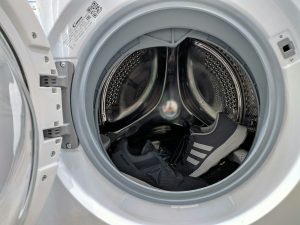

Even a washer built with Steel Seal’s reduced-moisture door design can develop odor if the drum and dispenser are not cleaned periodically. Asko washer drum cleaning is not a deep, difficult job — it is a short monthly routine that targets the three areas where residue actually accumulates: the drum interior, the detergent dispenser, and the door seal.
Running an empty maintenance cycle
Once a month, run an empty cycle — no laundry — using the hottest water setting your washer offers, with either a washer-cleaning product designed for this purpose or a cup of white vinegar added directly to the drum. This clears detergent film, fabric softener residue, and any biofilm that has started to build up on the drum walls and drain path, none of which a normal laundry cycle at typical temperatures fully removes on its own.
Cleaning the detergent dispenser drawer
Pull the detergent dispenser drawer out fully — most slide out with a firm pull once you release any locking tab — and rinse it under running water, using a small brush to clear compacted detergent or fabric softener residue from the compartment corners. Residue here is a common, overlooked source of musty smell that owners often mistake for a drum or seal problem.
Wiping the door seal after every cycle
Even with Steel Seal’s reduced-moisture design, a quick wipe of the door seal area after each wash prevents residue from accumulating over time. Leave the door cracked open between washes rather than closing it immediately, allowing the drum and seal area to air out and dry fully before the next load goes in.
Checking behind the drum where visible cleaning cannot reach
Some odor sources sit beyond what a routine wipe-down or empty cycle addresses — mineral deposits or biofilm building up in areas behind the drum where water routes during fill and drain. If odor persists despite consistent monthly maintenance, this less accessible buildup is a likely cause, and it typically needs a technician to access and clear properly rather than a home remedy.
When odor points to something beyond routine cleaning
Persistent musty smell despite a consistent asko washer drum cleaning routine can point to a drain path issue, a failing seal despite Steel Seal’s design, or standing water somewhere in the system that routine cleaning cannot reach. Check our drain filter cleaning guide first, since a clogged filter is a common contributor to trapped moisture. If odor continues, our washer repair service can diagnose further, and you can book a visit directly.
How often professional-level asko washer drum cleaning is worth scheduling
Most households can maintain good results with the monthly empty-cycle routine described above, but if odor or visible residue persists despite consistent home maintenance, a professional deep clean addressing areas beyond routine home access — including behind-drum water paths — is worth scheduling periodically, particularly for washers more than a few years old that have never had this done. You can review Asko’s own care recommendations on its washer support pages for guidance on maintenance intervals specific to your model. Treat a persistent, unresolved odor as a signal rather than something to mask with stronger detergent or extra fabric softener, since masking the smell without addressing its source generally means it returns within a wash cycle or two.
Signs your asko washer drum cleaning routine needs adjusting
If odor returns noticeably faster after a maintenance cycle than it used to — within days rather than weeks — that shift is worth paying attention to, since it can indicate a developing drain-path issue rather than routine residue buildup that a monthly cycle would normally handle. Track roughly how long a maintenance cycle’s benefit lasts, and treat a shortening interval as a signal to look deeper rather than simply running maintenance cycles more frequently to compensate.
If your household includes anyone with sensitivities to fragrance, choose an unscented washer-cleaning product for the monthly maintenance cycle, since a heavily fragranced cleaner can leave its own lingering scent that some household members may find just as unwelcome as the odor it replaced.
Keep track of roughly which month you last ran a maintenance cycle, either with a simple note or a recurring phone reminder, since a habit performed only “whenever it crosses your mind” tends to slip during busy stretches far more than a habit tied to a specific reminder.