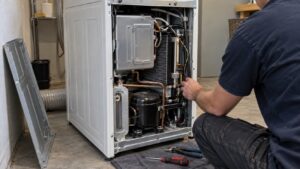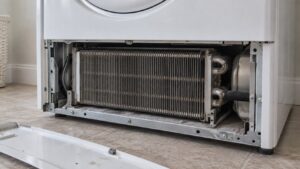

Asko’s US dryer lineup is entirely condenser-based technology, split between standard condenser models and asko dryer heat pump types, with no exhaust-vented option in the current US catalog. Understanding the difference between the two condenser approaches — standard versus heat-pump — helps you choose the right one, or understand why the dryer you already own behaves the way it does.
How a standard condenser dryer works
A standard condenser dryer, like the T208C or T208V in the Classic/3-series tier, heats air with a conventional electric heating element, passes it through the drum to remove moisture from the laundry, then cools and condenses that moist air internally rather than exhausting it outdoors. The condensed water either collects in a removable reservoir or drains directly, depending on the installation. This approach runs at higher temperatures for a shorter cycle time than a heat-pump equivalent.
How asko dryer heat pump types differ
Models like the T411VD, T5HXLT, T5HXLG, T5HXLW, and T7HXLW use a refrigerant-based heat pump instead of a conventional heating element. The heat pump extracts heat from the exhaust air and recycles it back into the intake air, dramatically reducing the energy needed to maintain drying temperature compared with heating air from scratch on every pass. The tradeoff is a longer cycle time, since heat-pump drying runs at lower temperatures by design.
Energy use and cost of operation
Heat-pump technology is significantly more energy efficient than a conventional heating element over the life of the dryer, which shows up as a real difference in electricity use for households running frequent loads. The extra upfront cost of a heat-pump model, and the longer per-load cycle time, are the tradeoffs against that lower running cost — whether that tradeoff makes sense depends on how often you run the dryer and how much you value shorter cycle times against lower energy bills.
Fabric care differences
The lower operating temperature of a heat-pump cycle is gentler on fabric over time than the higher heat of a standard condenser cycle, which matters more for households doing frequent loads of delicate or synthetic fabrics that are prone to heat damage. If fabric longevity matters more to you than cycle speed, a heat-pump model’s lower-temperature operation is a genuine, ongoing benefit rather than just a marketing distinction.
Choosing between the two for your household
If cycle speed matters most — a busy household running multiple loads back-to-back — a standard condenser model’s shorter cycle time may suit better despite higher energy use per load. If energy cost and fabric gentleness matter more, a heat-pump model is the better long-term fit despite the longer wait per load. Our model pages list which tier each unit belongs to, and if you are deciding between a repair on an aging condenser unit versus upgrading to heat-pump technology, our dryer repair service can help you weigh that decision — reachable through our scheduling page.
Comparing specific asko dryer heat pump types side by side
If you are choosing between specific heat-pump models within the lineup — the T411VD, T5HXLT, T5HXLG, T5HXLW, or T7HXLW — compare their individual program counts and capacity ratings directly on Asko’s dryer pages, since heat-pump technology is common across all of them but capacity and program flexibility still vary by tier. A larger-capacity heat-pump model suits a household doing fewer, larger loads, while a smaller-capacity model paired with more frequent, smaller loads can sometimes offset some of the longer per-load cycle time in practice. There is no universally correct choice between condenser and heat-pump technology — the right fit depends entirely on how your household actually uses the dryer week to week.
If you are replacing an aging standard condenser dryer and cycle speed has never been a real complaint in your household, a heat-pump upgrade is worth serious consideration purely on the strength of its long-term energy savings and gentler fabric treatment.
For households genuinely torn between the two technologies, running a standard condenser model for a year or two before eventually upgrading to heat-pump technology on the next replacement cycle is a perfectly reasonable way to make the decision with real usage data in hand rather than guessing upfront.
Whichever technology you choose, the underlying maintenance habits described throughout this site — lint filter and condenser upkeep especially — matter just as much to long-term reliability as the initial choice between the two.