
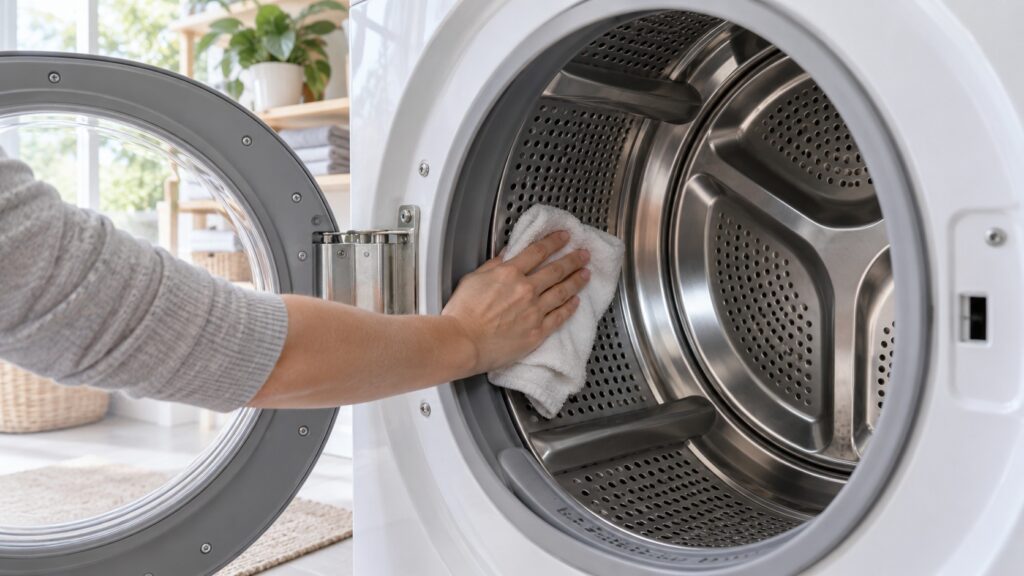
Asko dryer drum cleaning is a short, safe job: with the dryer cool and switched off, wipe the drum, the door opening and the door seal with a damp cloth, take any residue from fabric softener and dryer sheets off the surfaces, and wipe any sensing surfaces you can see inside the drum. Keep the lint filter clean, use no abrasives and never open the cabinet. A dirty drum causes more than a look: it can stain clothes, leave odor and interfere with an automatic program that depends on sensing how dry the laundry is.
Why does a dryer drum get dirty?
Lint is the obvious dirt, but the layer that causes trouble is the thin film you cannot see. Fabric softener, dryer sheets and detergent left in the laundry are carried onto the drum by the warm air and stay there as the dryer cools. Over many loads the film builds up, and it can transfer to clothes as stains or a waxy feel. Pens, crayons and lip balm left in a pocket are another cause of marks that appear on the next load.
A film on the drum is not the same as a film on the sensing surface, but the cause is the same, and both reduce accuracy. Our guide on Asko dryer cycle duration explains why programs vary in length, and a clean sensing surface is part of keeping them predictable.
How do you clean the drum safely?
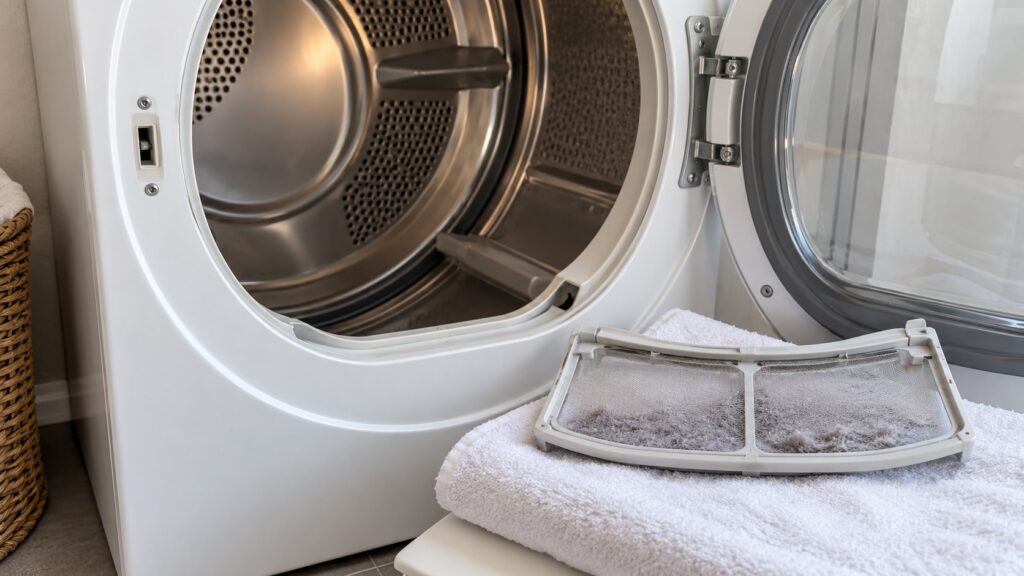
Wait until the dryer is completely cool and switch it off; if the dryer is plugged in somewhere you can reach, you may also unplug it. Open the door and take out the lint filter, then wipe the drum with a cloth wrung out in warm water with a little mild soap. For a sticky residue, leave the damp cloth on the spot for a short time so it softens, and then wipe it away rather than scrubbing. Follow with a clean damp cloth to remove the soap and finish with a dry cloth.
Do not use abrasive pads, steel wool, solvents or anything strong, because they can damage the finish and leave residue that is then heated in the next cycle. Never spray water into the dryer, and do not hose it. If a mark is a wax or a crayon, remove as much as you can by hand with a soft cloth and warm soapy water, and do not run a load until the drum is clean so that the mark is not transferred to clothes.
A good test after cleaning is a small load of light-colored, clean cloths. If they come out marked, residue is still in the drum, and it is better to find out with a rag than with a favorite shirt.
What about the sensors and the door seal?
Some dryers have visible metal strips or a small sensing surface on the drum’s face, and automatic programs use them to judge how dry the load is. If you can see them, wipe them with the same damp cloth, let them dry, and do not scratch them. If you cannot see them, do not look for them behind panels; their position depends on the model and the platform, and your manual is the place to look. Our guide on Asko dryer platform identification explains how to find which platform your dryer uses.
If the display shows a dryness message or a code that you cannot explain after cleaning, write it down exactly rather than guessing, since the meaning depends on the platform.
The door opening and the seal collect lint and residue as well. Wipe the seal and the glass, check that nothing is caught under the seal, and look for tears. Lint on the seal can stop the door from closing properly, and a door that does not close can stop a cycle. Our page on a dryer door that will not stay shut covers that symptom.
How does drum cleaning fit with the rest of the routine?
The drum is the easy part of dryer care. The filters are the part that matters most: the lint filter every load, and the condenser or heat pump filters as your manual describes. Our guides on the lint filter routine and condenser filter cleaning go through them. Empty the water container as well, unless your dryer drains to a pipe.
A sensible pattern is a quick wipe of the drum and the door area whenever you clean the filters, and a fuller clean when you notice residue, a smell or stains on clothes. Use less fabric softener and fewer dryer sheets, since both are the main source of the film.
If you hang laundry that has been treated with a lot of softener, you will also notice that it feels slick. That feeling is the same residue, and it is a good reason to use a smaller measure.
When does a dirty dryer need a technician?
Call if the dryer smells of burning, if clothes are scorched, if the drum does not turn freely, if a message returns after cleaning, or if clothes still come out damp with clean filters. Do not take the cabinet apart; a dryer holds live electrical parts and, on heat pump models, a sealed refrigerant circuit. If you see smoke, stop the dryer and switch off the breaker at the panel while standing on a dry floor. Our Asko dryer repair page explains how a visit works.