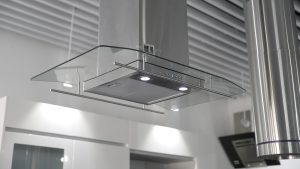

The asko concealed slide out hood mechanism is what lets Asko’s CBB-prefix hoods, such as CBB862W and CBB861S, sit completely hidden inside overhead cabinetry until they are needed, rather than hanging visibly over the cooktop the way a wall-mounted hood like the CW4934S does. This is a genuine design tradeoff worth understanding, since a concealed hood’s mechanism adds moving parts and complexity that a fixed wall-mounted hood simply does not have.
How the concealed mechanism operates
A concealed or built-under hood is mounted within the cabinet structure above the cooktop, with its control panel and, on many models, a portion of the intake housing designed to extend, slide forward, or tilt down when activated, increasing the effective capture area over the cooktop before retracting flush with the cabinetry when switched off. This slide-out action is typically driven by a motorized mechanism separate from the main fan motor, meaning a hood can have a perfectly healthy fan while the slide-out panel itself has developed a mechanical problem.
Why this differs from a simple concealed hood
Not every concealed hood includes a slide-out panel; some are designed to draw air upward through a fixed intake directly beneath the cabinetry without any moving extension at all. Confirming which type your specific model uses, from its manual or model documentation, matters before troubleshooting, since a fixed concealed hood has no slide mechanism to fail in the first place, and any performance issue on that type points straight to the fan or ducting rather than a mechanical extension problem.
Common slide-out mechanism problems
A panel that will not extend at all when the hood is switched on typically points to the extension motor itself, a stripped drive gear, or a control-board signal failing to reach the mechanism, rather than the main fan, which is a separate circuit. A panel that extends partway and then stops, or extends unevenly on one side, often points to a mechanical binding issue, sometimes from grease buildup on the slide rails themselves, similar in principle to how a telescopic oven rail can bind with accumulated residue at its pivot points. A panel that will not retract fully after use can leave the hood looking permanently open, which is both a cosmetic issue and, over time, exposes the mechanism to more grease and dust than it would collect fully retracted.
Basic care that prevents mechanism problems
Keeping the slide rails and visible mechanism components free of heavy grease buildup, wiped down periodically alongside routine filter cleaning, reduces the chance of binding developing in the first place. A mechanism that has already started sticking or moving unevenly is worth addressing before it fully seizes, since a motor working against a binding mechanism wears out considerably faster than one moving freely.
Browse our full Asko range hood model library to confirm your specific hood’s mechanism type, or book a diagnostic visit at /schedule/. Asko’s hood specifications are published at global.asko.com.