Asko range hood noise causes range from a five-minute fix to a genuine motor replacement, and the type of noise you are hearing is usually the fastest way to tell which end of that range you are dealing with, before assuming the worst and scheduling a service call for what might be a loose duct connector.
Vibration and rattling
A rattling or buzzing noise that changes noticeably with fan speed, getting louder as the hood is turned up, often points to loose ductwork rather than the hood itself, since a duct connector that has worked loose over time, or a section of flexible ducting vibrating against a wall stud or cabinet panel, can produce exactly this kind of noise even with a perfectly healthy fan motor. Checking accessible duct connections for looseness, and confirming the duct is not resting against any structural element that would let it vibrate, is worth doing before assuming a fan problem.
A grinding or grating sound
A grinding, grating, or metallic scraping noise coming from the hood itself, rather than the ductwork, is a more serious signal, generally pointing toward a fan blade that has become misaligned, is contacting its housing, or is loaded with enough grease buildup to throw it slightly out of balance. This kind of noise tends to get worse over time rather than staying constant, and is worth addressing before it causes further wear.
A high-pitched whine or squeal
A whine or squeal, particularly one that is most noticeable when the hood first starts up, commonly points to a motor bearing wearing out. Bearings degrade gradually, so this noise often starts subtly and gets progressively more noticeable over weeks or months of continued use, rather than appearing suddenly.
Humming with reduced airflow
A hood that hums normally but seems to be moving noticeably less air than it used to, without a clear change in the sound itself, points less toward a noise problem specifically and more toward restricted airflow, whether from a saturated grease filter, a duct restriction, or a partially failing motor that is running but has lost strength. This overlaps with the airflow troubleshooting covered in our duct and steam-clearing guide.
Noise tied to the concealed slide-out mechanism
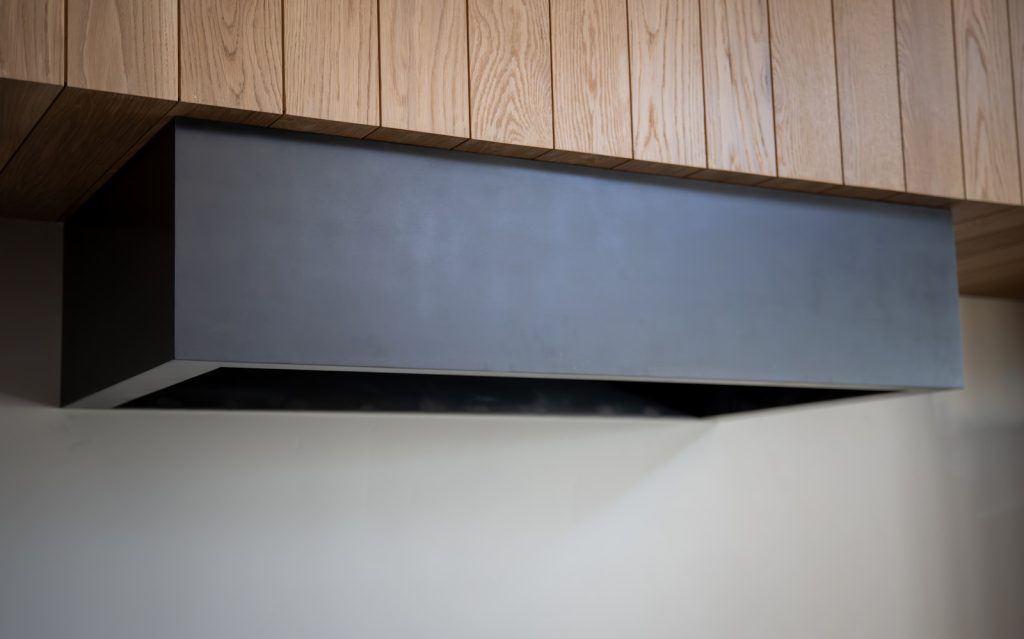
On concealed hoods with a motorized slide-out panel, noise during the extend or retract motion, separate from fan noise entirely, points to the extension mechanism rather than the fan, and is worth distinguishing clearly when describing the issue to a technician, since the two are separate systems with separate fixes.
What to note before calling for service
Noting whether the noise happens at startup, continuously while running, or specifically during extension or retraction, and whether it changes with fan speed, gives a technician a real head start on diagnosing the cause before they even arrive.
Book a diagnostic visit at /services/range-hood-repair/, or schedule service in your area at /schedule/. Extraction ratings for each hood are documented at global.asko.com.