
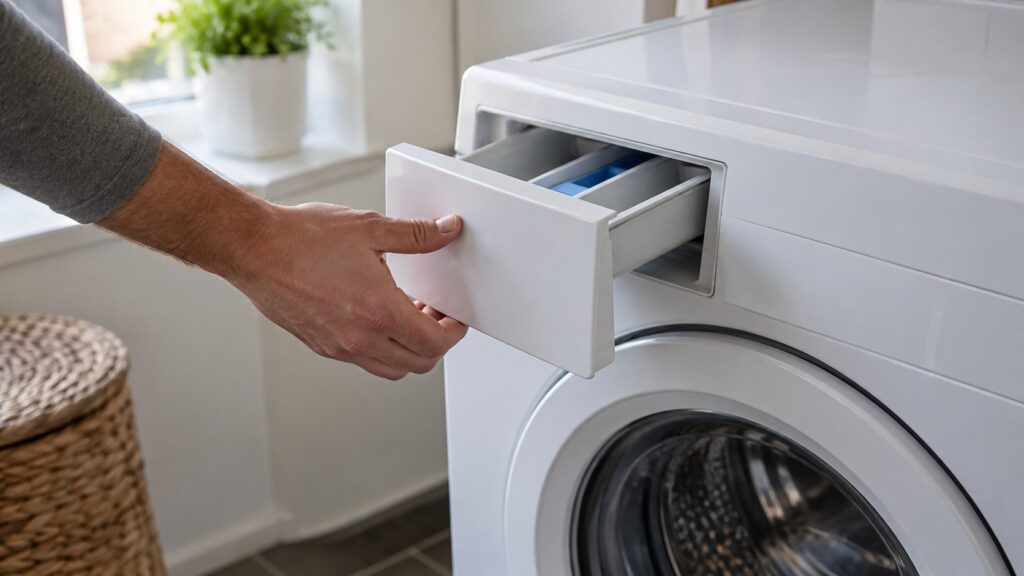
The Asko washer detergent drawer needs a proper clean every month or two, because detergent, softener and lime scale build up in its compartments and in the housing behind them. A clogged drawer leaves a gummy residue, lets powder sit unused, sends fabric softener straight into the drum and gives the washer a musty smell. Pull the drawer out, wash the parts, clear the housing and dry everything before you slide it back.
Why does the Asko washer detergent drawer get so dirty?
The drawer sits in the path of the incoming water, so every load rinses detergent and softener through its compartments. What does not rinse away dries into a film. Liquid softener thickens into a sticky gel, powder cakes in the corners and lime scale from hard water forms a crust that narrows the passages. The warm, damp, closed space then makes a perfect home for mold.
A dirty drawer does not only look bad. It changes how much detergent reaches the load and when, and it can send water through the wrong channel. If your washer leaves detergent behind, read our symptom page on a washer detergent not dispensing, and see our Asko washer detergent dosing guide, since overdosing is the main reason residue builds in the first place.
How do you remove the drawer safely?
Stop the washer and make sure it is idle. Pull the drawer straight out until it stops. Many Asko drawers have a release tab or a lever near the back of the drawer or inside the front, which you press to take the drawer out completely. Check your owner’s manual for the exact method on your model, because forcing it can crack the drawer. Place it on a towel so water does not drip on the floor.
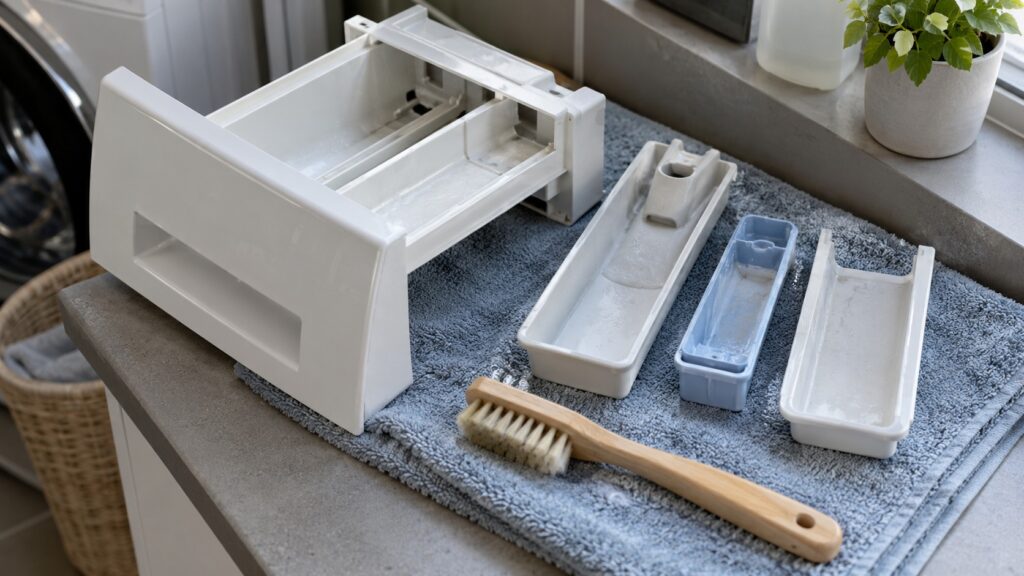
Take out any removable inserts, such as a softener cup or a liquid insert, noting how they fit so you can put them back in the right place. If the drawer has a built-in siphon cap, take care with it, since it is a small part that is easy to lose and needed for the softener to work correctly. Photograph the arrangement before you pull anything apart.
How do you clean the drawer and its housing?
Soak the drawer and the inserts in warm water for a few minutes to soften the residue. Scrub the compartments with a soft brush, such as an old toothbrush, paying attention to the corners and the channels. For lime scale, a soak in a mix of warm water and white vinegar helps, then rinse well. Avoid harsh abrasives and sharp tools, which scratch the plastic and give residue more to cling to.
Then look into the opening where the drawer sits. Use a flashlight, and wipe away residue from the walls with a damp cloth or a small brush. Clear the spray area at the top of the opening, where water enters, so the nozzles are not blocked by scale or grit. Do not push anything into the openings that could drop into the machine. Once clean, rinse the housing with a small amount of clean water on a cloth, not a stream.
What stops the drawer from getting dirty again?
Use the right amount of detergent, since too much is the main cause of residue. Use fresh softener only as directed and never above the max line. Leave the drawer slightly open after the last wash of the day so air can circulate and the compartments dry, which discourages mold. Wipe the drawer front and the surrounding panel when you wipe the door seal.
Run a periodic hot maintenance wash, as your manual suggests, to flush the drum and the pipework. Our guides to Asko washer drum cleaning and Asko washer drain filter cleaning cover the other two parts of a regular care routine.
A simple routine keeps the job small. Once a week, pull the drawer out a few inches and look at the compartments, wiping away any gel or powder with a damp cloth. Once a month, do the full wash described above. If you live in a hard water area, add a short descaling soak every second month. Little and often is far easier than scraping a hard crust that has had a year to set, and it protects the washer from the odor that sends many owners looking for a bigger problem.
When you put the drawer back, push it all the way in and check that it closes flush with the panel. A drawer that sits crooked can send water down the wrong side or let it spray onto the front of the machine. Run a short rinse cycle to confirm that water flows through the compartments and drains cleanly, and look for drips around the drawer opening while it runs.
When is a clean drawer not enough?
If the drawer is spotless and detergent still does not dispense, the problem lies further along: a blocked water channel, low water pressure at the inlet or a faulty valve that sends water to the wrong compartment. A very musty smell that returns quickly may come from the door seal or the drain path, not the drawer. If water leaks from the drawer area, stop using the washer until it is checked.
Note which compartment fails, whether the problem comes with a code, and how the washer fills. Then see our Asko washer repair page for what a visit involves.