
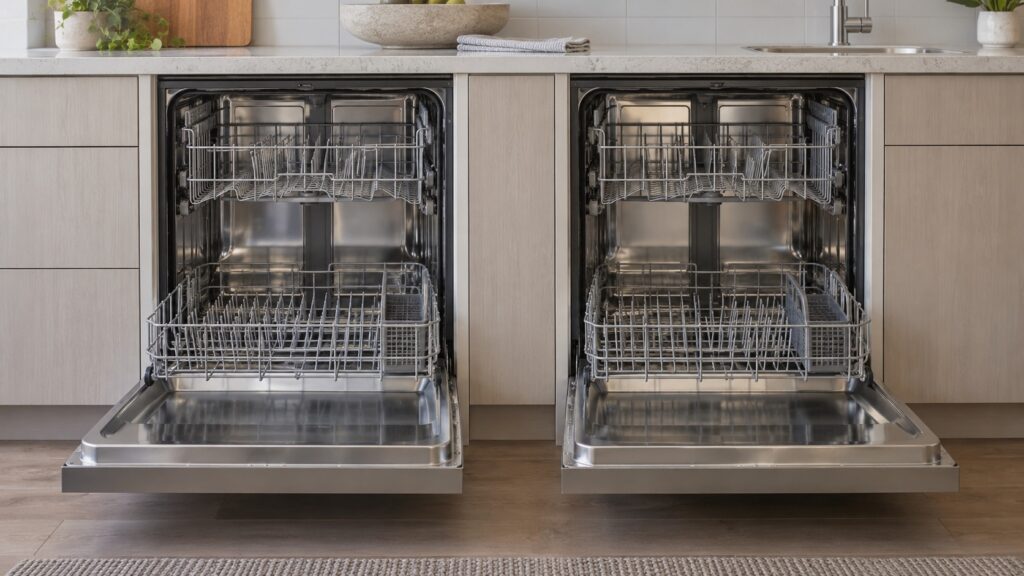
The asko vs miele dishwasher question is a choice between two brands of built-in dishwashers, so the decision comes down to details of construction, drying and loading on the exact models, not to a clear winner. On our side, an Asko dishwasher is built around a stainless steel tub, drying by condensation on most models, and a family of series from entry level to extra-large and outdoor versions. About Miele we make no claims about specific features: for the tub, racks and drying of any Miele model, check that model’s own spec sheet. We make no judgment of better or worse and quote no price or reliability figure, because we have no source for them. We are an independent repair company and we do not sell either brand.
Is an Asko dishwasher better than a Miele?
Neither is better in every kitchen. Both brands sell built-in dishwashers in several tiers. The honest way to compare is by model: pick the Asko and the Miele you can actually buy, then read the spec sheets side by side. We do not rank brands, and a comparison that does is selling something. What we can tell you is what we see on our side, which is Asko dishwashers in homes, and what features are worth asking about on any brand.
If you are still choosing between brands, it helps to know what is included in the US range. Our guide to the Asko US product lineup explains which products the brand sells today and which we only service.
How do the tubs and racks differ?
Asko markets its appliances with the line “more steel, less plastic,” and our guide to Asko dishwasher steel construction explains what that means in practice: a stainless steel tub that holds and releases heat evenly, wipes clean easily and does not absorb odors, with racks and framing that lean toward metal. Not every internal part is steel, and spray arms and dispenser parts are examples where plastic remains. For Miele, check the spec sheet for the tub material and the rack design of the exact model, because both vary by tier.
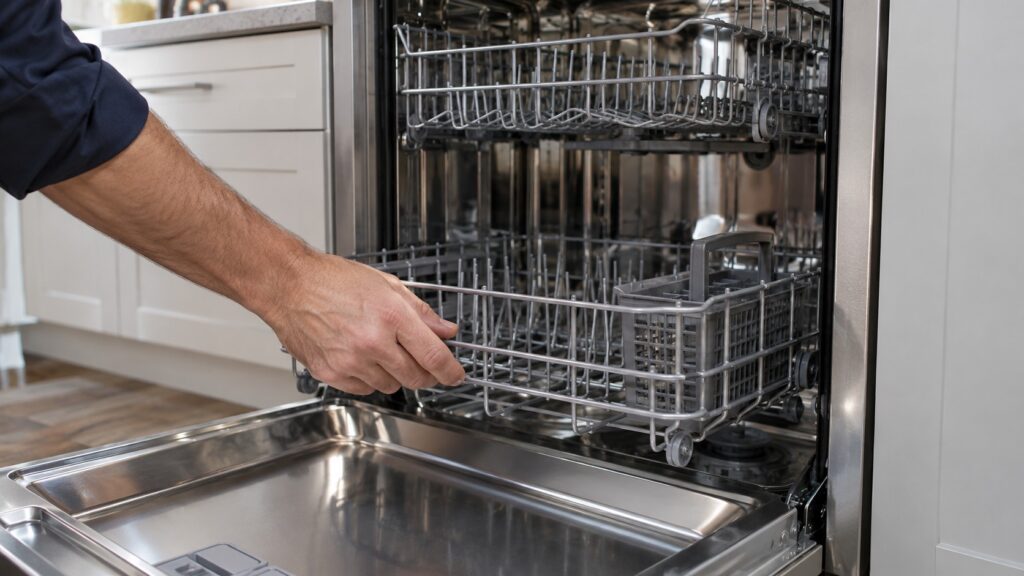
Rack layout is the other practical difference. Our guide says many XXL Asko models have an upper rack with adjustable tines and a shallow top tray for utensils. For a Miele, check the rack and cutlery arrangement on the spec sheet of the exact model. If you like to load cutlery in a basket, look at how it is done on each model, and bring a typical load to the showroom in your mind. Our guide to Asko XXL loading shows how the extra-capacity models are meant to be used.
How do drying systems compare?
Drying is where models differ most, and where you should read the spec sheet for the exact model. On most Asko models, there is no drying element: the final rinse is hot, the load carries its own heat, and moisture condenses on the cooler stainless tub wall and drains away. Our explanation of how Asko condensation drying works covers it, and our guide to Turbo Combi Drying explains the forced-air option on some higher-tier models. Light plastic is the usual complaint on any dishwasher that relies on residual heat, because plastic holds almost no heat. For a Miele, check the drying method listed for the exact model.
What about water softening, leak protection and noise?
Asko’s European roots show in the salt compartment, a water softener built for hard water. Whether you need it depends on your local water hardness, and our guide to Asko salt and rinse aid explains how to find out. Leak protection also varies: our Aqua Safe guide describes the system on higher-tier Asko models, which shuts off the water if it detects water in the base pan. Check each model’s spec sheet for its leak protection, whatever the brand. Noise ratings are published by both brands for each model and are measured under different conditions, so compare them on one spec sheet at a time, and be careful with a number that comes from a retailer instead of the manufacturer.
What should you check before you buy?
Measure your opening and check the installation requirements, including water, drain and power. If you plan a panel-ready look, our guide to panel-ready dishwasher installation lists what to plan for. Look at the filter and how easy it is to remove, because a clogged filter is behind most poor-cleaning complaints on any dishwasher, and our Asko dishwasher filter cleaning guide shows the routine. Ask who services the machine in your area and how long parts take. A dishwasher is a long-term purchase, so service matters as much as the feature list.
How should you test a dishwasher in the showroom?
Do not rely on the brochure. Pull each rack out and push it back, and listen for rattles. Check how the racks adjust and whether the tines fold flat for large items. Open and close the door several times, because the weight and the feel of the door tell you about the hinges and the seal. Look at the control panel and ask how a cycle is started, how the display reports a problem and whether the buttons are easy to read in your kitchen light. Ask where the model and serial plate is, since you will need it for any future service. Five minutes of this tells you more than an hour of reading reviews.
What about repairs and older machines?
A part swap is usually far cheaper than a new dishwasher, and a technician visit makes sense when a machine will not drain, will not fill or shows a fault code. Our guide to Asko dishwasher error code families explains how to read the display, and our repair or replace guide sets out the questions to ask. Our Asko dishwasher repair page explains how a visit works.