
The lint filter is the first line of defense in any dryer, and a consistent asko dryer lint routine after every load is by far the easiest maintenance habit on this entire site to build. It takes seconds, and skipping it consistently is what pushes more lint further into the condenser system than that system is designed to handle on a normal cleaning schedule.
Where the lint filter sits and how to check it
The lint filter on most Asko dryers pulls out near the door opening, similar in style to most dryers on the market. Check it before starting every load, not just when it looks obviously full — a thin, even layer of lint can still restrict airflow more than it appears to at a glance, especially once it has been slightly compressed by warm, humid air passing through it repeatedly.
The right way to clean it
Pull the accumulated lint off in one motion where possible, rather than picking at it piece by piece, which tends to leave a thin residual layer behind. Every few weeks, rinse the filter mesh under running water and let it dry fully before reinstalling — fabric softener and dryer sheet residue build up on the mesh over time in a way that dry-wiping alone does not fully remove, and that residue gradually reduces how effectively the filter traps lint even when it looks visually clean.
Why this habit protects the condenser system
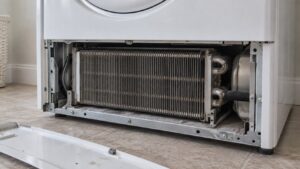
Because Asko’s US dryers are condenser and heat-pump technology, any lint the lint filter does not catch has nowhere to go but further into the internal condenser system, where it accumulates on heat-exchange surfaces that are considerably more work to clean than the simple pull-out lint filter. A consistent lint-filter routine directly reduces how often the deeper condenser cleaning, covered in our separate guide, needs to happen at all.
Signs your lint filter routine has slipped
Longer-than-usual drying times, a burning-dust smell during the first few minutes of a cycle, or visibly reduced airflow when you hold a hand near the drum opening during operation are all signs the lint filter — or the condenser behind it — needs attention sooner than your normal schedule. Do not ignore a burning smell specifically; it is worth stopping the cycle and checking the filter and condenser before continuing.
Building the habit into your laundry routine
The most reliable way to keep up an asko dryer lint routine is to make checking the filter part of loading the dryer itself, rather than a separate task to remember. If drying performance has already declined despite consistent lint-filter maintenance, the condenser or heat-pump system likely needs direct attention — see our condenser filter cleaning guide, and if issues persist, our dryer repair service is reachable through our scheduling page.
Building an asko dryer lint routine that actually sticks
The households most successful at maintaining a consistent asko dryer lint routine tend to attach it to a physical trigger rather than relying on memory alone — a small note taped near the dryer door, or simply committing to checking the filter every time you load a new batch of laundry rather than only when you remember to. Asko’s own care guidance, available through its support pages, reinforces this same every-load habit as the baseline recommendation across its dryer lineup. If you share laundry duties across a household, make sure everyone doing laundry understands the habit, not just whoever set up the routine initially — a lint routine followed inconsistently by different household members provides far less protection than one everyone follows the same way.
What a torn or damaged screen means for your asko dryer lint routine
If you notice a tear or a hole in the lint filter mesh during your routine check, replace it rather than continuing to use a damaged filter — even a small tear lets lint bypass the filter entirely and travel further into the condenser system, undermining the entire purpose of the every-load habit this guide describes. Replacement filters are inexpensive relative to the condenser cleaning a damaged filter eventually causes.
If you notice the filter mesh feels stiff or coated even right after rinsing, that residue buildup described earlier has likely progressed further than a quick rinse can address, and a more thorough soak-and-scrub cleaning is worth doing before returning to the normal every-load routine.