A common question during installation planning is where the dryer vent duct needs to run, and this asko dryer venting explained guide starts from a fact that surprises a lot of new owners: Asko’s current US dryer lineup is entirely condenser and heat-pump technology, with no exhaust-vented model in the catalog at all.
Why there is no exterior vent duct to plan for
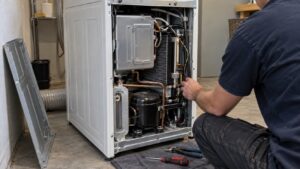
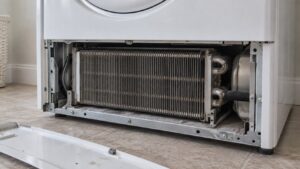
A traditional exhaust-vented dryer pushes hot, humid air directly outside through a duct, which is why vented dryer installation planning always centers on duct routing, length limits, and an exterior termination point. Asko’s condenser and heat-pump dryers instead cool and condense the moisture out of the drying air internally, collecting it in a reservoir or draining it through plumbing rather than exhausting it outdoors. This means there is no exterior duct run to plan, size, or route through a wall or ceiling cavity at all.
What installation actually requires instead
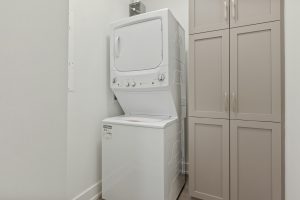
In place of exhaust ductwork, a condenser or heat-pump dryer needs a standard electrical connection and, if your specific model drains the condensed water rather than collecting it in a removable reservoir, a nearby drain connection for that water. Clearance around the unit still matters — the condenser and heat-pump systems both need adequate airflow around the cabinet to dissipate heat and function efficiently, so avoid installing the dryer flush against a wall or inside a fully enclosed space without the clearance your specific model’s manual calls for.
Managing humidity in the installation space
Because condenser and heat-pump dryers release some warm, humid air into the room around them rather than exhausting it outdoors, installing one in a small, poorly ventilated closet can lead to noticeable humidity buildup in that space over time. A laundry closet with even modest natural airflow, or a room with reasonable ambient ventilation, handles this comfortably; a tightly sealed closet with no airflow at all is worth reconsidering, or ventilating, before installation.
Reservoir vs drain connection: which your model uses
Some condenser models collect condensed water in a removable reservoir that needs to be emptied periodically by hand; others can be plumbed to drain the water automatically, similar to a washer’s drain connection. Check your specific model’s installation manual to confirm which approach it uses — plumbing a drain connection during initial installation, if your model supports it, saves the ongoing task of manually emptying a reservoir.
If you are converting from a previously vented dryer setup
If your installation space still has an old exhaust vent duct from a previous vented dryer, it does not need to be used or connected to an Asko condenser or heat-pump model — it can simply be capped or left unused. Our dryer repair service can advise on installation-adjacent questions during a service visit, and you can book a visit if you want the setup checked before or after installation.
Reviewing your specific model’s guidance in asko dryer venting explained terms
Installation specifics — reservoir capacity, whether a drain connection is supported, and exact clearance figures — are listed in the manual for your specific model, also available through Asko’s support section, and are worth reviewing in full before installation day rather than relying on the general principles covered here alone. If you are working with a contractor unfamiliar with condenser or heat-pump dryer installation, share the manual’s clearance and connection requirements directly, since a contractor experienced primarily with traditional vented dryers may not automatically know these units skip exhaust ductwork entirely in favor of the clearance and drainage considerations described above.
What changes if you relocate an appliance covered in asko dryer venting explained terms
If you are relocating a condenser or heat-pump dryer to a new room during a renovation, remember that the installation considerations are about clearance and drainage, not duct routing — this generally makes relocation simpler than moving a traditional vented dryer, since there is no exhaust path to reroute through walls or ceilings, just power, drainage if applicable, and adequate clearance at the new location.
If you are ever unsure whether a specific installation location has adequate airflow for a condenser or heat-pump dryer, a simple test is to run a full cycle and check whether the surrounding air feels noticeably and persistently humid afterward, which would suggest the space needs better ventilation.