
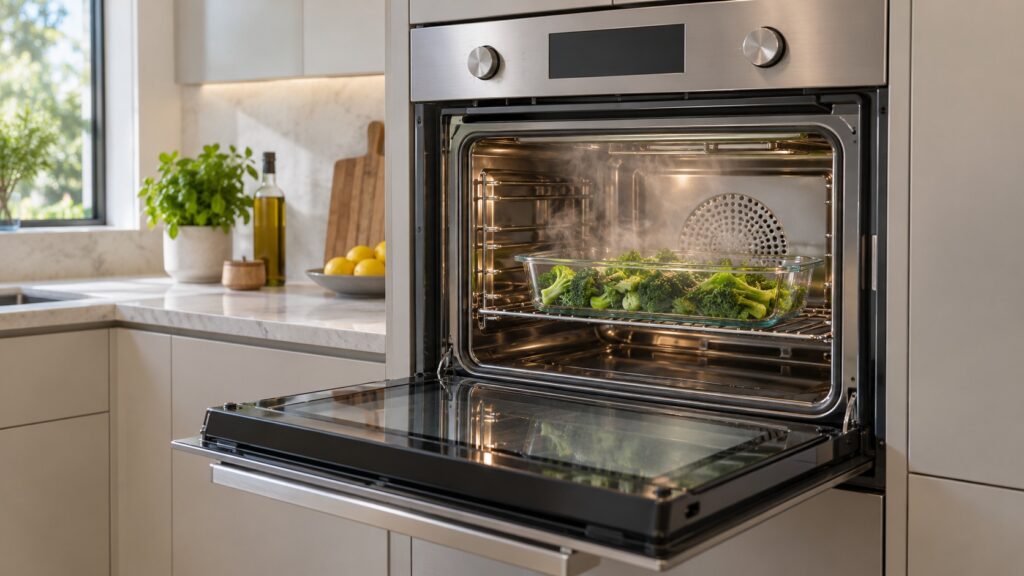
The best Asko steam oven cooking tips are about water and habits rather than secret settings. Use the water your manual recommends, fill the tank the way the manual shows, match the food to the right mode, resist opening the door, and empty and dry the tank after cooking. Times and temperatures belong to your owner’s manual and your recipe, because they differ by model and by mode, and this guide deliberately does not quote numbers.
What is a steam oven actually good at?
An oven that adds steam to the cavity cooks with moist heat. That suits foods that dry out or toughen in dry air: vegetables that keep their color and bite, fish that stays tender, rice and grains, eggs and custards. It is also good at reheating, because steam warms leftovers without drying the surface, and at proofing dough, because the moist cavity keeps the dough skin from crusting over.
Combi-steam models add a convection heating element to the steam function, so you can finish a roast with moisture early and browning later. Our guide to Asko steam and combi-steam ovens explains the difference between the two types. Which modes your oven has, and what they are called, is in the manual.
Because the steam is generated from water, steam cooking has its own rhythm. Foods do not brown the way they do in dry heat, which is a feature for vegetables and fish and a limitation for pastry, so many cooks use steam for the first stage and dry heat to finish, if the model offers that.
What should you do before you start cooking?
Begin with the water. The steam comes from a removable tank, and the water you put in affects how long the steam system stays healthy. Use the type your manual specifies; in hard-water areas, filtered or distilled water slows the buildup of scale in the tank and the steam generator. Fill the tank to the level the manual shows and seat it fully, because a tank that is not seated can make an oven complain that it cannot find the tank.
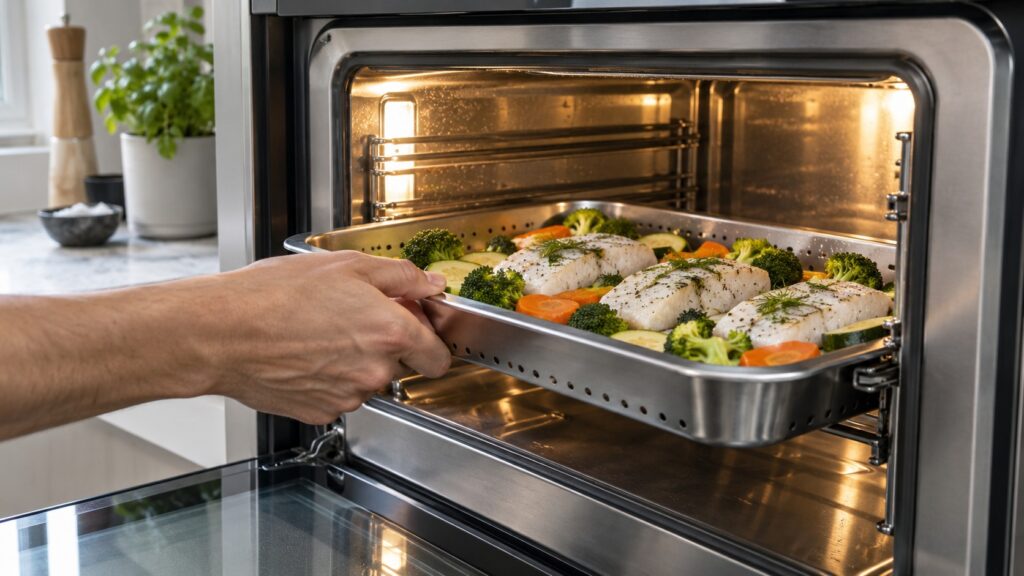
Next, check that the cavity is clean and that you have the right accessory for the job. A perforated tray lets steam reach the food from all sides, and a solid tray beneath it catches drips. Do not place a dish with a tightly fitting lid in the cavity if you want the food steamed; the steam cannot reach it.
How should you load and cook?
Leave space between pieces of food so steam can circulate. Cut vegetables to a uniform size so they finish together, and put thicker or denser items where your recipe or manual puts them. Use the preheat the oven asks for before you add the food, because steam cooking depends on the cavity being filled with steam when the food goes in.
Resist opening the door. Every opening lets steam escape and cools the cavity, which slows cooking and leads people to add more time than the food needs. Use the oven light and the window to watch. When you do open the door at the end, open it a little first and stand back, because the escaping steam is hot enough to burn.
For times and temperatures, take figures from your manual or from recipes written for steam ovens. A time for a conventional oven does not carry over, and this article does not list numbers because they are different on every model.
If you cook the same dish often, note the settings that worked for you in a small card kept near the oven. Your own notes become a better guide than any general list, because they reflect your oven, your water and your taste.
How do you look after the tank and the oven afterwards?
Empty the tank and dry it after every steam session instead of leaving water standing in it. Standing water in a warm tank is how mineral deposits and a musty smell begin. Wipe the cavity once it has cooled, and leave the door ajar for a while so the inside dries. Follow the descaling schedule in your manual, or the on-screen prompt if your oven gives one; heavier steam use and harder water both shorten the interval.
Our guide on Asko steam oven water tank care covers the routine in more detail. If you ever see a message that the tank is not recognized or that steam is not being produced, our pages on the tank not recognized symptom and on no steam generated list the checks in order.
When does steam cooking need a technician?
If water leaks from the oven, if the oven fills the cavity with water instead of steam, if steam never appears after the tank is full and seated, or if a message keeps returning after you have cleaned and refilled the tank, stop and ask for a visit. The steam generator and the pump are not owner parts, and you should never open the oven’s panels.
If you see sparks, smell burning, or find water around the controls, switch off the breaker at the panel while standing on a dry floor, and leave the oven alone. Our Asko oven repair page explains how a visit works.