Asko dishwashers: series and lineup
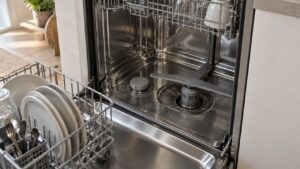
Asko dishwashers are the one appliance category the brand sells at full strength in the United States, spanning the 30, 40, 50, 60, and 60+ series plus a dedicated Outdoor series built for freestanding installation on a covered patio. Panel-ready models carry the DFI prefix, built-in stainless models carry DBI, the sliding-door DSD565 opens differently from either, and the DOD561TXXLS is the current Outdoor-series unit. Current 60+ series units such as the DFI786XXLSOF and DBI786IXXLSSOF lead the lineup on place-setting count and quiet operation, while the 50 series covers the bulk of the catalog with models like DBI565PXXLS, DFI565XXL, and the ADA-compliant DFI565. Full model records live in our model directory.
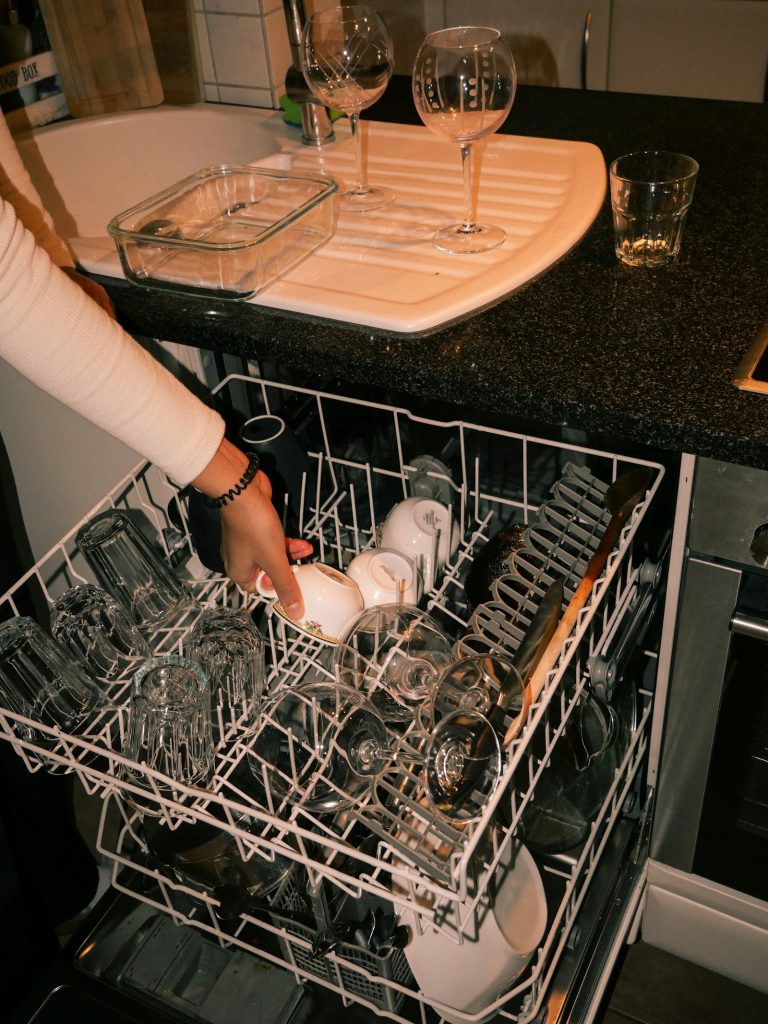
The move from a 40-series unit to a 60 or 60+ series model is mostly a story of quieter operation and rack capacity rather than a wholly different platform — a 39 dB(A) rating on the 60-series line is a genuinely noticeable drop from the 42-44 dB(A) common on older 30-series and 40-series units, and the extra place settings on the larger XXL tub size matter more to a household upgrading from a compact dishwasher than any single headline feature. The Outdoor series stands apart structurally rather than just cosmetically: it is built to handle temperature swings and moisture exposure an indoor kitchen dishwasher never sees, which is also why its service scheme runs on its own separate code table rather than sharing one with the indoor lineup.
Technologies and features
Turbo Combi Drying and, on the sliding-door DSD565, Auto Door Open Drying are Asko’s answer to plastic-heavy dishwashers that leave items damp — the first circulates hot air through a fan at the end of the cycle, the second pops the door open partway to vent residual heat and moisture passively. Super Cleaning System+ increases spray-arm coverage on higher-series models, and Aqua Safe leak detection plus a Kid Safe child lock round out the standard feature set on most current-generation units. Across every series, the parts that wear are the spray-arm bearings and dividers, the circulation and drain pumps, the water inlet valve, and the heating element — the same components regardless of which F-code scheme the control board happens to display.
Turbo Combi Drying in particular depends on more moving parts than most owners realize — a dedicated fan, a heating element separate from the wash-cycle heater, and a vent path that has to stay clear of lint and debris to work as designed. When drying performance drops off gradually rather than failing outright, it is worth checking that vent path before assuming the fan motor itself has failed, since a partially blocked vent produces the same lukewarm, slow-drying symptom a weak fan motor does.
Common issues and maintenance
Asko genuinely runs three separate F-code schemes across its dishwasher generations, and reading a code against the wrong one leads straight to a misdiagnosis. The legacy LED blink-code generation uses F1 through F9 plus FA and FB; the current text-display generation on DFI, DBI, and DSD units shows F10 through F68; and the Outdoor series runs a distinct colon-format scheme (F:10 and similar) whose meanings clash directly with the current-generation numbers rather than extending them. Overfilling, a blocked filter reducing rinse pressure, and a circulation pump losing suction from trapped debris are the complaints we see most, alongside dishes coming out spotty when the drying fan or spray-arm bearings have worn. Scraping large food debris before loading, running a monthly rinse-aid and filter check, and not overloading the lower rack ahead of the heating element all extend service life measurably. For code meanings by generation, see our dishwasher error codes, and browse repair guides for asko dishwashers troubleshooting. It is worth noting that a dishwasher displaying no code at all, rather than a wrong one, is not necessarily an older unit — a tripped household breaker or a loose power connection behind the appliance produces the same blank-display symptom on any generation, and checking the electrical supply before assuming a control-board failure saves an unnecessary part order more often than owners expect, particularly on units installed within the last year or two.
When to call for repair
A failed circulation or drain pump, a spray-arm divider stuck in one position, a heater failure, or an inlet valve that will not shut off are best handled by experienced technicians who confirm the F-code generation before ordering a part. As an independent, third-party repair service, we hold no affiliation with, authorization from, or endorsement by Asko, Gorenje, or Hisense, and our technicians back every visit with a 30-day labor warranty on the workmanship. Have your model and Art. No. ready when you book, since Asko’s parts catalog is keyed on that Article Number rather than the model number alone. Schedule Asko dishwasher repair or book an appointment online, and you can review current listings at us.asko.com.