
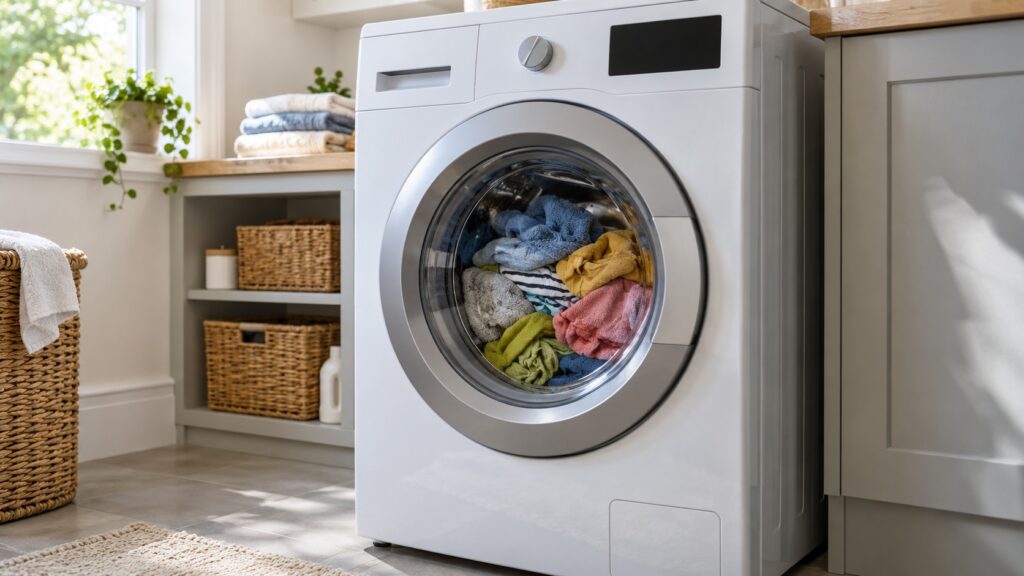
The easiest way to cut Asko washer energy use is to wash fuller loads at lower temperatures with an eco-style program, accept that it runs longer, and let the 1400 rpm spin pull as much water out as possible before the dryer. Most of a washer’s energy goes into heating water, so temperature is the biggest lever. Load size, detergent amount and a clean machine decide the rest. None of this means giving up clean clothes, because modern detergents work well in cooler water when the cycle is long enough.
Where does a washer use the most energy?
Heating the water. The motor, the pump and the electronics use a little, but warming a drum of water takes far more energy than turning it. A hot wash can use several times the energy of a cool one, which is why the temperature setting matters more than any other choice you make. A longer, cooler wash lets the detergent and the drum action do the work that heat would otherwise do, and for everyday clothes it gets them clean.
That does not mean always washing cold. Heavily soiled loads, towels, bedding and anything that needs sanitizing still benefit from warmth. Choose the lowest temperature that will do the job for the fabric and the soil, and save the hottest settings for the loads that need them. Our guide to Asko washer program selection helps you pick.
Why does an eco program take so long?
An eco-style program reduces the temperature and stretches the time so that clothes still get clean. It may also use less water and adjust the fill to the load. The clock on the display can look surprisingly long, and it may change during the cycle, because the machine weighs the load, checks the water level and the balance of the drum and adapts. That is not a fault. If a cycle seems to run much longer than the label said, our symptom page on a washer cycle that takes too long explains when it is normal and when it is not.
The temperature on the dial is a target, not a guarantee of exact degrees at every moment. Water heats up gradually, and the machine may hold a cooler wash for part of the cycle. If a program with a labeled temperature never seems to get warm, see the page on a washer not heating water.
How full should the drum be?
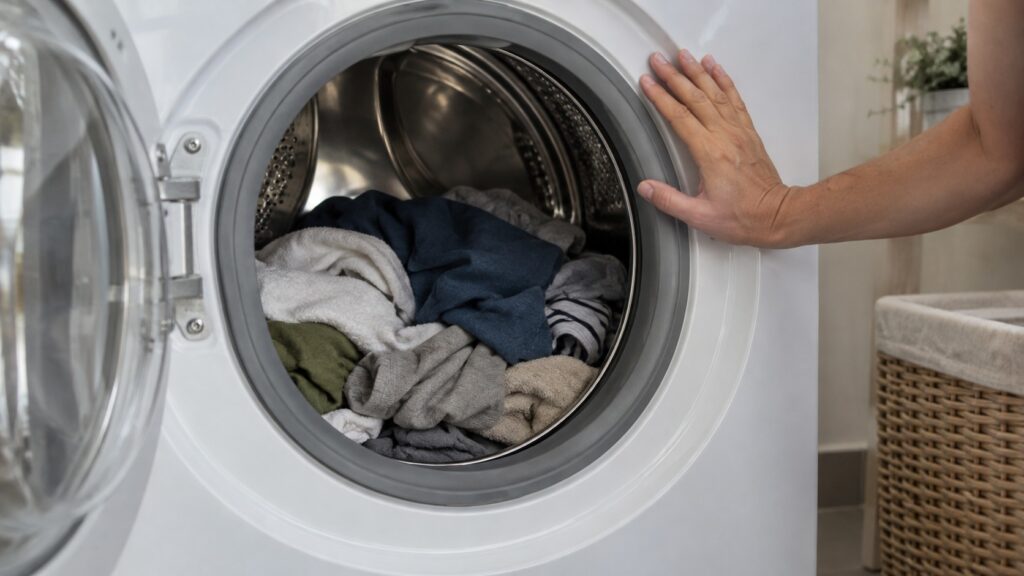
A washer uses nearly the same energy to heat and turn a half load as a full one, so running full loads saves energy per piece of laundry. Full does not mean packed. Clothes need room to tumble and rinse, and an overloaded drum cleans poorly, strains the suspension and tends to trip the unbalance protection. A good test is to leave about a hand’s width of space above the clothes when the drum is loaded.
The US models range from 17.6 lb on the W2084 to 26.5 lb on the W7XLW, so the right load depends on your machine. Our guide to washer capacity and spin speed explains what the numbers mean. Mix sizes of items in a load, since a single large towel causes more unbalance than a mix.
Does spin speed save energy?
Indirectly, yes. The 1400 rpm spin on the US Asko washers pulls a lot of water out of clothes, so they leave the drum damper and dry faster. Drying is often the most energy-hungry step of laundry, so every minute taken off the dryer cycle is worth more than a small saving in the wash. Do not lower the spin speed unless the fabric label requires it, and use the gentler spin for delicates only.
If you pair the washer with an Asko dryer, a shorter dry time is a real benefit, and our tips on heat pump dryer cycle times show how to use it. A high spin also needs a level machine, so check the leveling if it starts to shake.
What else makes a difference?
Use the amount of detergent on the label, because extra detergent means more suds, more rinse water and more residue, and the machine may add rinses to clear it. If your model has Auto Dose, keep the tank filled and let it adjust. Keep the drain filter clean, because a partly blocked filter slows the drain and makes the pump work harder, as our guide to drain filter cleaning explains. Run an occasional hot cleaning cycle to keep the tub clean.
Finally, do not leave wet laundry in the drum. A load rewashed because it smells is energy twice spent. If a machine is running much longer or hotter than it should, or the bills are climbing, a visit to Asko washer repair can check the heater and the sensors.
Pre-treating stains is another quiet saver. A stain that survives the wash gets washed again, and a second cycle costs the water and the energy a second time. Spend a minute with a stain remover on grease, wine or sweat marks before the load goes in, sort heavily soiled items into their own load, and avoid mixing delicates with towels. Fewer rewashes and shorter dry times are where most households actually find savings.