
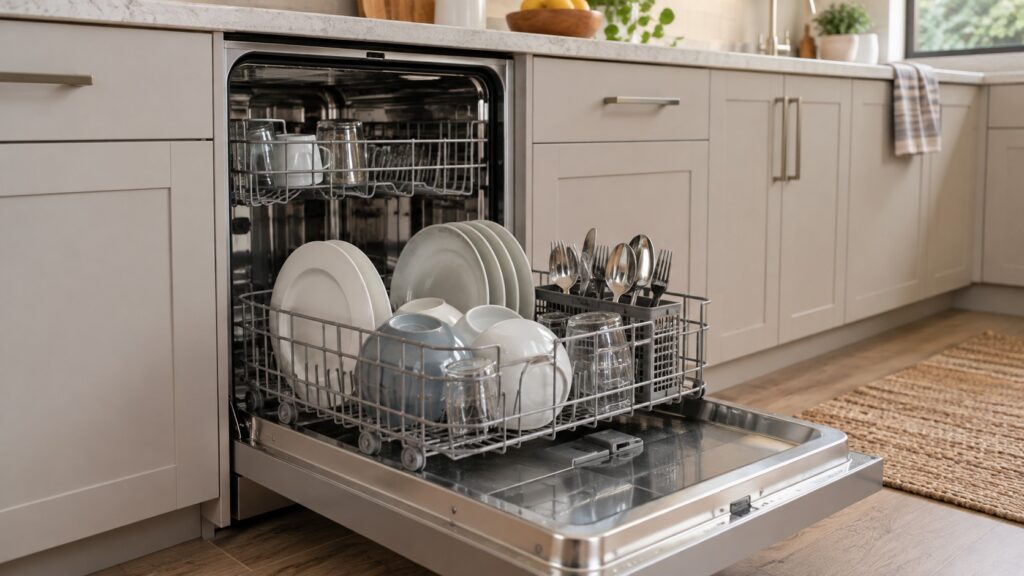
Comparing the Asko dishwasher series means reading the model prefix, the control generation and the installation style before anything else. The DFI, DBI and DSD names on our model list point to different families, and the same family can come with a plain button panel, a text display or a fully hidden panel. Choose by how you want the front of the dishwasher to look, how much control you want and which numbering scheme your error codes will use later, not by the badge alone.
What do the DFI, DBI and DSD prefixes mean for a buyer?
The prefix names a product family, and the digits that follow separate the models inside it. On our model list the DFI5558, the DBI675 and the DSD746U show up as reference points, and the practical differences between them are panel style, control generation and features such as the display. Asko changes features between production years while keeping the series name, so treat any comparison as a starting point and confirm your exact model number on the rating plate or in the owner’s manual.
One thing to watch for is that model numbers found online with endings such as .au come from other markets and may not match what is sold in the United States. If a number you found does not match the plate on a machine you are looking at, ask for the full model and Art. No. before you compare anything. Our Asko US product lineup guide helps you tell what is offered here.
Which control generation are you buying into?
This matters more than it sounds. Asko dishwashers have used three numbering schemes for faults: legacy machines show blink patterns on program lights, current display machines show F-codes starting at F10, and the Outdoor series uses a colon format that reassigns some numbers. The DSD746U is on the current display generation. A newer machine with a text or code display is easier to diagnose because it tells you what it sees, while a legacy model gives you only a light pattern to interpret.
If you buy used or refurbished, this is a key question. A machine from the legacy platform can be a perfectly good dishwasher, but parts and diagnostics follow a different path. Our Asko dishwasher error code families guide explains the three schemes so you can recognize which one a candidate machine uses.
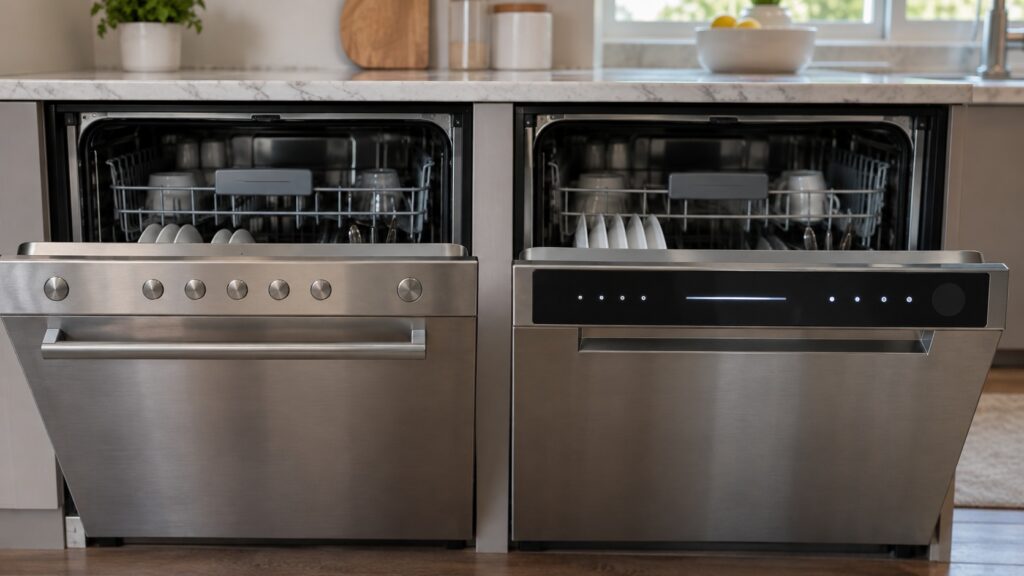
Panel-ready or a visible control panel?
Panel-ready models accept a cabinet door panel that matches your kitchen, and the controls sit on the top edge of the door or are hidden altogether. A model with a visible front shows its panel and display. The choice is about looks and about how you interact with the machine: a hidden panel looks seamless but you have to open the door to see the display, while a visible front lets you glance at the status. Our guide to Asko dishwasher panel-ready installation explains what the cabinet side of a panel-ready machine needs.
Check the door weight and the hinge arrangement if you plan to attach a heavy custom panel. A panel that is heavier than the machine is designed for can cause the door to drop open or sag, and the manufacturer’s installation instructions give the limits. Ask your cabinet maker to work from the instructions for your exact model.
What features are worth paying for?
Look at the things you use every day. The tub material and construction matter for long-term durability, which our guide to Asko dishwasher steel construction covers. Drying matters too: Asko relies on condensation drying on many machines, which is quiet but works differently from a heated dry, as explained in our guide to how Asko dishwasher condensation drying works.
If you load large pots, tall glasses or serving dishes, the rack layout is worth a close look. Our Asko dishwasher XXL loading guide explains what a tall tub changes in practice. Features you will rarely touch, such as a long list of specialty programs, add cost without adding much to everyday use. Spend on build, drying and a rack layout that fits your dishes.
What should you check before you buy?
Measure the opening, including the height under the counter, and compare it with the dimensions in the installation instructions for the model. Check the water supply, the drain connection and the power outlet, since the hookup must suit the machine. If you are replacing an older unit, do not assume the connections line up. Our Asko dishwasher water and drain hookup guide lists what to check.
If you are buying used, ask for the full model number and Art. No., the age and the service history, and ask whether the machine shows any codes. A machine that has been repaired by someone who knew the platform is a better bet than one with an unknown past. A part swap is usually far cheaper than a new dishwasher, but not when a machine has several worn systems at once.
A final practical tip: write down the model and Art. No. of whichever machine you choose and keep a photo of the rating plate with your purchase records. When a question comes up in five years, whether about a code, a part or a warranty, that photo saves a trip behind the door and prevents the wrong-part mix-ups that come from guessing the series.