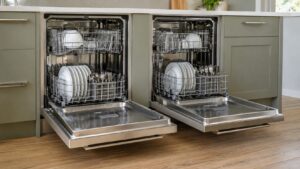
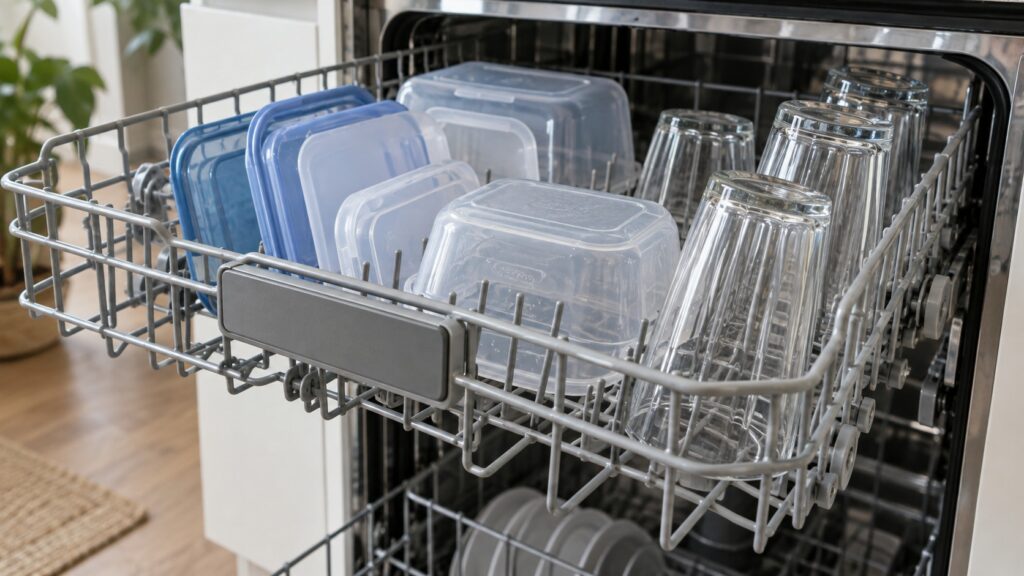
The best Asko dishwasher plastic routine is to load plastic containers on the upper rack, face down and tilted so water drains, choose a gentler program if your machine has one, and expect plastic to come out wetter than china. Plastic does not hold heat the way ceramic and glass do, and an Asko dishwasher dries largely by condensation, so plastic items often stay damp even when the cycle has worked perfectly. Knowing that saves you from chasing a fault that is not there.
Where should plastic go in an Asko dishwasher?
The upper rack is the right place for most plastic, because it sits farther from the heat source at the bottom of the tub and gets gentler spray than the lower rack. Place containers face down and angled so water cannot pool in the base, and put lightweight items where they cannot flip over and catch the spray arm. Weigh small items down by placing them in a basket or securing them with the rack tines.
Check that nothing blocks the spray arms or the detergent door, since an upturned container can lock an arm or shield the dispenser, and that is the quickest way to get an unclean load. If you use the lower rack for a big pot, keep plastic out of the way of it. Our guide to Asko dishwasher XXL loading covers how to arrange large and small items together.
Which program is gentlest on plastic?
Many dishwashers offer a program with a lower wash temperature that is intended for lighter loads and more delicate items, and that is the kind of program to choose when plastic is the main load. The exact program names, the temperatures and the options differ between Asko models and between production years, so use your owner’s manual to find the gentlest suitable program for your machine, and do not guess from the name.
Avoid extra-hot or sanitizing programs for plastic unless the manual says the items can take it. High heat can warp thin containers, soften lids and cloud clear plastic over time. If an item is not marked dishwasher safe, wash it by hand. A reusable bottle with a printed label, a nonstick-coated item or a thin disposable container are the most common casualties. Our Asko dishwasher terms glossary explains the program and option names you will see on the panel.
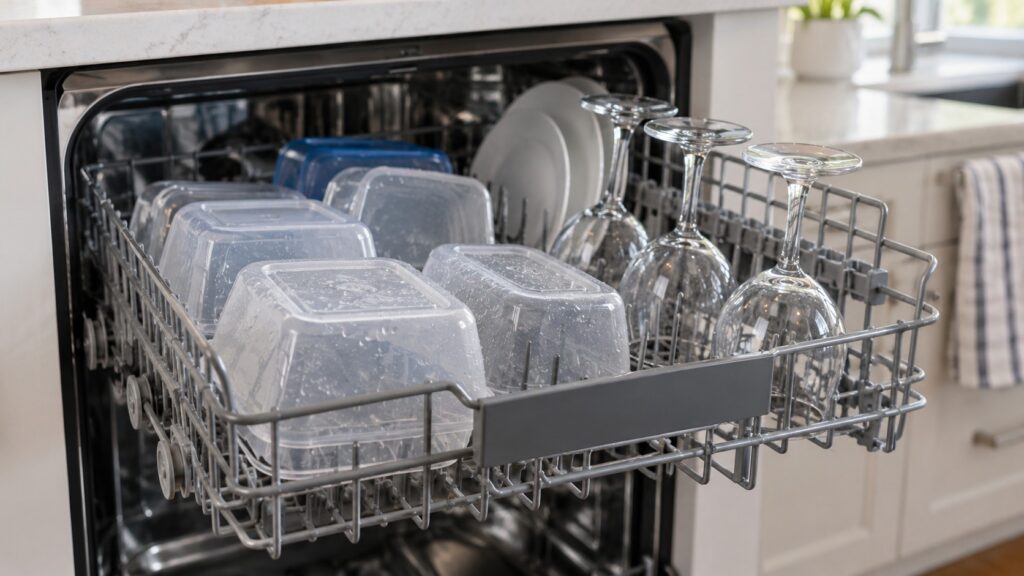
Why does plastic come out wet?
Condensation drying works by letting the hot, moist air in the tub condense on the cooler tub walls and run away, while the dishes themselves hold the heat that evaporates the film of water. China, glass and metal store plenty of heat and dry well. Plastic stores very little, so the water on its surface sits there and beads in the dips. This is how condensation drying behaves, not a sign of a fault, and our guide to how Asko dishwasher condensation drying works explains the principle in full.
A few habits help. Tilt containers so they drain, use rinse aid to reduce the surface tension that makes beads cling, and open the door at the end of the cycle to let steam escape. Dry the last drops by hand with a cloth. If everything is wet, including china and glass, the cause is different, and our page on dishwasher not drying lists what to check.
How do you get clear glassware?
Space glasses so they do not touch, because contact points trap water and leave marks. Place stemware in the upper rack with the stems secured and avoid crowding. Use the correct detergent dose and keep the rinse aid dispenser full, since rinse aid is what makes water sheet off glass and prevents spots. A cloudy film on glassware often points to water hardness or too much detergent, not to a faulty machine, and our guide to Asko dishwasher salt and rinse aid covers both.
Etched glass is permanent damage from soft water and too much detergent, and cannot be cleaned away. If you value fine crystal or old glasses, wash them by hand. For everyday glasses, a small adjustment to the detergent dose and a full rinse aid reservoir are usually enough to keep them clear.
How do you handle a mixed load of plastic, china and pans?
A mixed load is the everyday case, and the rule is to put each material where it copes best. Heavy, heat-holding items such as pans, baking dishes and plates go on the lower rack, where the spray is strongest. Plastic, cups and glasses go above. Keep the two apart so that a hot, heavy pan is not touching a plastic lid, and keep lids and small parts in the cutlery basket or a small lidded basket so they do not drift.
If you must wash plastic and a greasy pan in the same cycle, choose the program for the dirtier item and accept that the plastic will be wetter at the end. Alternatively, run the plastic in its own light load with the gentler program. Two small loads cost a little more time but protect the containers. Either way, do not overfill the racks, since crowding blocks the spray and leaves dishes dirty, which people often blame on the plastic or the detergent.
Finally, empty the lower rack first when you unload. Water pooled on the upper rack’s plastic can drip onto dry dishes below, so lift the cups and containers out after the plates are done, and tip any trapped water into the sink before you put them away.