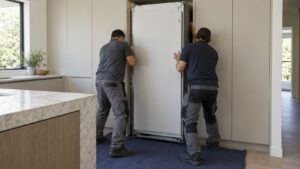
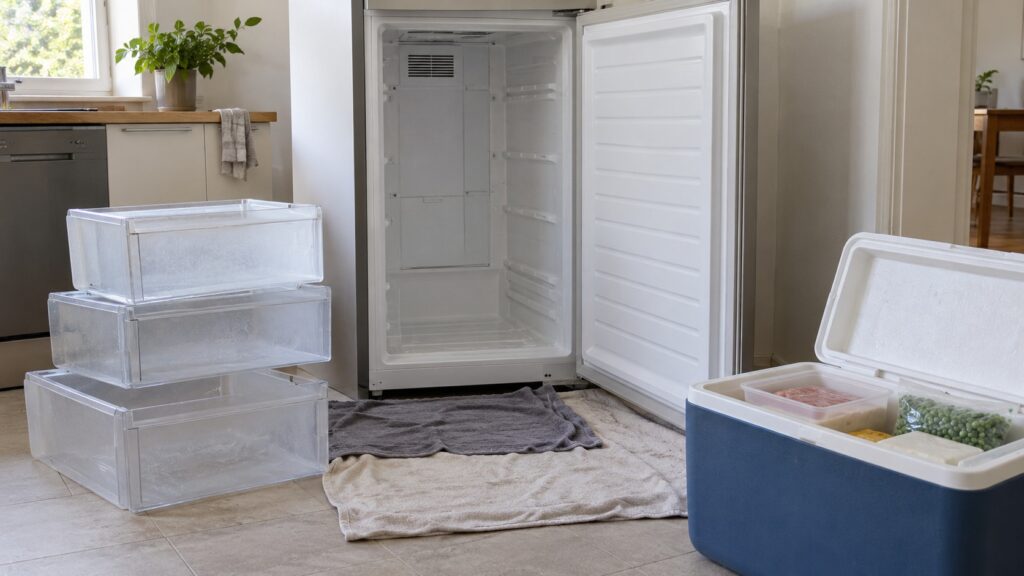
An Asko freezer cleaning routine is simple and safe if you follow the order: empty the freezer into coolers, switch it off, let any ice melt on its own, wash the inside with mild soap and warm water, dry everything thoroughly, and only then restart it. Do not chip at ice with a sharp tool and do not use a hair dryer or any other heat source, because both can damage the parts that make the freezer cold. A no-frost freezer should rarely need a full defrost, but a regular clean is worthwhile on every freezer.
How often should an Asko freezer be cleaned?
There is no single schedule that fits every household, and your owner’s manual is the first place to look for one. A reasonable habit is a wipe-down of any spill straight away and a fuller clean when the freezer is running low on food, for example before a big shop, because that is when emptying it is easiest. A freezer that smells, that has sticky shelves or that has a frost-covered drawer rail is overdue regardless of the calendar.
Whether you also need to defrost depends on the type. A no-frost freezer clears its own frost during normal operation, so cleaning is just that: cleaning. Manual defrost models collect frost over time and need to be defrosted when the layer builds up; your manual says which type you have. Our Asko freezer manual defrost guide goes through that process in more detail.
What should you do with the food?
Plan before you open the door. Frozen food should stay frozen while the freezer is empty, so line up coolers with ice packs, or use a neighbor’s freezer if the job will take a long time. Pack the food together, because a tightly packed cooler holds its cold much longer than loose items, and keep the cooler closed. Do not refreeze food that has warmed above 40 °F, and discard it if you are unsure. For the general principles of keeping frozen food safe when the cold is interrupted, our guide on freezer power cut food safety sets them out.
Take the opportunity to throw out old, freezer-burned and unlabeled food. A freezer that holds only what you will use is easier to clean, easier to load and more efficient to run.
How do you clean the inside?
Unplug the freezer at the wall. If the unit is built in and the plug is not reachable, switch it off at the breaker instead, with dry hands and a dry floor. Remove drawers and baskets as your manual describes, taking care not to force them if they are frozen in place; our guide on Asko freezer drawer removal explains how to free an iced-in drawer without cracking the runners.
Lay towels on the floor and inside the cabinet, and let the frost melt naturally with the door open. Do not scrape with a knife or an ice pick, and do not aim a hair dryer into the cabinet. Either can puncture a thin part of the cooling system or damage wiring, and a damaged cooling system is not a cheap repair. If your manual allows it, a bowl of warm (not boiling) water placed inside can speed up the melt; never pour water onto the ice or the cooling parts, and never use a knife, a scraper or a hair dryer.
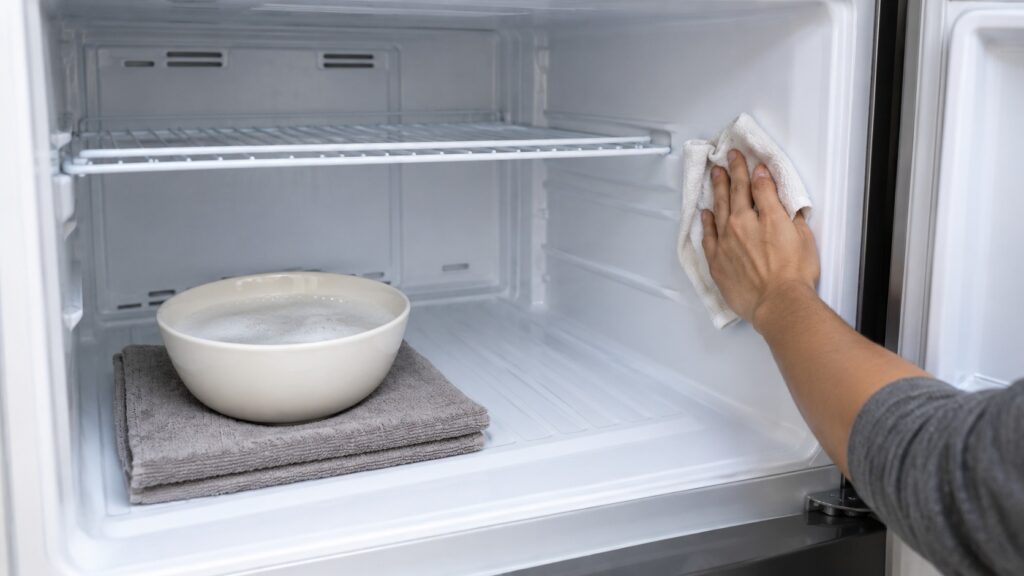
Once the ice has gone, wash the walls, shelves and drawers with mild dish soap and warm water on a soft cloth. Wash the removed drawers and baskets separately in the sink. Do not use abrasive pads or strong solvents, because the lining scratches and some plastics crack. Wipe the door gasket gently with a damp cloth, taking care to reach into the folds, since that is where sticky residue collects and keeps the seal from closing fully.
What about the drain and the airflow?
A freezer that collects a lot of frost or water is often telling you about the drain or the airflow, and a clean is a good moment to check both. If your model has a defrost drain, make sure it is clear so the meltwater can leave; our guide on the Asko refrigerator defrost drain explains the principle. Look at the vents inside the cabinet, and keep stored food from blocking them once you reload. Our article on freezer storage airflow explains why packing food against the vents causes uneven cooling.
If you find a thick layer of frost on the back wall of a no-frost freezer, that is not normal, and our guide on rear wall frost explains what it can mean.
How do you restart and reload?
Dry the whole interior with a towel before you restart, because any water left behind will simply refreeze into ice. Put the drawers back, close the door, plug the freezer in and let it run until it is cold before reloading. Your manual may say how long to wait; do not guess, and do not load warm items into a freezer that has not yet reached its normal temperature.
Reload with the airflow in mind: leave a little space around the vents, put frequently used items near the front, and label what goes in. Check later that the freezer is holding temperature and that the compressor is cycling normally.
When should you stop and call for help?
Call if the freezer does not get cold again after a clean and a proper restart, if ice returns quickly in a thick layer, if there is water on the floor that does not come from your defrost, or if the compressor runs without stopping. Do not open the cabinet’s back or side panels; the cooling system is sealed, and refrigerant work needs a certified technician. If you see water near the electrics or smell burning, switch off the breaker at the panel while standing on a dry floor.
Our Asko freezer repair page explains how a visit works.