Choosing an Asko freezer comes down to one decision before anything else: a tall, freestanding column freezer that stands on its own, or an integrated drawer freezer that fits under a counter or beside a matching column refrigerator. Both hold Asko’s full-size food storage, but they solve different kitchen layouts, and the wrong pick for the space costs more to correct than the appliance itself.
Should I buy a column freezer or an integrated drawer freezer?
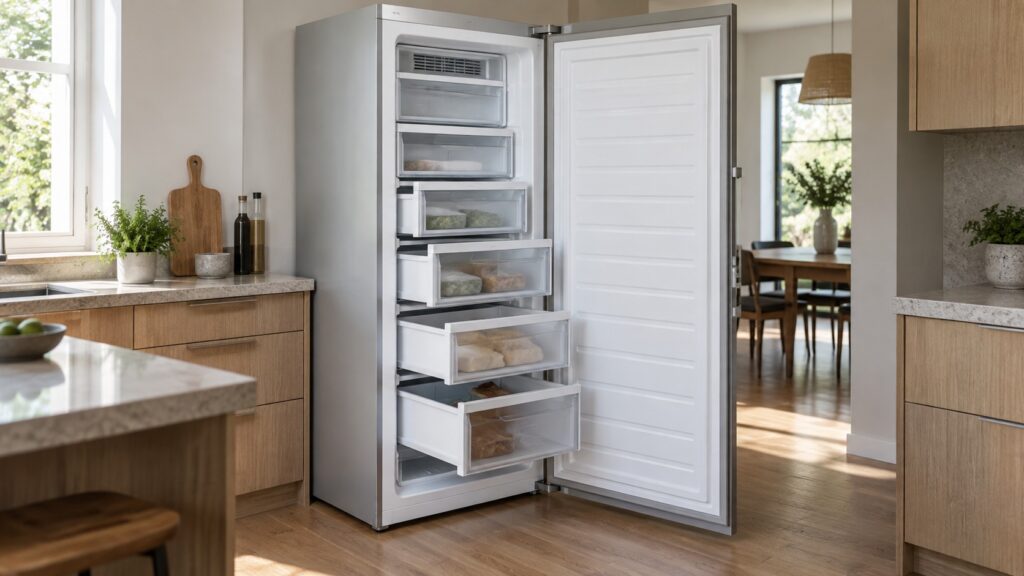
The decision usually turns on how the household actually uses freezer space. A column freezer, installed as a full-height unit either freestanding or built into cabinetry, gives real bulk storage — enough for batch cooking, whole cuts of meat, or a family that stocks up rather than shopping frequently. It typically stands beside a matching column refrigerator, so the kitchen gets independent, full-size cooling and freezing rather than one cabinet split between the two.
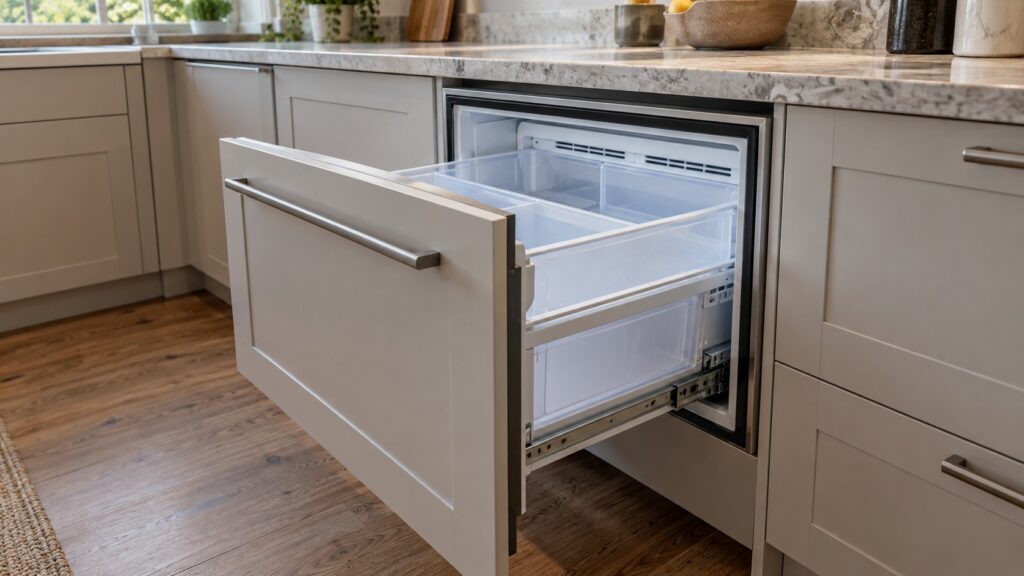
An integrated drawer freezer trades capacity for placement. Installed at counter height as a drawer, it works as supplemental storage near a prep area or a bar setup, not as the household’s primary freezer. Most kitchens that choose a drawer unit already have a combined refrigerator-freezer or a separate column freezer elsewhere and are adding convenience storage, not replacing their main capacity.
How much capacity does an Asko freezer actually need to have?
A rule of thumb used across the appliance trade is roughly 1.5 cubic feet of freezer space per household member for typical use, more for anyone who buys in bulk or freezes home-cooked meals regularly. A column freezer comfortably exceeds that figure for most households in a single unit. A drawer freezer, by contrast, is sized for supplemental use and should not be the only number a household plans around — measure what a family actually keeps frozen for two weeks before assuming a drawer unit will cover it alone.
Door and drawer count matters as much as the cubic-foot figure on the spec sheet. A single large compartment holds more in total but makes it easier to lose track of what is at the back. Multiple drawers or shelves cost some efficiency but keep items visible and organized, which matters more in daily use than the raw number most buyers compare first.
Does an Asko freezer need automatic or manual defrost?
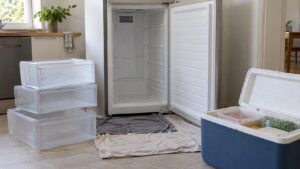
Several Asko freezer models use manual defrost rather than an automatic frost-free system, and that is a planning decision rather than a shortcoming to work around. A manual-defrost freezer needs to be emptied and defrosted periodically as ice builds on the interior walls — skipping that step reduces usable space and can affect how efficiently the compressor runs. Anyone choosing between models should ask directly whether the unit is frost-free or manual defrost, since the spec sheet does not always make the distinction obvious at a glance. Our manual defrost guide covers what the routine actually involves before you commit to a model.
A frost-free model removes that routine but adds a defrost heater and fan to the sealed system, which is one more component that can eventually need service. Neither approach is objectively better; the right one depends on whether a household would rather spend fifteen minutes every few months on manual defrost or accept a slightly more complex sealed system.
Should I buy a separate freezer or a combined refrigerator-freezer instead?
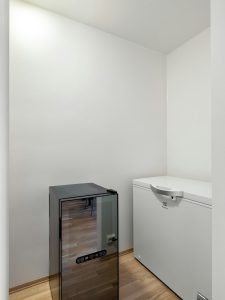
A combined refrigerator-freezer puts both functions in one cabinet, sharing a footprint and, on some designs, part of the cooling system — our combined refrigerator-freezer guide covers how that sharing actually works. It suits a smaller kitchen or a household that does not need dedicated bulk freezer capacity. A separate column freezer alongside a separate refrigerator gives more total capacity and independent temperature control for each, at the cost of two footprints instead of one.
The practical test is whether the kitchen has room for two full-height columns. If it does, separate units generally serve a busy household better long term; if it does not, a combined unit or a drawer freezer for supplemental storage is the more realistic fit.
What noise level should I expect from a new freezer?
Noise level is easy to overlook when comparing capacity and layout, but it matters more for a freezer than for most other kitchen appliances because a freezer runs its compressor for longer stretches than a refrigerator does, especially in a warm kitchen or a garage installation. A column freezer installed near a living or dining area is worth checking against its published sound rating before purchase, since a unit that sounds fine in a showroom can be far more noticeable once it is the loudest thing running in a quiet kitchen at night. An integrated drawer freezer, built into cabinetry with a panel front, generally reads as quieter in daily use simply because the surrounding cabinetry helps dampen the compressor sound, even when the two units carry similar published ratings.
This asko freezer buying guide treats noise as part of the same decision as capacity and defrost type, not a separate afterthought — all three interact with where in the kitchen the unit will actually sit.
What should I check before buying an Asko freezer for my kitchen?
- Measure the opening, not just the appliance. Column units built for panel-ready or freestanding installation have different clearance and ventilation needs; confirm which your kitchen was designed for.
- Confirm defrost type before comparing capacity numbers. A manual-defrost model’s usable space shrinks between defrosts in a way a frost-free model’s does not.
- Decide primary versus supplemental use first. That single answer usually settles column versus drawer before capacity numbers even need comparing.
- Ask about ventilation and leveling requirements for the specific installation type, since a built-in column freezer has plinth ventilation needs a freestanding unit does not.
We are an independent repair company, not a factory service arm, and we also help buyers confirm whether a model fits an existing kitchen opening before it arrives. If you already own an Asko freezer and something is not right — it is not holding temperature, running constantly, or has visible frost buildup — book Asko freezer repair or schedule a visit and we will diagnose it before assuming a replacement is the only option.