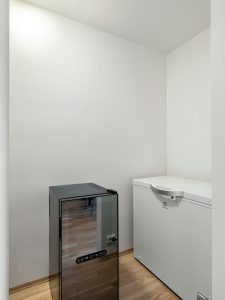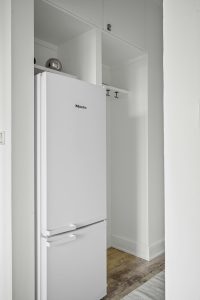
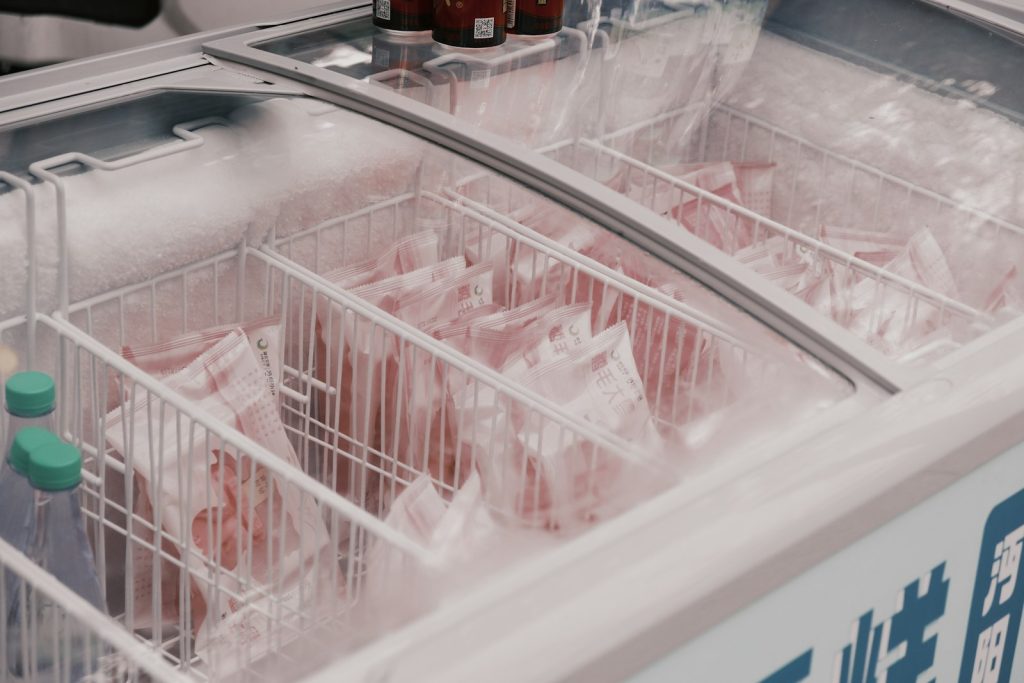
Because most current Asko freezers use an automatic No-Frost system, an asko freezer manual defrost should be a rare event rather than a scheduled maintenance task – the appliance is designed to handle defrosting on its own. It becomes necessary when the automatic system has stalled, when relocating the appliance for an extended period, or when ice has built up faster than the automatic cycle can clear it.
Before you start: unplug and empty
Unplug the unit from the wall rather than relying on any control-panel power-off setting, since a manual defrost involves standing water and ice near electrical components. Remove all food and, if the defrost is expected to take more than a couple of hours, transfer frozen items to a cooler with ice packs or a neighbor’s freezer to avoid a food-safety loss – our guide on food safety after a power cut covers the same timing principles that apply here.
Speeding the melt safely
Prop the door open and let the cabinet reach room temperature on its own, placing towels on the floor and inside the cabinet to absorb meltwater as it accumulates. Bowls of warm – not boiling – water placed inside the cabinet can speed the process along by raising the ambient temperature faster than open air alone. Never use a sharp tool, an ice pick, or a hair dryer to chip or melt ice directly, since any of these can puncture the evaporator coil or damage interior wiring, turning a routine defrost into a costly repair.
Clearing the drain during a manual defrost
While the cabinet is empty and accessible, it is a good opportunity to check and flush the defrost drain channel described in our refrigerator drain guide, since a blocked drain is a common reason ice built up faster than the automatic system could keep pace with in the first place.
Drying and restarting
Once all visible ice and water have been cleared, dry the interior thoroughly with a towel before restoring power, since any remaining moisture will simply refreeze the moment the compressor restarts. Give the unit several hours to reach its normal operating temperature before reloading food, and avoid packing it fully until the temperature display has stabilised.
How long an asko freezer manual defrost typically takes
A lightly iced cabinet can clear in two to three hours with the door propped open and warm water bowls placed inside, while a heavily iced unit that has gone unaddressed for a longer stretch can take six hours or more to fully clear using only passive melting methods. Planning around a half-day window, rather than assuming it will be a quick task, avoids the temptation to speed things up with a sharp tool or a heat source that risks damaging the interior. If a defrost is taking dramatically longer than these general ranges even with the door propped open, that itself can be a clue that the insulation or door seal is compromised, since a healthy cabinet should still lose cold reasonably quickly once actively opened to room air.
Signs an asko freezer manual defrost has fully finished
Beyond simply seeing no more visible ice, run a hand along the rear interior wall once the bulk of the melt has cleared to feel for any remaining cold, damp patches that indicate a stubborn pocket of ice tucked behind the panel where it is not directly visible. Fully drying these hidden spots before restoring power matters just as much as clearing the obvious ice on open surfaces, since a hidden pocket of moisture will refreeze the moment the compressor restarts and can undermine the whole point of doing an asko freezer manual defrost in the first place.
What to do with the melted water once the defrost is complete
Collected meltwater in towels or a shallow pan placed inside the cabinet during the process should be wrung out or emptied well away from the appliance itself, and the floor around the unit checked for any spillage that reached outside the cabinet, since standing water near an appliance’s electrical connections is worth avoiding even after power has been safely restored.
When manual defrost keeps being needed
If an asko freezer manual defrost is becoming a repeated task rather than a one-time event, that is a sign the automatic defrost heater, timer, or control has failed and needs repair rather than ongoing manual workarounds – a properly functioning No-Frost freezer should not need this at all. Our experienced, independent technicians can diagnose why the automatic cycle has stopped working. Browse our freezer repair service page or book a visit at /schedule/. Asko’s own care instructions are at global.asko.com.