
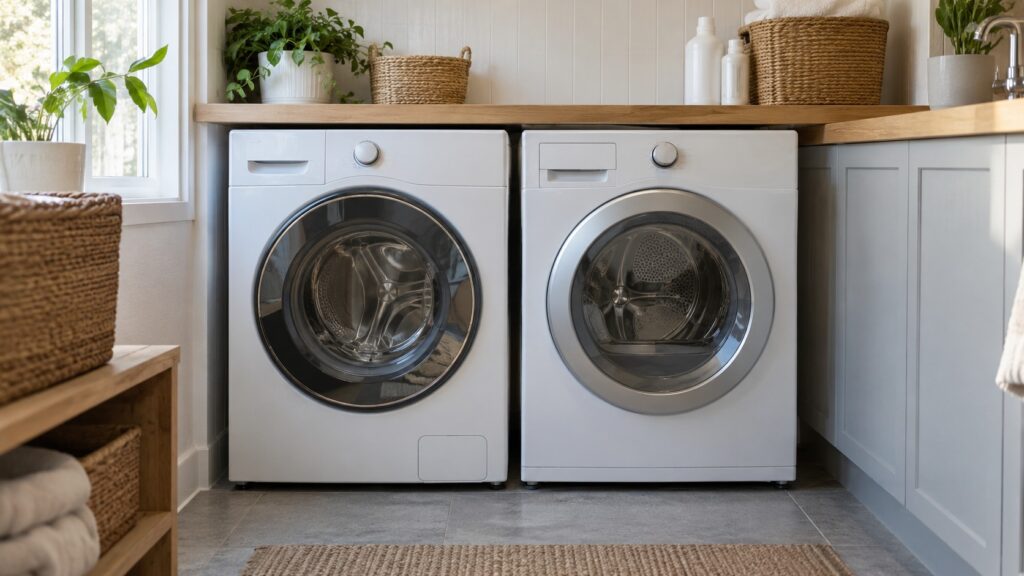
An asko vs miele washing machine comparison is mostly about construction details, dosing and fit, because both brands sell front-load washers and the models vary by tier. On our side, an Asko washer is described by its four-point suspension, a rigid Steel Seal at the door, rated capacity in kilograms and a high spin speed. For Miele we make no claims about specific features: check the spec sheet of the exact model. We do not rank the brands, quote prices or give reliability figures, because we have no source for them. We repair Asko washers, and we do not sell either brand.
Is Asko better than Miele for washing machines?
Neither is better in every home. Both brands sell front-load washers in several tiers. The sensible way to compare is by model, side by side, on the spec sheets. Anyone who tells you one brand always wins without knowing your laundry room, your loads and your habits is guessing. What we can offer is a list of the things that actually differ, and a view of what we see when Asko washers need service.
Before you shop, our guide to the Asko US product lineup explains which tiers the brand sells today in laundry, so you know which models are available to compare.
How do the suspension and the door seal differ?
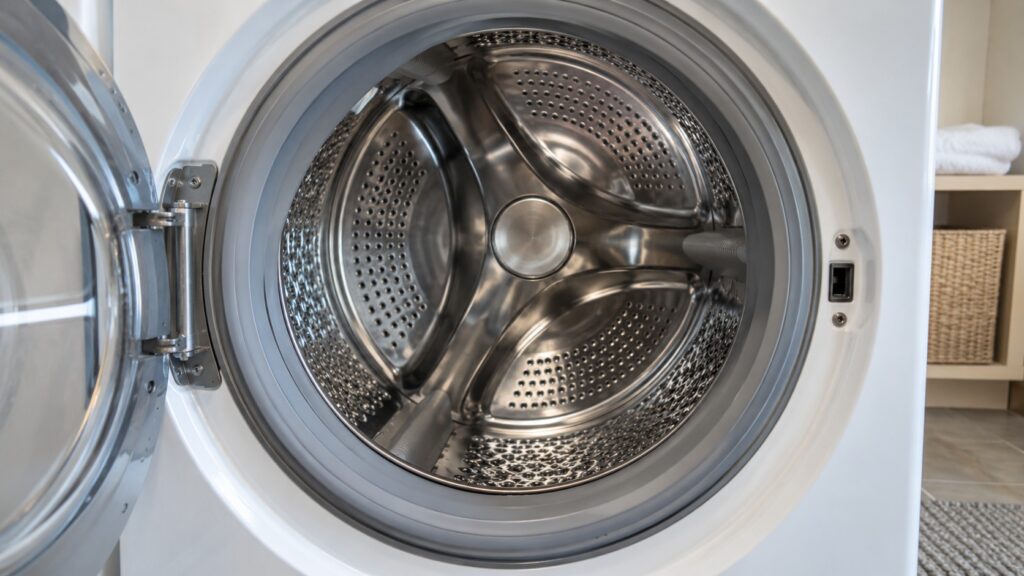
Two Asko design points come up often on our service calls. The first is the four-point suspension, which Asko calls Quattro Construction. It spreads the weight and the spin forces across four suspension legs, and our guide to Asko washer Quattro Construction explains why the washer still has to be level for it to work as designed. The second is the Steel Seal. A conventional front-load washer has a folded rubber bellows where water, detergent and lint can collect and cause odor, and the Steel Seal uses a rigid construction that reduces that pocket, as our guide to the Asko washer steel seal describes. It reduces the odor problem; it does not remove it if wet laundry is left in the drum.
For a Miele, check the spec sheet of the exact model for the suspension, the door seal and the drum design.
What is different about capacity and spin speed?
Asko quotes capacity in kilograms of dry cotton, not in drum volume, and that is a common source of confusion for buyers used to domestic brands that quote cubic feet. Our guide to Asko washer capacity and spin speed explains how to translate the figure into real loads. Spin speed decides how much water is left in the laundry, and therefore how long your dryer runs. Compare spin speeds on the exact models you are considering, and check the rated capacity using the same method on both. If you are comparing a figure from one brand’s spec sheet with a figure from another’s, check how each was measured.
How do detergent dosing and programs compare?
High-efficiency front-load drums use less water, so they need less detergent than most American owners expect. Our guide to Asko washer detergent dosing explains why overdosing makes clothes dirtier, not cleaner. Some Asko models have Auto Dose, and for any Miele or other model you like, check the spec sheet to see what it actually has. Programs differ as well. Our guide to Asko washer program selection shows how the program count varies between tiers, and our note on Pro Wash explains the intensive setting. Ask yourself how many programs you will ever use. Most households use a handful.
Which washer suits which household?
Think about the shape of your laundry week rather than the badge. A household that washes a few large loads of cotton on the weekend cares about rated capacity and spin speed, because a large drum with a high spin leaves the laundry lighter for the dryer. A household that washes small, frequent loads of mixed fabrics cares about program choice and gentle handling, and about how easily the detergent dose can be adjusted for a half load. A household with children or sports kit cares about the intensive and rinse settings, and about how quickly the drum can be cleaned. If you live in an apartment or put the washer near bedrooms, ask how the machine behaves at spin, and bring your own judgment to any noise figure. Whichever brand you pick, a level floor and a firm base matter for any front-load washer.
What should you check before you buy?
Fit decides more purchases than any feature. Measure the depth, the door swing, the hinge side and the clearance for hoses, and check the stacking kit if you plan to stack a dryer on top, as our washer and dryer stacking guide describes. Look at the drain filter and how easy it is to reach, because cleaning it is a routine task, and our drain filter cleaning guide shows how. Think about the drum: a drum that is easy to wipe and a door that is easy to leave open make odor a smaller problem, and our drum cleaning guide covers the routine. Ask who services the machine locally.
What about repairs and keeping an older washer?
A part swap is usually far cheaper than a new washer, and a technician visit makes sense when a washer will not drain, spins poorly or shows a fault code. Asko washers do not share one universal fault code table, and our guide to the Asko washer code families explains how to identify the family before you troubleshoot. Our repair or replace guide helps you weigh a repair against a new machine, and our Asko washer repair page explains how a visit works.