
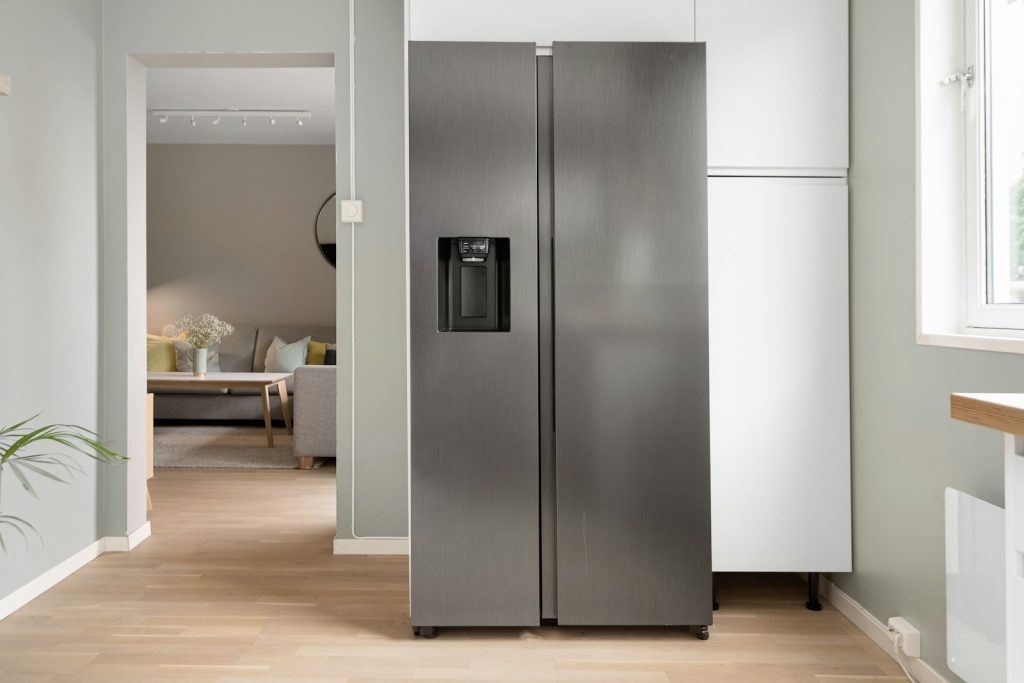
Asko sells refrigeration through two distinct formats, and the difference between an asko integrated refrigerator and a freestanding one is not just cosmetic. An integrated unit is designed to sit inside a run of kitchen cabinetry with no visible appliance front at all – the owner hangs a matching furniture door on the appliance’s own hinge system, so from across the room the fridge looks like another cabinet. A freestanding unit, by contrast, has its own finished stainless or painted front and can stand on its own in a kitchen with no surrounding cabinetry required.
How an asko integrated refrigerator is hinged
Because the cabinetry door is not the appliance door, this integrated format uses a sliding hinge bracket system that lets the heavier furniture panel swing on the appliance’s own frame while staying aligned with the neighboring cabinet doors. Getting that bracket adjusted correctly is what keeps the furniture door sitting flush – a door that is even a few millimeters out of alignment will drag on the floor or bind against the cabinet next to it, and re-aligning it is a routine part of a service visit rather than a sign of a failing unit.
Why ventilation looks different on a built-in
A freestanding refrigerator draws air around its own cabinet and rejects heat straight into the room. An integrated model instead relies on ventilation panels built into the surrounding cabinetry, usually a grille at the plinth (the low panel beneath the appliance) and sometimes another near the top, because the compressor and condenser are boxed in by cabinetry on every side rather than sitting in open air. If those panels get blocked, painted over, or covered during a kitchen remodel, the compressor runs harder and hotter than it should, which is one of the more common causes of an integrated unit running warm even though nothing inside the appliance has actually failed.
What this means for parts and service
The Model, Serial, and Art. No. on the rating plate stay the same regardless of format, and are read the same way whether the unit is integrated or freestanding – always confirm the Art. No. before ordering a part, since it is the field that pins the exact production variant. Where format does change things is access: on an integrated unit, a technician often has to remove the furniture door and its brackets before reaching the control panel, gasket, or interior components, which adds a step a freestanding repair does not need.
Choosing between the two if you are buying
An asko integrated refrigerator suits a kitchen where a continuous run of cabinetry is the design goal and the appliance itself should not be a visible feature. A freestanding unit suits a kitchen where the appliance front is meant to be seen, or where future flexibility to move the unit to a different layout matters. Neither format changes the internal cooling technology – the difference is entirely in how the exterior is finished and mounted.
Weighing an asko integrated refrigerator against your kitchen plan
Beyond the visual difference, an asko integrated refrigerator can transmit a small amount of compressor vibration into the surrounding cabinetry if the mounting brackets are not fitted with the correct anti-vibration spacers, something a freestanding unit sidesteps entirely since it stands on its own feet with nothing rigidly attached. This is a minor consideration for most kitchens but worth mentioning to an installer if your cabinetry run backs onto a bedroom or a shared wall. Resale and future flexibility also factor in: a freestanding refrigerator can move with you to a different kitchen layout without needing matching cabinetry, while this built-in format is committed to the opening it was built for unless a future owner is willing to rebuild around a replacement. On the technology side, both formats within the same Asko generation typically share the same compressor, refrigerant circuit, and No-Frost circulation design – the RBR, RBC, and RFN model families cover built-in and combined configurations using the same underlying cooling engineering, so choosing between the two formats is a decision about the kitchen, not a trade-off in cooling performance.
A note on noise levels between the two formats
Because an integrated unit sits fully enclosed by cabinetry, any compressor hum or cycling click can resonate slightly against the surrounding panels rather than dispersing into open air the way it would around a freestanding unit. This is usually a minor, background-level difference rather than something most households notice day to day, but a kitchen open to a living or dining area may want anti-vibration mounting confirmed specifically during installation for exactly this reason.
Getting either format serviced
Whether you own an integrated or freestanding Asko fridge, our experienced, independent technicians handle both formats and know to check the plinth ventilation and furniture-door hinge alignment as part of any visit. See our guide on plinth ventilation on a built-in fridge for more on the airflow side, browse model reference pages for specific SKUs, or book a visit through /schedule/. For Asko’s own product information, visit global.asko.com.