
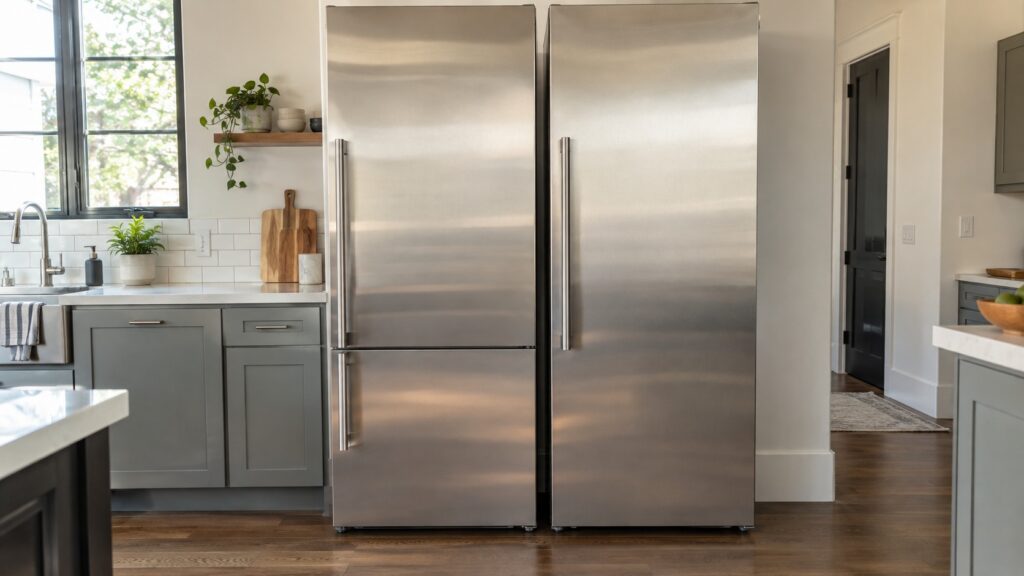
In the Asko refrigerator series on our model list, the Series 2 and Series 5 design lines differ mainly in trim, finish and styling, not in the cooling system underneath. The first letters of the model number tell you the type: RFR is a freestanding refrigerator, RFC a freestanding fridge/freezer combination, RFF a freestanding upright freezer, and RBR and RBC are the built-in integrated versions. Knowing that code is the fastest way to tell what a listing or a rating plate describes before you buy, move or service one.
What is the difference between Series 2 and Series 5 Asko refrigerators?
Series 5 is the premium design line, and Series 2 is the standard one. On the models we see, a Series 5 unit such as the RFC586KNBB1 adds styling, for example a black stainless steel finish, while a Series 2 unit such as the RFC286KNBS1 comes in plain stainless steel. The electronics and the service profile are the same. In other words, choosing Series 5 is mostly a decision about how the appliance looks in your kitchen, and it is worth paying for only if the finish matters to you.
What does not change between the two lines is the way they fail. The common service calls on both are a worn evaporator fan, a blocked defrost drain, a bad door seal or, on the combination models, a defrost heater or thermostat on the freezer side. None of these models has an error display, so a problem shows up as a symptom: an unevenly cold cabinet, a warm fresh-food side, frost on the back wall or water at the base.
Which type should you choose: RFR, RFC or RFF?
Decide how much freezer you need, because that picks the type. An RFR refrigerator has no freezer compartment, so it pairs with an RFF upright freezer when you want a large freezer separate from the fridge. An RFC combines the two in one body, which saves floor space and a plug, but shares one cooling system, so a problem in one compartment can affect the other. Our guide to the Asko combined refrigerator-freezer explains why.
If you freeze in bulk, a separate RFF freezer is easier to manage, and our Asko freezer buying guide covers what to look for. For a household that wants simple everyday storage in a small footprint, the combination model is usually enough.
Freestanding or built-in: what do the second letters mean?
The R and F in RFR stand for a freestanding unit with its own finished front. The R and B in RBR and RBC mark a built-in integrated model, designed to sit behind a matching furniture door with the cabinet ventilation panels around it. The two formats are hinged and ventilated differently, which affects installation and service. Our guide to integrated versus freestanding refrigerators goes through the details.
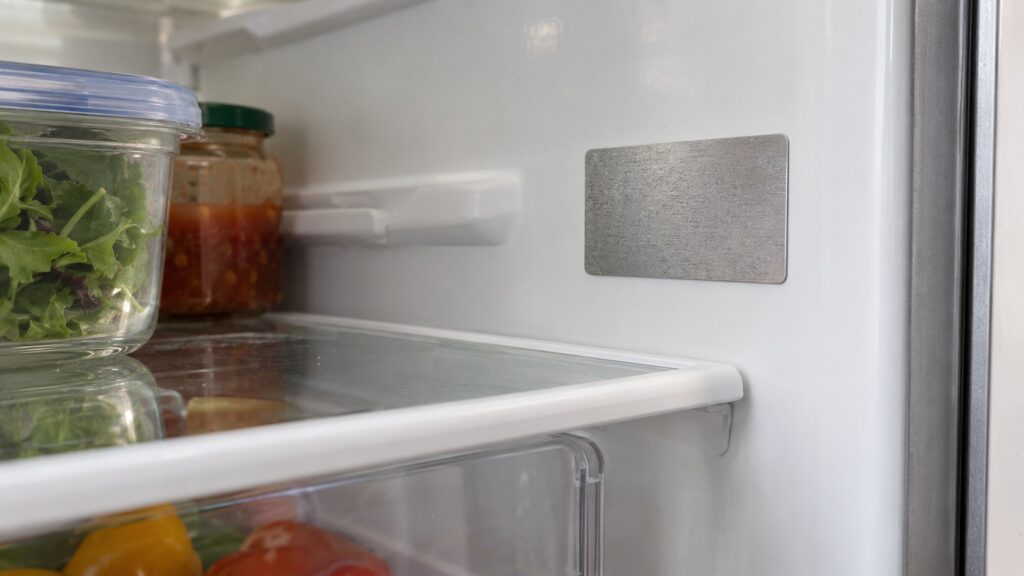
Finish and energy class show up in the model number too. In RFR286KNCS1, the later letters point to the finish and revision, and the model sheet gives the energy class. Do not try to decode every letter from memory. Read the rating plate and the model page, and treat the digits as a family code that groups similar sizes and lines.
What should you know about the energy class?
The models in our list carry energy classes C, B and D. A better class means lower running cost, but it does not predict how long the appliance will last or how likely it is to need service. Combination models list class B in our examples, the plain refrigerators and freezers list class C, and the built-in integrated models list class D. Use the class to compare electricity use between two units you are already considering, not as the main reason to choose one.
A smaller cabinet or fewer features often explains the class difference more than the build quality does. If running cost matters, compare the stated yearly energy use on the label for the exact model rather than the letter alone.
What should you check about an imported Asko refrigerator?
Our model pages list these refrigerators as Swedish refrigeration sold in markets such as SE and the UK, so one in an American kitchen may be an import. That matters in three ways. Check the voltage and frequency on the rating plate against what your outlet supplies, since US kitchens supply 120 volts at 60 hertz and the plate shows what the unit was built for. Check the cutout and plinth dimensions against your cabinetry. And check how parts will be sourced, using the model, serial and article number from the plate. Our guide to an Asko refrigerator in a US kitchen covers all three.
Do not assume a good price on an import is a bargain. A unit that needs an electrical conversion, a new plinth panel or hard-to-find parts can cost more in the end than a domestic one. If you already own one, our Asko rating plate guide shows how to read the three identifiers a technician needs.