
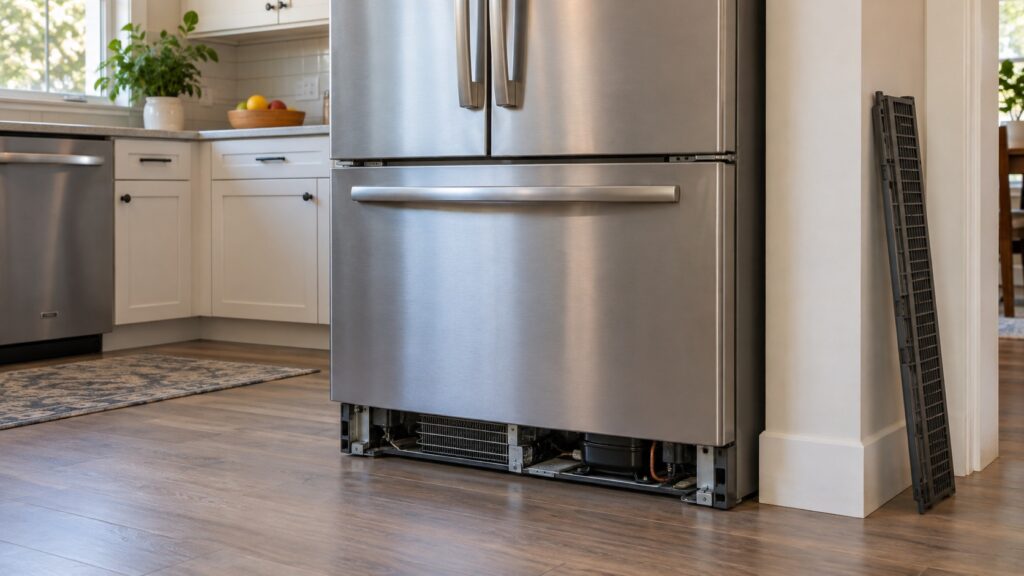
The Asko refrigerator condenser is the heat-rejecting part of the cooling system, and keeping its airflow clear is one of the few maintenance jobs that really pays off. On many refrigerators it sits at the base of the cabinet behind the plinth or at the back, where dust and pet hair collect. On others it is built into the cabinet walls, and there is nothing to clean. Check which you have before you reach for the vacuum, unplug the refrigerator first, and never use water on it.
Where is the condenser on an Asko refrigerator?
It depends on the model and on how the refrigerator is installed. On a freestanding unit, the condenser is usually at the base or on the back panel, with the compressor close by. On a built-in integrated unit, which sits enclosed by cabinetry, the compressor and condenser rely on a ventilation grille in the plinth, the low panel under the appliance, to take in room air and shed heat. Some refrigerators have the condenser built into the side or rear walls of the cabinet, in which case it needs no cleaning, but the vents around it still must be clear.
The manual for your model shows the location. If you do not have it, the rating plate lists the model, serial and article number, which lets you find the right one, and our Asko rating plate guide shows where the plate is. Do not pry panels off to hunt for a coil. If the plinth grille or a rear cover does not come away easily, stop and check the manual.
Why does condenser dust matter?
The cooling system works by moving heat from inside the cabinet to the room. If the condenser is coated with dust, the heat cannot leave efficiently, so the compressor runs longer to do the same job. You may notice the refrigerator running almost all the time, the plinth or the sides feeling warm, a louder compressor and, in a warm kitchen, a fresh-food compartment that is slightly warmer than it should be. Over time, the extra running adds to electricity use and wear.
It is easy to blame the compressor, but a clogged condenser or a blocked vent is much more common. Our guide to refrigerator plinth ventilation explains how enclosed units breathe, and the symptom page for a refrigerator that runs constantly lists the other causes.
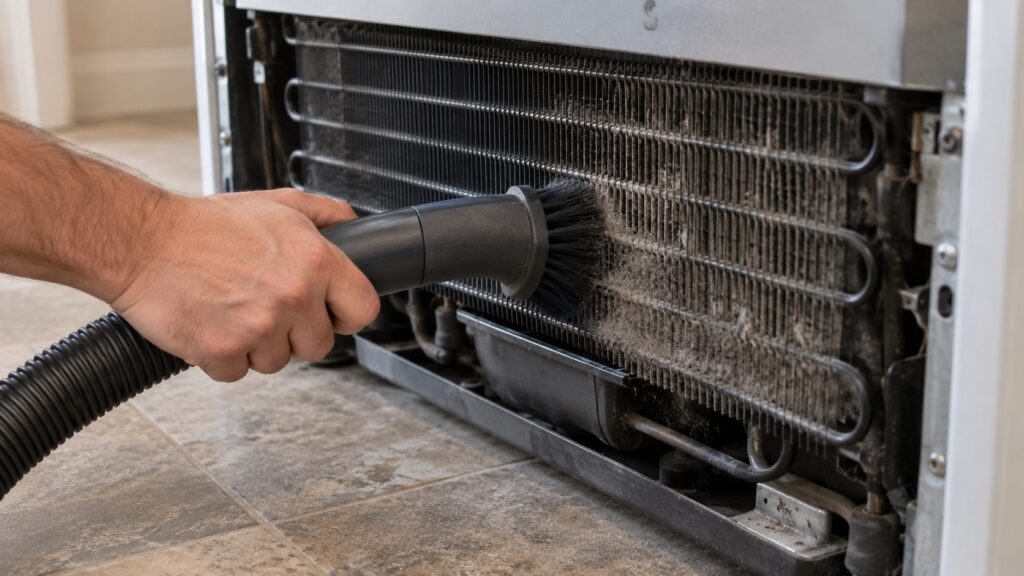
How do you clean the condenser safely?
Unplug the refrigerator, or switch off its dedicated breaker, before touching anything near the base or back. Move the unit only if it is freestanding and the floor and cord allow it, and take care not to damage the water line if there is one. Remove the plinth grille or rear cover as the manual describes. Use a vacuum with a brush attachment to lift dust and lint from the coil, working with the fins, not across them, and use a soft long brush to reach into corners. Wipe the grille itself with a damp cloth and let it dry.
Never spray water or cleaner on a condenser, never scrape it with a screwdriver, and be careful not to bend the fins. Replace the covers, check the cord and plug, and plug the refrigerator back in. It may run a little longer after you restart it while it brings the cabinet back to temperature. Add this to the schedule in our Asko refrigerator maintenance checklist.
What else should you check while you are there?
Look at the clearance around the unit. An enclosed refrigerator needs the ventilation openings in the cabinetry kept free, so do not store boxes or cleaning supplies against the plinth. A freestanding model needs space at the back and sides as the manual specifies, so check that it has not been pushed tight to the wall. Look for ice or water at the base, which points to a blocked defrost drain rather than a condenser problem, and listen for a fan that rattles.
If the condenser and the vents are clean and the refrigerator still runs constantly, the door seal, the evaporator fan or the defrost system may be responsible, since those are the usual causes on these models. Our guide to the door seal test is a simple next step.
Pets and renovation dust are the two biggest culprits. A kitchen that has just had work done can coat a base grille within weeks, and a shedding dog or cat will fill the space behind a plinth faster than you expect. If you share a home with animals, a quick vacuum of the plinth grille every few months keeps the airflow healthy without opening anything. Warm kitchens also make the condenser work harder, so a unit next to an oven or in direct sun benefits from more frequent checks.
When should you call a technician?
Call if the refrigerator still runs constantly after a clean condenser and clear vents, if the compressor makes a loud or clicking noise and the cabinet is not cooling, or if you find water at the base. A technician can test the fan, the defrost parts and the sealed system, which are not owner jobs. For an old unit that has been neglected for years, a thick mat of dust can hide other problems, so a visit is worthwhile after the clean. See Asko refrigerator repair for what we cover.