
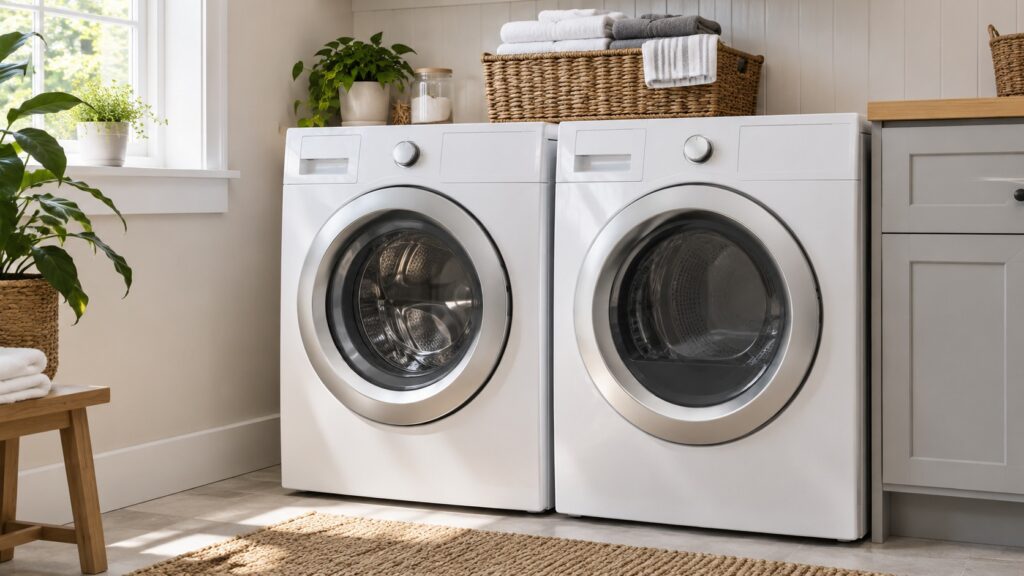
Asko laundry terms are the brand’s own names for features you will see on a washer or dryer dial, in a manual or on a spec sheet: Steel Seal for the rigid washer door seal, Pro Wash for the intensive wash cycle, Auto Dose for automatic detergent dosing, Quattro Construction for the four-point washer suspension, and auto condenser filter cleaning for the dryer. This glossary explains what each one means in plain English, which of them need your attention, and what to do when one seems not to be working.
What is Steel Seal on an Asko washer?
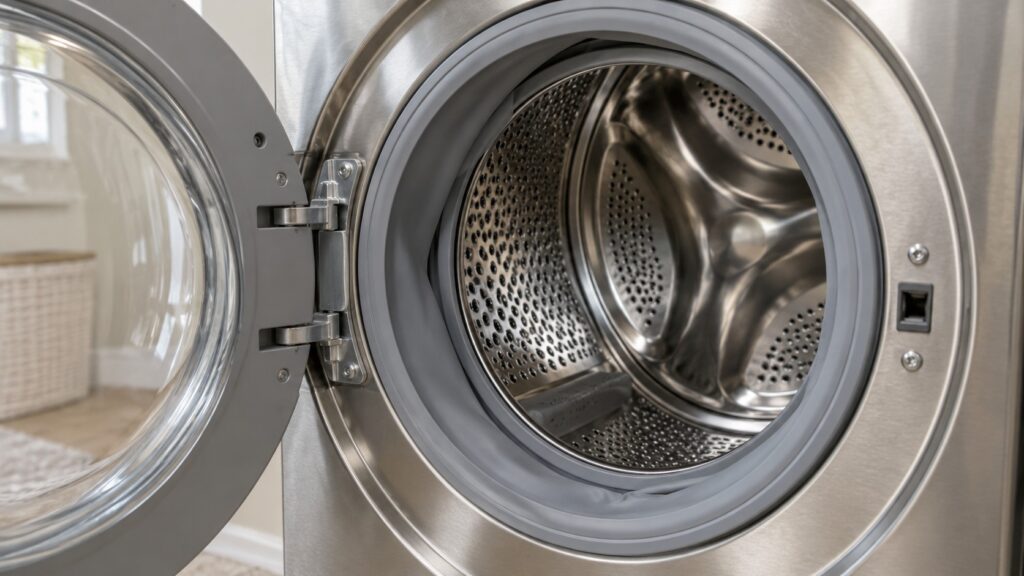
Steel Seal is the name for the rigid door seal on much of Asko’s current washer lineup. A traditional front-load washer has a flexible rubber bellows with a deep fold, and that fold traps water and detergent, which is where musty smells begin. A rigid seal reduces the size of that pocket, so less moisture stays behind. It does not remove the need for good habits: leave the door open between washes, wipe the seal if you can and do not leave wet laundry in the drum.
Not every model has it, so confirm it against your exact model before you rely on it. If an odor develops anyway, the cause is often elsewhere, such as the dispenser, the drain filter or standing water in the drain path. Our guide to the Asko washer Steel Seal covers it in depth, and the guide to washer drum cleaning covers the routine.
What does Pro Wash mean?
Pro Wash is a dedicated intensive wash. On some dials it is its own program, and on others it is a modifier layered onto another program. It uses a longer, more active wash pattern to lift ground-in soil from work clothes, towels and gym wear. It works best with warm water where the fabric allows, because heat helps detergent break down soil. It does not replace pre-treating a set stain such as grease or wine, which needs treatment before the wash.
If heavily soiled loads still come out dirty on Pro Wash, check the basics first: a clogged drain filter, an overfilled drum or a dispenser that is not emptying. Our guide to Asko Pro Wash goes through the choices.
What is Auto Dose?
Auto Dose is a detergent dosing system. Instead of you measuring a scoop, the machine releases detergent from a tank according to the load size, soil level, water hardness, the chosen program and the temperature. It is convenient and reduces the chance of overdosing, which is the commonest cause of excess suds and detergent residue. You still need to keep the tank filled with a suitable detergent and keep the dispensing path clean. Models without Auto Dose use the usual drawer, and our guide to washer detergent dosing covers that.
What is Quattro Construction?
Quattro Construction is Asko’s name for its four-point washer suspension. The drum is supported at four points so the spin vibrates the cabinet less and the machine stays steadier at high speed. That helps most on upper-floor laundry rooms, where vibration travels into the structure. It is not a replacement for leveling: a washer must still be level front to back and side to side, with the feet locked, and loaded within its rated capacity. If a Quattro washer starts to walk or bang, check the leveling and the load first, then the suspension parts. Our guide to Asko Quattro Construction explains how.
What are condenser and heat-pump dryers?
Both are ventless dryers that remove moisture by condensing it into water, which collects in a tank or drains away. A condenser dryer heats the air with an element, and a heat-pump dryer recycles its heat in a closed loop, which uses less energy and treats fabric more gently, at the cost of a longer cycle. Which you own affects how long loads take and how much attention the condenser and filters need. Our guide to heat pump versus condenser dryers compares them.
Some dryers add auto condenser filter cleaning, which reduces lint build-up between cycles but does not eliminate it. A manual check of the condenser and the lint filter is still worthwhile, and our guide to condenser filter cleaning shows how.
How do you find out which features your Asko has?
Read the rating plate and the model number, then check the manual or the model page, because feature sets vary between tiers, and marketing text on retail sites does not always distinguish them. The plate carries three identifiers: model, serial and article number. Our rating plate guide explains why the article number is the one parts catalogs use. If a feature that you think you should have seems to be missing, it may belong to a higher tier.
For a repair, mention the feature by name. A technician who hears that the Steel Seal washer smells, or that the auto-clean dryer is running long, knows where to look. You can see what we repair on the Asko washer repair page.