Asko gas cooktop ignition works in four steps: you press and turn a knob, which opens a gas valve and triggers a spark module; gas flows out of the burner ports; a spark from the igniter electrode lights it; and the flame then runs on its own. The gas cooktops on our model list, the HG1986, HG1776 and HG1666 families, work this way and report nothing on a display, so every fault shows up as something you can see, hear or smell. Knowing the four steps tells you which stage failed when a burner sparks and will not light.
How does an Asko gas cooktop light a burner?
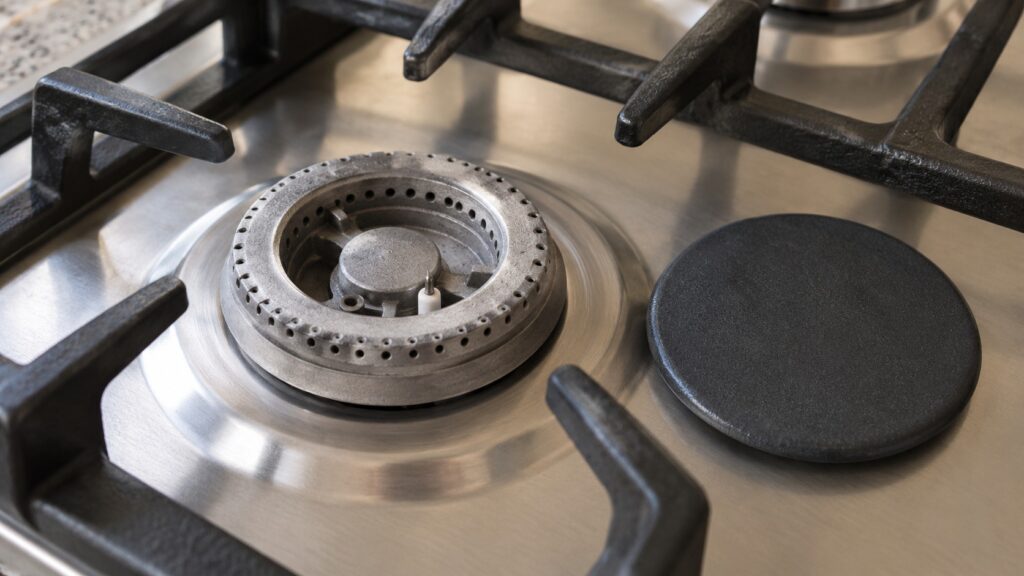
When you press and turn the control knob, two things happen together. The valve behind the knob opens so gas can flow to that burner, and a switch tells the spark module to start firing. The module builds a high-voltage pulse and sends it to the igniter electrode, a small ceramic-covered tip beside the burner. The spark jumps from the electrode to the metal of the burner, ignites the gas that is coming out of the ports, and the flame travels around the ring. Once it is burning, the sparking stops.
Turn the knob toward low and the valve reduces the gas flow to a small flame, which is what gives you a controllable simmer. Because all of it is mechanical and electrical, with no display and no software, the cooktop has nothing to tell you when something goes wrong, and the clues are the clicking, the flame and the smell.
Why do burners spark but not light?
A clearly audible, visible spark proves the ignition circuit is alive. If no flame follows, the problem is almost always in the gas path or the burner, not the spark. The most frequent cause is clogged ports, where food debris or a boil-over blocks the tiny holes gas needs to escape through. Next is a burner cap that is not seated, which sends gas to the wrong place or keeps it away from the spark. Moisture left in the ports after cleaning can also stop ignition for a few minutes. A closed or partly closed gas shutoff behind the cooktop, or a failing valve, is a rarer cause. If you smell gas during repeated attempts, stop clicking and ventilate.
Our symptom page on an Asko gas cooktop that sparks but will not light lists the checks in order, and it is the right page to use when the symptom appears.
What is the burner head and cap doing?
The burner is a base with ports and a cap that sits over it. Gas mixes with air inside the burner and leaves through the ports, and the cap directs the flame ring and keeps spills out of the ports. If the cap is a little off, the flame can be uneven, yellow or hard to light. Asko cooktops with a large wok burner use the same principle with a bigger ring, and our guide to wok burner care explains how to keep it clear.
After cleaning, always dry the burner and seat each cap fully and flat before you try to light it. A cap that rocks is not seated. A warped ring after a boil-over is a repair, because the shape of the ring decides how the gas and the flame meet.
What is the safety side of the system?
A gas burner should never leave gas flowing without a flame. Many gas cooktops include a flame-failure safety feature that shuts off a burner’s gas if the flame goes out, and that is why you may need to hold the knob for a moment after lighting. Check your owner’s manual for how your model behaves. The practical rule is the same either way: if a burner will not light within a few seconds, turn the knob off, ventilate and wait before trying again, and never let gas build up while you click.
If you ever smell gas without a burner on, do not use switches or flames. Leave the room, ventilate if you can do so safely, and call your gas utility from outside. Gas connections and valve work belong to a qualified professional.
What do yellow, weak or lifting flames mean?
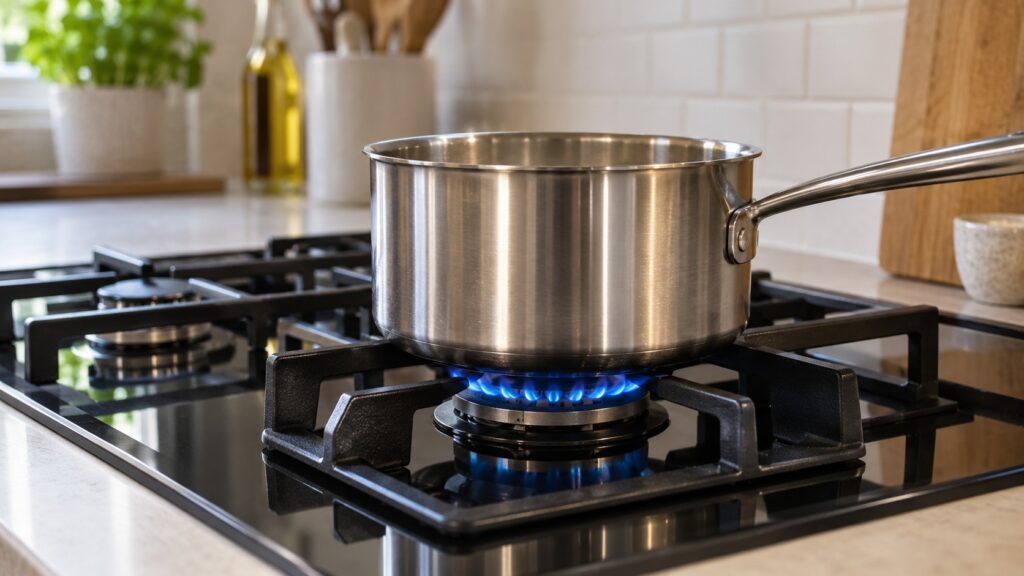
The flame is the best diagnostic you have. A healthy flame is mostly blue, steady and evenly spaced around the ring. Yellow tips usually mean the air-gas mix is off, often from a dirty burner, spilled food or a misseated cap. A weak flame points to blocked ports or restricted gas. A flame that lifts away from the burner can mean too much gas pressure for the burner. Our symptom page for a yellow or weak gas flame covers the checks.
Asko’s current US site lists no cooktops, so a unit in an American kitchen reached it as an import or in a European-specified build. That affects parts sourcing more than operation, and our guide to a gas versus induction cooktop helps you compare fuels before you replace one. For help, see Asko cooktop repair.