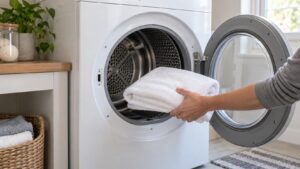
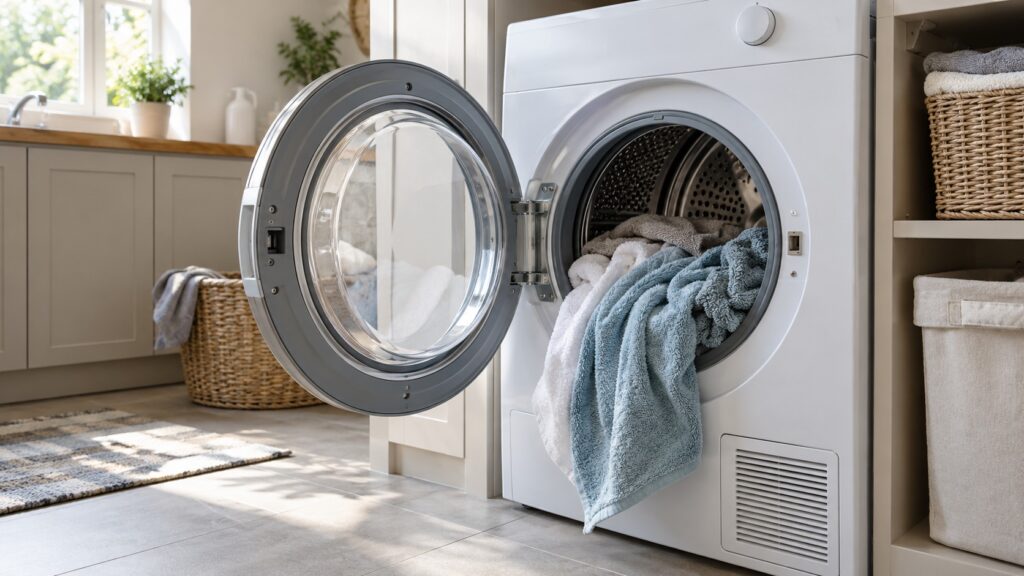
An Asko dryer not drying clothes is most often an airflow or load problem rather than a failed part: a full lint filter, a clogged condenser or heat pump filter, a full water container, an overloaded drum or a program that does not suit the fabric. Check those first, because they are quick, free and safe. If clothes still come out damp with clean filters and a sensible load, the heating system, the sensor or the control needs a technician, and the cabinet should stay closed.
Is the lint filter clean?
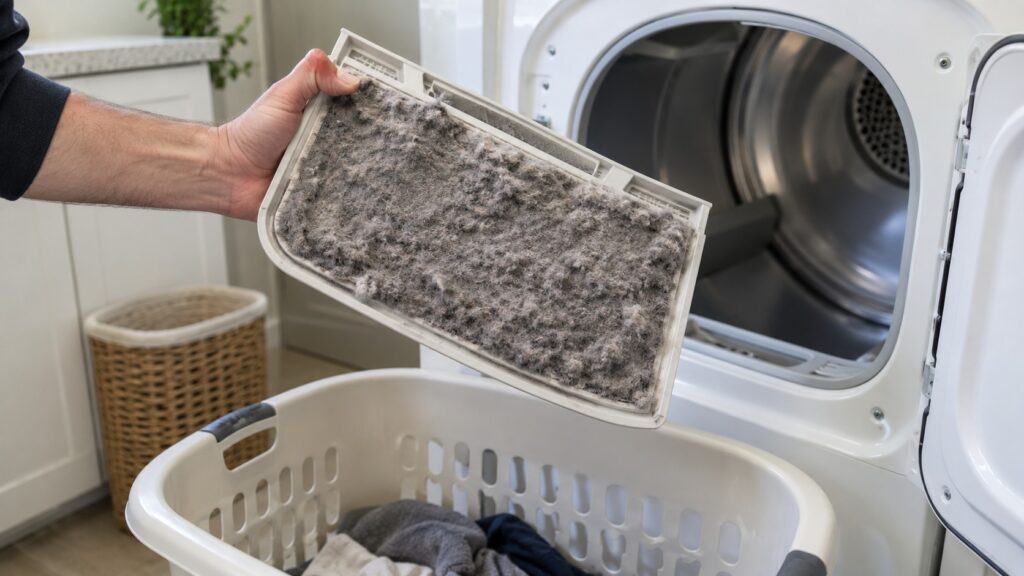
This is the single most common cause. A lint filter that is coated, even lightly, restricts the air that carries moisture out of the drum, and a dryer that cannot move air cannot dry. Take the filter out after every load, pull the lint off by hand, and look at the mesh against the light. If you cannot see light through it because of a film, rinse it as your manual describes, and let it dry completely before refitting. Our guide on the lint filter routine covers the habit.
Fabric softener and dryer sheets can leave a film that does not look like lint but blocks the mesh just as well. If a filter looks clean and still seems to restrict airflow, wash it with warm soapy water.
After washing, let the filter dry completely before putting it back, because a damp filter can clog quickly and hold moisture in the airflow.
Are the condenser or heat pump filters clogged?
Asko dryers are typically condenser or heat pump models with no outside vent (your manual confirms which yours is), which is why the second set of filters matters. Fine lint that gets past the door filter collects on the secondary filter and then on the cooling surfaces, and airflow drops gradually, so cycles take longer and clothes stay damp. Our guide on condenser filter cleaning explains how to reach and clean the parts an owner may handle, and the one on heat pump dryer evaporator care explains why the filters protect the heat exchanger. Where the manual shows a filter you may remove, follow it exactly, and let it dry fully before refitting.
Leave anything behind a panel to a technician. Do not run the dryer with a base panel off, and never poke into the fins of a heat exchanger.
If you are not sure which filters your model has, check the manual or the rating plate for the model, and do not guess at what may be removed.
Is the water container full, or is the room the problem?
On models that collect the water in a container, a full container can stop a program or leave the load damp. Empty it after every cycle unless your dryer drains to a pipe. Our guide on dryer water tank full codes covers the message that goes with it.
The room matters too. A condenser or heat pump dryer releases some warm, humid air into the space around it and needs airflow around the cabinet, so a tightly enclosed closet with no ventilation slows drying. Our article on Asko dryer venting explains why these dryers need no outside duct yet still need clearance, and the one on stacking clearances covers the gaps. A very cold room can lengthen cycles on heat pump models as well, and your manual describes the operating conditions for your model.
Is it the load or the program?
An overloaded drum cannot tumble freely, so the middle of the load stays wet. A load of heavy towels and jeans dries more slowly than a load of shirts, and mixing the two means the light items are done long before the heavy ones. Spin the washing well first, because wetter laundry means a longer dry. Choose a program that suits the fabric and a dryness level that suits the load, and avoid a gentle or low-heat program for a heavy load.
If you wash and dry together, check the washer’s spin as well: a washer that spins poorly sends the dryer wetter laundry, and the dryer then looks slow when it is the washer that has a problem.
Heat pump programs run longer than condenser ones by design, so judge your dryer against its own history rather than another machine. Our guide on heat pump dryer cycle time tips explains what to expect.
Keep a rough note of how long a standard load takes when the dryer is behaving well. A sudden jump, say from your usual to several times longer, is far more informative than any published figure, because it measures your machine against itself.
When should you call a technician?
Call if clothes are still damp with clean filters, an empty container, a sensible load and the right program; if there is no heat; if a code returns after a restart; or if you smell burning. A smell of burning or scorched fabric means stop the dryer and switch off the breaker at the panel while standing on a dry floor, and leave it off until it has been looked at. Never open the cabinet. Our page on a dryer with clothes still damp lists the components involved, and our Asko dryer repair page explains how a visit works.