Asko cooktop fault codes are short — usually two characters — and they are not a diagnosis. They tell you which protection tripped, not which part failed. Three of them account for most calls on these cooktops: F with a letter, the fan warning, and the silent shutdown that displays nothing at all. Knowing what each one is protecting turns a vague fault into a short list of checks.
Why the first step is the model plate, not the code
Every brand reuses short codes across appliance types and across production years, and Asko is no exception. A code read on a dishwasher forum will not translate to a cooktop, and a code from an earlier induction generation will not always translate to the current one. Our guide on why fault codes are not universal covers the trap in detail, and it applies here more than anywhere: a cooktop has fewer sensors than a washer, so the same code has to cover more ground.
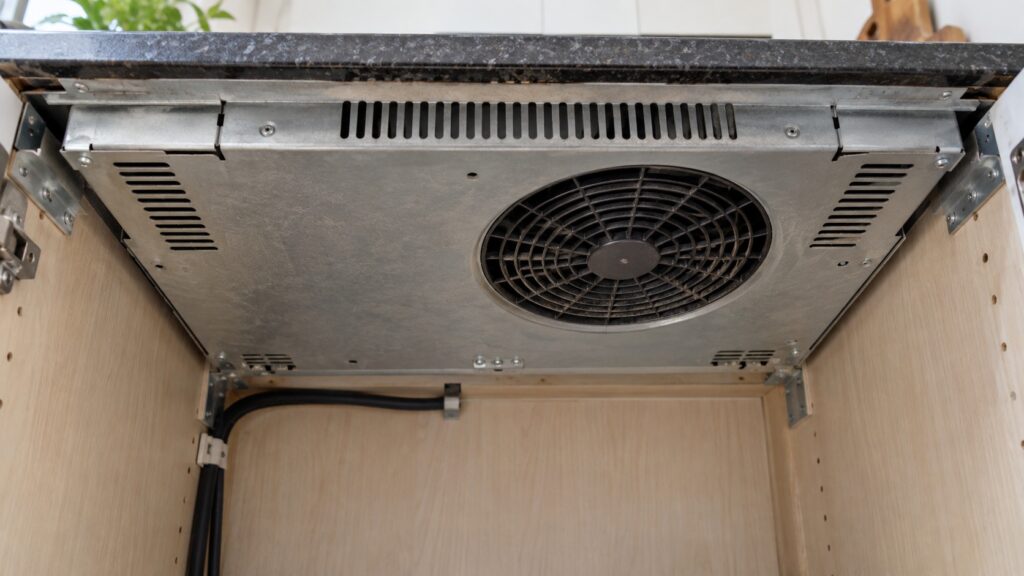
Find the rating plate before you search anything. On a cooktop it is on the underside of the unit, which means it is visible from inside the cabinet below, not from the kitchen. Photograph it once and you will never have to find it again.
FA: the control thinks something is touching it
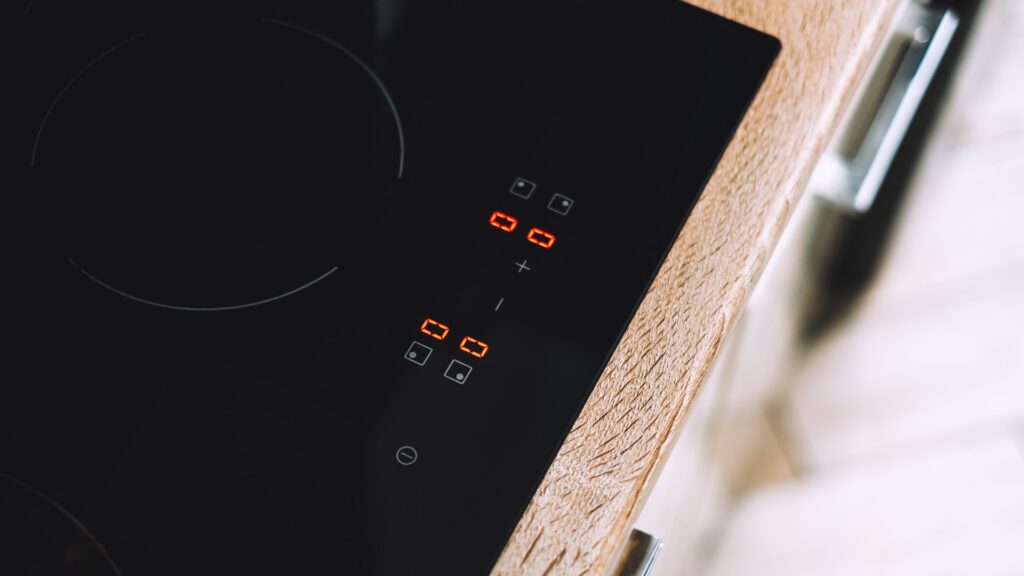
Touch controls work by measuring a tiny change in capacitance under the glass. Anything that changes that measurement looks like a finger. In practice that means:
- Water or a wet cloth on the panel. The commonest cause by far, and it clears itself as soon as the glass is dry.
- A boil-over that ran across the controls and left a film. Sugar and starch films hold moisture for a long time after they look dry.
- A pan resting on the control area. Heat and mass both register.
- A crack at the edge of the glass, even a small one, which lets moisture reach the sensor film underneath.
Power the cooktop down at the wall for a minute, dry the glass completely including the seam at the edge, and try again. If the code returns on a dry, clear panel, the sensor film or the control board is the next step, and that is not a user repair — the panel is bonded to the glass.
FC: the electronics are hot, not the food
This one is misread constantly, because people assume a temperature code refers to the cooking surface. It does not. Induction electronics sit in a shallow cavity directly beneath the glass, and they generate real heat of their own. They are cooled by a fan drawing air through the cabinet. When that air path is compromised, the control shuts zones down to protect itself long before anything else is at risk.
The usual causes are all installation, not failure:
- a drawer or a full cabinet directly beneath, blocking the intake;
- an oven installed below without the required separation, feeding its exhaust into the cooktop’s intake;
- a solid countertop surround with no ventilation gap at the front or rear;
- dust and grease built up over years on the fan and the intake grille.
Our guide on ventilation and overheating goes through the clearances. If the cooktop has worked for years and only recently started doing this, suspect the buildup rather than the design — and check whether anything changed in the cabinet below.
The fan code, and the noise that comes before it
A cooling fan rarely stops without warning. It gets louder, or it develops a rhythmic note, weeks before it trips a code. If you have noticed the cooktop humming after it is switched off — the fan runs on to bring the electronics back down, which is normal — and that run-on has become noisy, that is the warning.
Once a fan code appears, the cooktop will usually still work at reduced power or will shut down under load. That is the protection doing its job. Running it in that state is not dangerous, but it is not going to improve, and the heat the fan is failing to remove is shortening the life of the board it was protecting.
No code at all, and a zone that will not work
Two behaviors get reported as faults and are neither:
Pan detection. An induction zone that does nothing has usually decided there is no pan on it. A pan that is too small for the zone, has a warped base that lifts in the middle, or is not ferrous enough will not be seen. Test with a pan you know works on another zone before concluding anything.
Power sharing. Zones on an induction cooktop are wired in pairs to a shared inverter. Set one zone to maximum and its partner cannot also reach maximum — it will cap, or the display will drop the level you set. This is designed behavior and it is why a zone appears to cycle on and off under heavy load.
What to check before calling
When to call
Call when a code returns on a dry, clear panel, when a temperature code appears with the cabinet verified clear, when the cooling fan is noisy or silent, when the glass is cracked, or when a zone stops responding with a pan that works elsewhere on the cooktop.
We are an independent repair company and not a factory service arm. Pricing starts from a diagnostic visit and we confirm the estimate before any work begins. Asko cooktop repair covers touch controls, inverters, sensors, fans and wiring, and you can schedule a visit online.